How to end cortisol from my body
Before we dive into how we can naturally lower and manage it so it does not cause issues like fatigue or sleep disruption, I would love to learn a little more about your situation so I can tailor this session perfectly for you.
To help me customize our chat, could you share a bit about why you are concerned about your cortisol levels? For example, are you noticing specific symptoms like sleep issues, fatigue, or weight changes, or are you just looking to manage general daily stress?
I have multiple symptoms and want to learn how to balance it overall.
Thank you for sharing that. Since you are experiencing multiple symptoms, it makes total sense that you want to bring things back into balance. To get us started on this journey, let's take a look at our roadmap for today so you can see exactly how we will tackle this together.

The Stress Command Center
Why does cortisol peak in the morning?
That is a great question! It comes down to how we evolved to survive, and it is controlled by a built-in biological clock called the in your brain.
Think of cortisol as your body's natural cup of coffee. As dawn approaches, your brain detects the gradual change in light and begins ramping up cortisol. This early morning surge mobilizes glucose to flood your bloodstream with energy, raises your blood pressure slightly, and sharpens your alertness. It is designed to physically prep you to wake up, get out of bed, and face the day's demands.
Now that we understand this normal, healthy morning spike, let's look at what happens when things go awry. Specifically, what is the difference between this kind of short-term stress response and the chronic stress we often experience in modern life?
Give me a diagram of the daily cortisol cycle
You got it! Visualizing this makes the concept so much easier to grasp. I am queueing up a clean, interactive diagram that charts exactly how your cortisol levels should peak and fall throughout a standard 24-hour cycle.

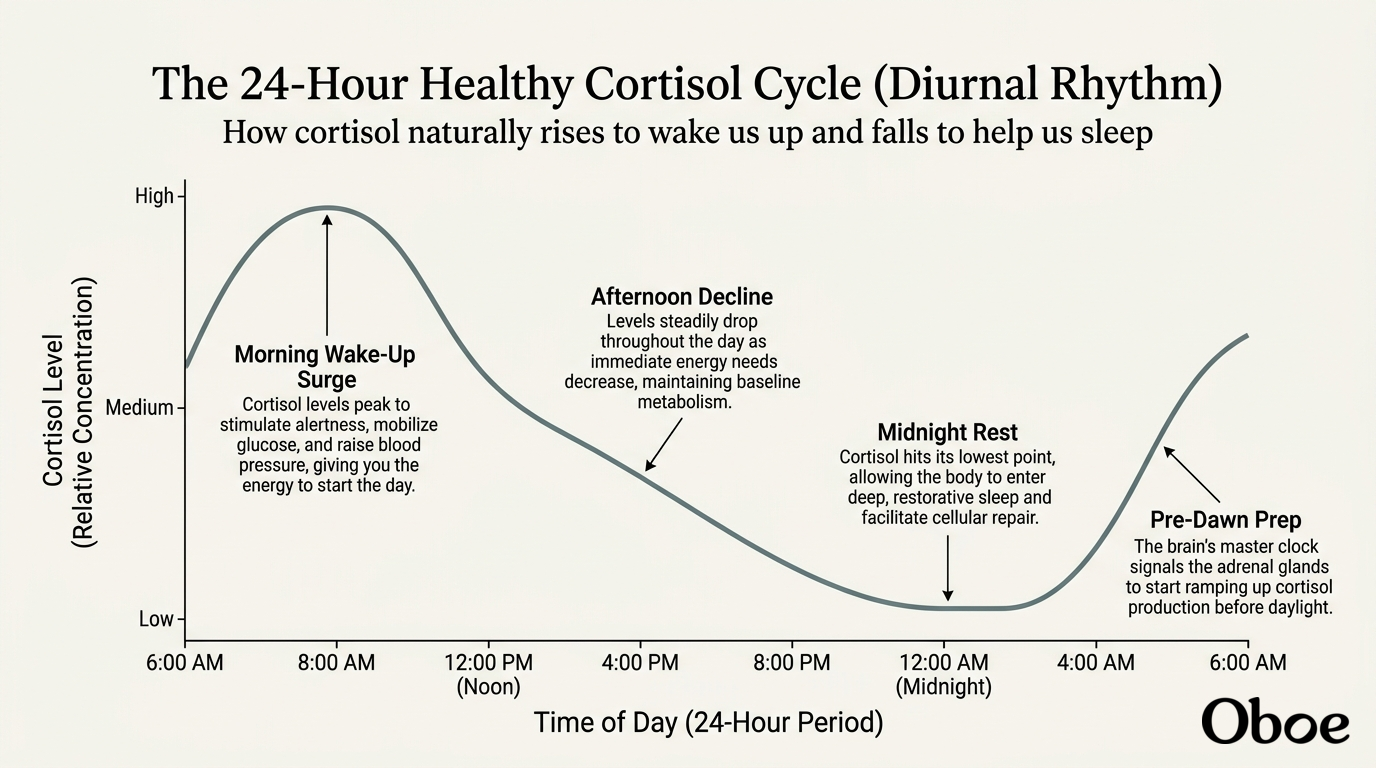
While that diagram is being put together, let's keep moving. To understand why balancing this hormone is so critical, we need to look at how our bodies handle short-term bursts of stress versus the long-term, ongoing stress of modern life.
Historically, our stress response evolved to deal with —sudden, immediate physical threats that required rapid action.
Let's continue to the health impacts of chronically high cortisol
I am so glad you want to look at this, because the physical impact of chronic stress is where we really start to connect the dots with the symptoms you might be feeling. When your adrenal glands keep pumping out cortisol day after day without a break, it ceases to be a helpful morning wake-up call and instead begins to disrupt almost every system in your body.
The Downstream Effects of Elevated Cortisol
- Weight Gain: Especially around your midsection, as cortisol signals your body to store visceral fat and increases cravings for quick energy sources like sugar.
- Brain Fog & Fatigue: Constant cortisol production keeps your nervous system hyper-aroused, eventually draining your energy reserves and impairing the of your brain, which is responsible for focus and memory.
- Immune Suppression: While temporary cortisol lowers inflammation, long-term exposure actually blunts your immune response, making it easier for you to catch colds and harder for your body to recover.
It is important to remember that cortisol is not the villain here—it is simply a messenger doing its job too well because the 'alarm' has been left on. To balance it, we do not need to fight the hormone itself; we just need to learn how to turn off that alarm.
Now that we have seen how chronic cortisol can affect your health, are you ready to jump into our next subtopic and look at how changing your diet can help naturally calm this stress response?