Machine Learning Fundamentals Visualized
Introduction to Machine Learning
Learning from Experience
At its core, machine learning is a way to teach computers to learn from data. Instead of writing a detailed set of rules for every possible situation, we give the computer examples and let it figure out the patterns on its own. It's like how you learned to recognize a cat. No one gave you a strict definition of "cat." You just saw lots of cats and eventually understood what makes a cat a cat.
Machine learning is the science of getting computers to act without being explicitly programmed.
This ability to learn from experience is what makes machine learning so powerful. It allows computers to tackle complex problems where the rules are either too complicated to write down or are constantly changing, like identifying spam emails or predicting stock prices.
A New Way to Program
Traditional programming is all about rules. A programmer writes explicit, step-by-step instructions that a computer follows precisely. For example, to create a program that converts Celsius to Fahrenheit, you would write the exact formula: . The computer doesn't learn this; it just executes the code it's given.
Machine learning flips this around. Instead of giving the computer the rules, we give it data—specifically, the inputs and the desired outputs. For our temperature example, we would feed it a list of Celsius temperatures and their Fahrenheit equivalents. The machine learning model then works backward to figure out the relationship, or the "rule," that connects them.
While this is a simple case, the principle applies to vastly more complex problems. It's much easier to show a machine a million pictures of dogs than to write a program that defines what a "dog" is in every possible breed, angle, and lighting condition.
Machine Learning in the Wild
You interact with machine learning every day, often without realizing it. When Netflix suggests a movie you might like, that's a recommendation engine powered by machine learning. It has learned your preferences by analyzing what you've watched in the past.
Other common applications include:
- Email Spam Filters: Analyzing incoming emails to predict whether they are junk.
- Credit Card Fraud Detection: Identifying unusual transaction patterns that might indicate theft.
- Virtual Assistants: Voice recognition in systems like Siri and Alexa is trained on vast amounts of speech data.
- Medical Imaging: Helping doctors spot tumors or other anomalies in X-rays and MRIs by learning from thousands of past scans.
These applications are possible because there is a huge amount of data available to train the models. The more relevant data a system has, the better it becomes at making accurate predictions or decisions.
The Machine Learning Process
Building a machine learning application isn't just a single step. It's a process that involves several key stages, from gathering data to deploying a functional model.
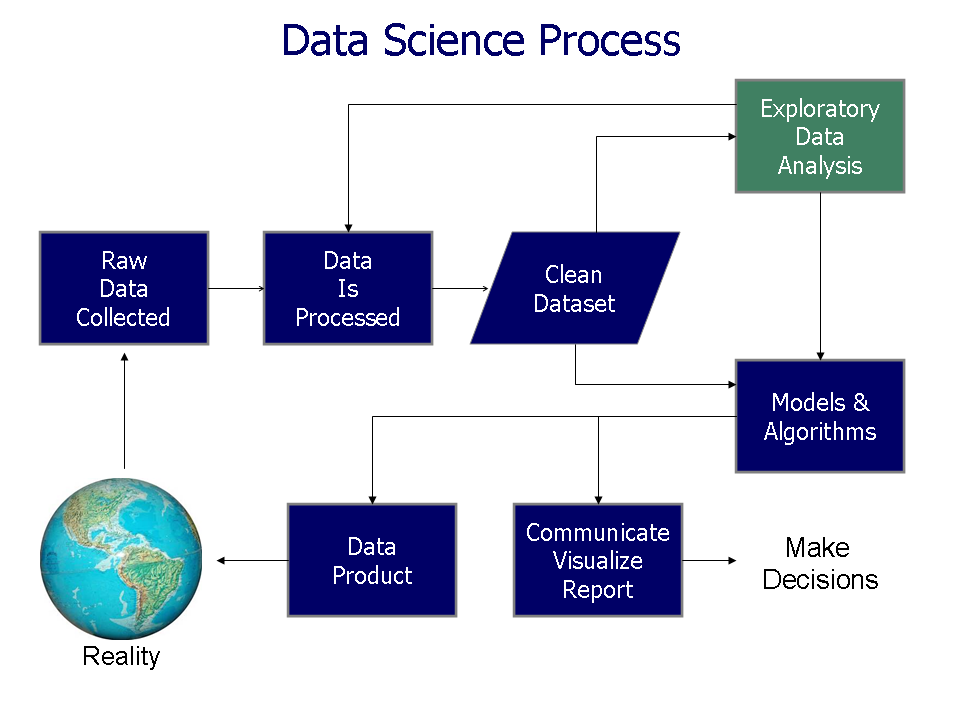
While the details can vary, the general workflow looks like this:
-
Data Collection: First, you need data. This could be anything from customer purchase histories and stock market prices to images and text documents.
-
Data Preparation: Raw data is often messy. This step involves cleaning the data to handle missing values or errors and formatting it in a way the machine can understand.
-
Modeling: This is where the learning happens. You select a suitable algorithm and train it on your prepared data. The machine crunches through the examples, adjusting its internal parameters to find patterns.
-
Evaluation: Once the model is trained, you need to check how well it performs. You test it on new data it hasn't seen before to see if its predictions are accurate.
-
Deployment & Monitoring: If the model performs well, it can be put into a live application. From there, it's monitored to ensure it continues to work as expected, and it may be retrained with new data over time.
This cycle allows data scientists to build powerful systems that can adapt and improve as they are exposed to more information.
What is the fundamental difference between how machine learning and traditional programming solve problems?
Which of the following scenarios is the best fit for a machine learning approach instead of traditional programming?