Machine Learning Fundamentals
Introduction to Machine Learning
What Is Machine Learning?
Machine learning is a way of teaching computers to find patterns. Instead of programming a computer with a huge set of specific rules for every possible situation, you give it a lot of data and let it figure out the rules for itself.
Think about how a small child learns to recognize a cat. You don't give them a list of rules like, "If it has pointy ears, whiskers, a tail, and says 'meow,' it's a cat." Instead, you just point out cats. "Look, a cat." "There's another cat." Over time, the child's brain learns the pattern of what a "cat" is. Machine learning works in a similar way.
This ability to learn from data is what makes machine learning so powerful. It's used everywhere, from your email's spam filter to the recommendation engine that suggests what you should watch next on a streaming service.
At its core, machine learning is the process of using data to answer questions.
AI vs Machine Learning
People often use the terms Artificial Intelligence (AI) and Machine Learning (ML) interchangeably, but they aren't the same thing. AI is the broader concept of creating intelligent machines that can simulate human thinking and behavior. Machine learning is a subset of AI—it's one of the primary methods used to achieve artificial intelligence.
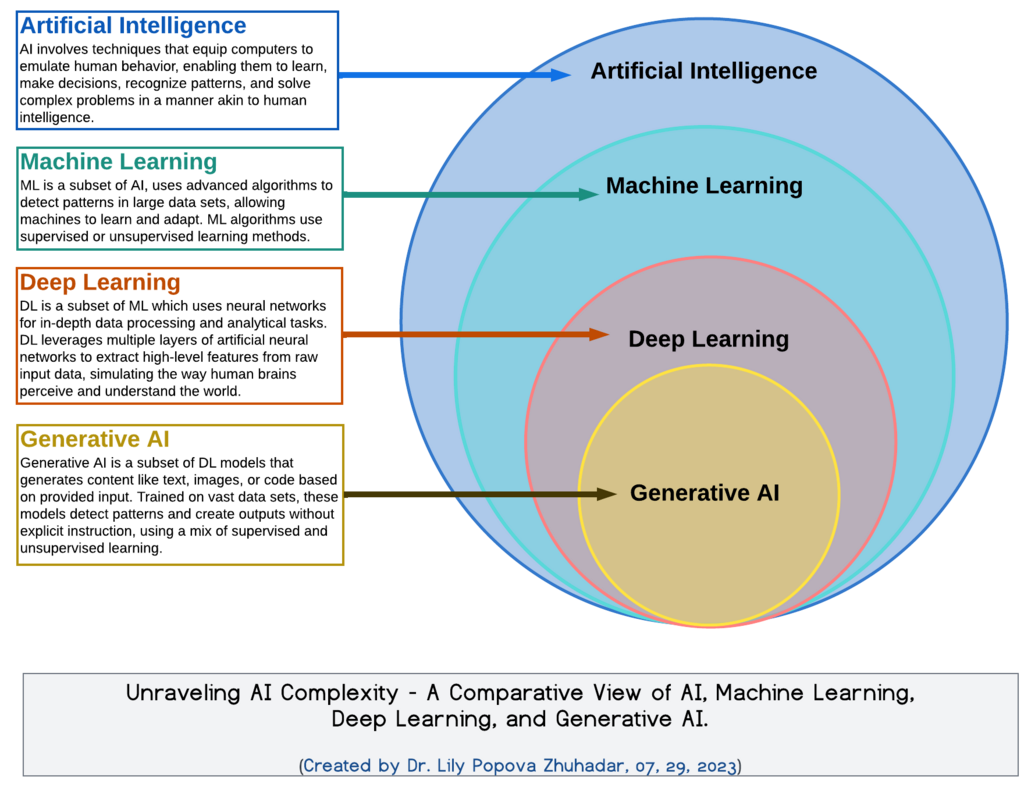
AI encompasses anything from a simple rule-based chatbot to an advanced robot. ML, on the other hand, is specifically about systems that learn and improve from experience without being explicitly programmed. So, while all machine learning is AI, not all AI is machine learning.
Types of Machine Learning
Machine learning can be broken down into three main categories, based on how the system learns.
Supervised Learning
noun
The machine learns from data that is labeled with the correct answers. It's like studying for a test with a complete answer key.
In supervised learning, the goal is to predict an outcome based on input data. For example, you could feed a model thousands of pictures of animals, each labeled as either "cat" or "dog." The model learns the visual patterns associated with each label. Eventually, it can look at a new, unlabeled picture and predict whether it's a cat or a dog.
Unsupervised Learning
noun
The machine is given unlabeled data and must find patterns or structures on its own. It's like being given a box of mixed Lego bricks and asked to sort them into piles without instructions.
Here, there are no right answers given. The algorithm explores the data and draws inferences. For instance, a retail company might use unsupervised learning to group its customers into different segments based on their purchasing behavior. This helps the company understand its customer base better and tailor marketing strategies.
Reinforcement Learning
noun
The machine learns by performing actions and receiving rewards or penalties. It's learning through trial and error.
This type of learning is modeled on how humans and animals learn. An algorithm, or "agent," interacts with an environment. It tries different actions and learns which ones yield the best outcomes over time. Self-driving cars use reinforcement learning to make decisions about steering and braking, getting positive rewards for staying on the road and negative ones for collisions.
The Machine Learning Workflow
While the details can get complex, most machine learning projects follow a similar high-level process. This ensures that the final model is effective and reliable.
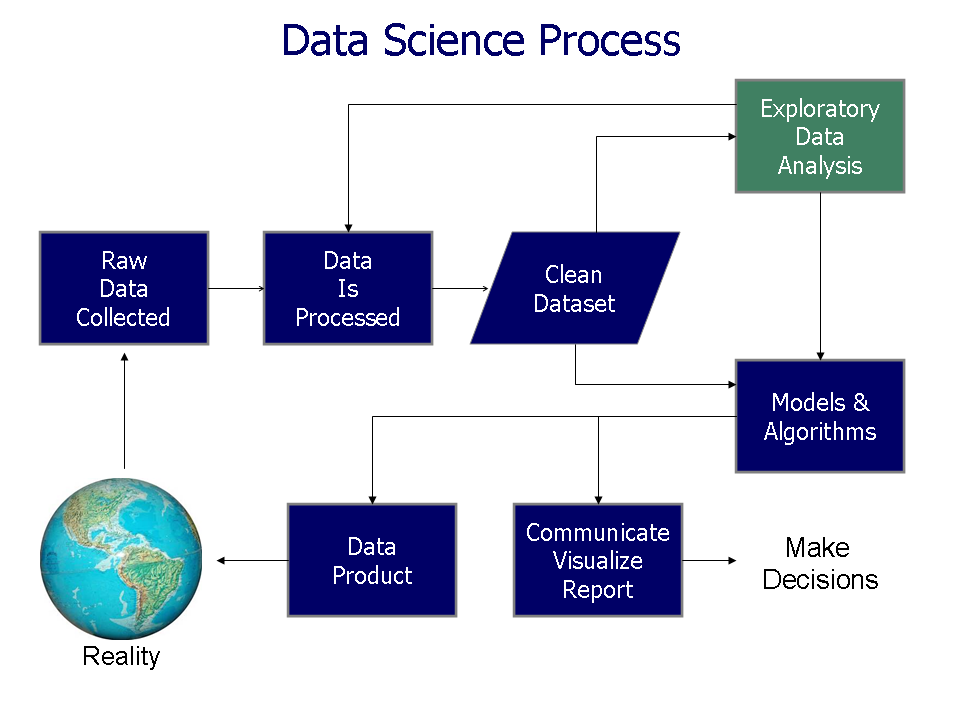
Here are the typical steps:
-
Data Collection: The first step is to gather the data needed for the project. This could be anything from customer purchase histories and website clicks to medical images or sensor readings.
-
Data Preparation: Real-world data is messy. This step involves cleaning the data by fixing errors, handling missing values, and formatting it in a way the machine learning model can understand. This is often the most time-consuming part of the process.
-
Model Training: This is where the learning happens. The prepared data is fed into the chosen algorithm, which adjusts its internal parameters to find patterns. For supervised learning, this means learning the mapping from inputs to the correct outputs.
-
Model Evaluation: Once the model is trained, you need to check how well it works. This is done by testing it on a separate set of data it has never seen before. This evaluation shows how accurately the model will perform on new, real-world data.
-
Deployment & Monitoring: If the model performs well, it's deployed into a live environment where it can start making predictions. The work doesn't stop there; the model is continuously monitored to ensure it remains accurate over time.
Let's test your understanding of these core concepts.
Which statement best describes the core principle of machine learning?
A streaming service wants to recommend new movies to users based on their past viewing history. The service has data on which movies users have liked and disliked. Which type of machine learning is most appropriate for this task?