Machine Learning From Scratch
Introduction to Machine Learning
What Is Machine Learning?
Imagine you want to write a program to identify spam emails. With traditional programming, you'd have to create a long list of rules. You might tell the computer: "If the email contains the words 'free,' 'viagra,' or 'winner,' mark it as spam." This is like following a very specific recipe. It works, but it's brittle. What happens when spammers start using the word 'fr33' instead?
Machine learning takes a different approach. Instead of giving the computer a recipe, you give it examples. You show it thousands of emails you've already marked as spam and thousands you've marked as not spam. The machine's job is to learn the patterns on its own. It's not just looking for specific words, but for combinations of features, sender reputations, and other signals that, together, suggest an email is spam. It learns to cook by tasting the final dishes, not by reading the recipe.
Machine learning is the process of teaching a computer to make predictions or decisions by finding patterns in data, rather than being explicitly programmed with rules.
This highlights the most crucial ingredient in machine learning: data. Without good data, a machine learning model has nothing to learn from. The more relevant and high-quality data you provide, the better the model becomes at its task. Data is the textbook from which the machine studies.
Types of Machine Learning
Machine learning isn't a single technique; it's a broad field with several distinct approaches. The three main types are supervised, unsupervised, and reinforcement learning. Each is suited for different kinds of problems.
Supervised Learning
noun
A type of machine learning where the model is trained on labeled data, meaning each data point is tagged with the correct output or answer.
Think of supervised learning as studying with flashcards. Each card has a question (the input data) and an answer on the back (the label). For example, a picture of a cat would be labeled "cat." The model's goal is to learn the relationship between the inputs and their corresponding outputs so it can correctly label new, unseen data.
This is used for tasks like predicting house prices based on features like square footage and location, or identifying cancerous tumors in medical images based on a dataset of labeled scans.
Next is unsupervised learning.
Unsupervised Learning
noun
A type of machine learning where the model works with unlabeled data to find hidden patterns or structures on its own.
If supervised learning is studying with flashcards, unsupervised learning is being given a big box of mixed Lego bricks and being told to sort them. There are no labels or instructions. You might group them by color, by shape, or by size. The goal is to find the inherent structure in the data.
This is useful for tasks like grouping news articles into topics, identifying distinct customer segments for marketing, or detecting unusual activity on a network that might signal an attack.
Finally, there's reinforcement learning.
Reinforcement Learning
noun
A type of machine learning where an agent learns to make decisions by performing actions in an environment to achieve a goal. It learns from the consequences of its actions through trial and error.
This is like teaching a dog a new trick. When the dog performs the correct action (like sitting), it gets a reward (a treat). When it does the wrong thing, it gets a penalty (or at least, no treat). Over time, the dog learns which actions maximize its rewards.
A reinforcement learning "agent" works the same way. It takes actions in an "environment," and receives rewards or penalties based on those actions. It doesn't have labeled data, but it gets feedback. This is the primary method used to train AIs to play complex games like Go or to control self-driving cars, where the agent learns to navigate traffic to reach a destination safely and efficiently.
Real-World Applications
Machine learning is no longer a niche academic field; it's woven into the fabric of our daily digital lives. Every time you use a service that seems to know what you want, you're likely interacting with an ML model.
- Recommendation Engines: Netflix, YouTube, and Spotify analyze your viewing and listening history to suggest new content you might like (unsupervised and supervised learning).
- Voice Assistants: Siri, Alexa, and Google Assistant use machine learning to understand your spoken commands and respond appropriately (supervised learning).
- Medical Diagnosis: Models can analyze medical images like X-rays and MRIs to detect signs of disease, sometimes more accurately than human experts (supervised learning).
- Financial Trading: Algorithms can predict stock market fluctuations and execute trades based on vast amounts of real-time data (reinforcement and supervised learning).
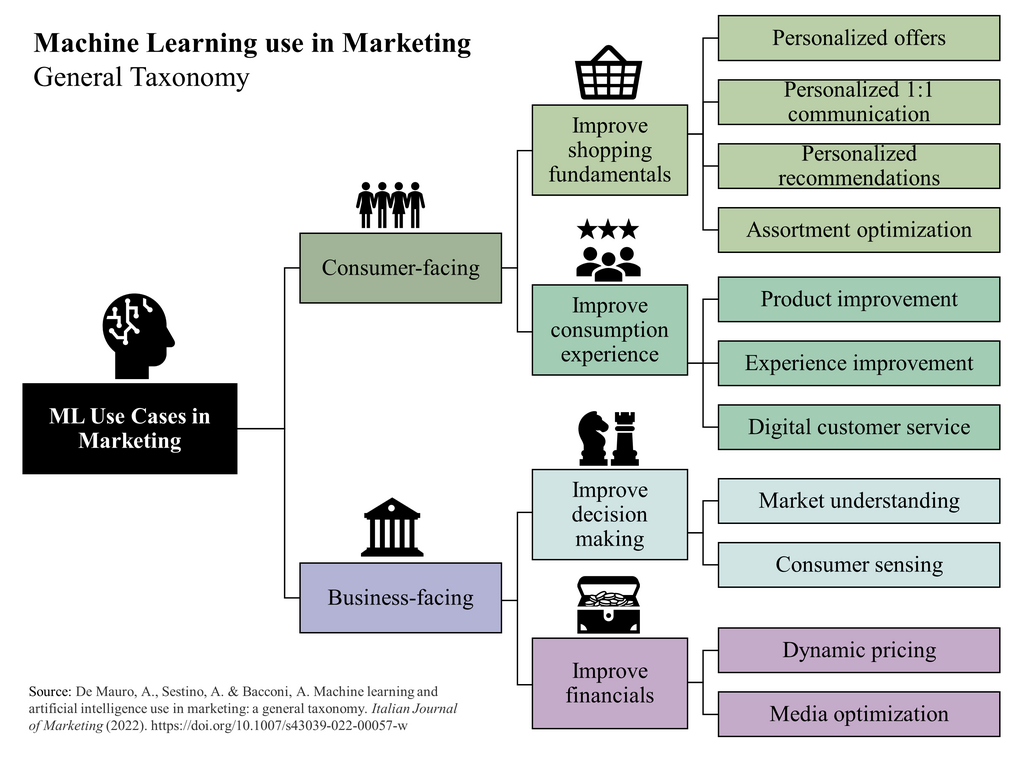
Now that you understand what machine learning is and the different ways it works, you're ready to see how these concepts are put into practice.
Let's check your understanding of these fundamental concepts.
What is the primary difference between the machine learning approach and the traditional programming approach to a task like identifying spam emails?
A bank wants to build a system that analyzes transaction data to find unusual patterns that might indicate fraud. Since there are no pre-labeled examples of 'fraudulent' vs 'non-fraudulent' patterns, the system must find the structure on its own. Which type of machine learning is best suited for this task?
With this foundation, you have the core vocabulary to explore the world of machine learning.