Machine Learning from Scratch
Introduction to Machine Learning
What Is Machine Learning?
At its core, machine learning is a way of teaching computers to learn from data. Instead of writing explicit, step-by-step instructions for every possible task, we create algorithms that allow a computer to find patterns and make decisions on its own. It's a subfield of artificial intelligence (AI) that focuses on building systems that can learn and improve from experience.
Think of it like this: you didn't learn to recognize a cat because someone described it to you with a set of rules. You learned by seeing many examples of cats. Machine learning works in a similar way, by showing a computer thousands or even millions of examples.
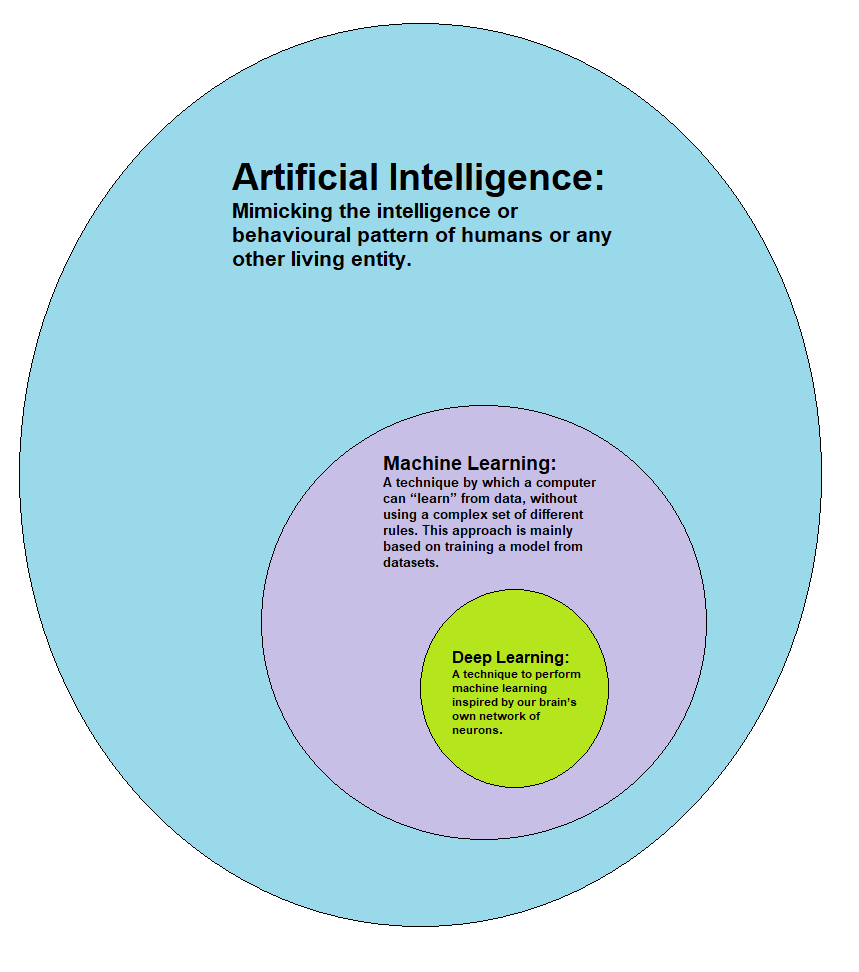
This ability to learn from data without being explicitly programmed is what makes machine learning so powerful. It allows us to tackle complex problems where the rules are either too complicated to write down or are constantly changing.
Why It Matters
Machine learning isn't just a futuristic concept; it's already a part of your daily life. When your email service automatically filters out spam, that's machine learning at work. The system has learned to identify the characteristics of junk mail based on millions of previous examples.
When a streaming service recommends a new show you might like, it's using machine learning to analyze your viewing history and compare it to users with similar tastes. Other applications are changing entire industries, from predicting stock market trends and diagnosing diseases from medical images to powering the navigation systems in self-driving cars. It helps us find meaningful patterns in vast amounts of data that would be impossible for a human to sift through.
Three Main Flavors
Machine learning is generally broken down into three main categories, each defined by the way the computer learns.
The most common type is supervised learning. Here, we provide the algorithm with a dataset that has already been labeled with the correct answers. For example, to train a model to identify cats in photos, we would feed it thousands of images labeled "cat" and thousands labeled "not cat." The model learns the relationship between the input images and the output labels. The goal is for it to accurately label new, unseen photos.
Next is unsupervised learning. In this case, the data has no labels. The goal isn't to predict a known outcome, but to find hidden structures or patterns within the data itself. A common application is customer segmentation, where a business might use unsupervised learning to group its customers into different marketing segments based on their purchasing behavior, without knowing in advance what those groups will be.
Finally, there's reinforcement learning. This type of learning is inspired by how humans and animals learn: through trial and error. An algorithm, often called an "agent," learns to achieve a goal in a complex environment. It makes decisions and receives feedback in the form of rewards or penalties. For example, a reinforcement learning model can learn to play a video game by being rewarded for a high score and penalized for losing. Over many attempts, it figures out the best strategies to maximize its reward.
Ready to check your understanding? Let's see what you've learned about the basics of machine learning.
What is the primary goal of machine learning?
An e-commerce company wants to group its customers into distinct segments based on their purchasing habits, but it does not have any predefined categories for these groups. Which type of machine learning would be most suitable for this task?
These three types of learning form the foundation for nearly all modern machine learning applications, from the simple to the incredibly complex.