LLMs and Reinforcement Learning Explained
Introduction to Large Language Models
What Are Large Language Models?
At its core, a Large Language Model (LLM) is an AI designed to understand and generate human-like text. Think of it as an incredibly advanced autocomplete. By analyzing vast amounts of text from the internet, books, and other sources, it learns the patterns, grammar, context, and nuances of language.
The fundamental task of an LLM is to predict the next word in a sequence. From this simple goal, complex abilities like writing essays, translating languages, and answering questions emerge.
This capability makes LLMs powerful tools for a wide range of natural language processing (NLP) tasks. They can summarize long documents, create marketing copy, write computer code, and even hold a conversation. By processing a user's input, or "prompt," they generate relevant and coherent text as a response.
A Brief History
The concept of language modeling has been around for decades, but early models were limited. The real breakthrough came with the development of a new architecture and the availability of massive datasets and powerful computers. A key milestone was the introduction of the Transformer model in 2017, which revolutionized how machines process language.
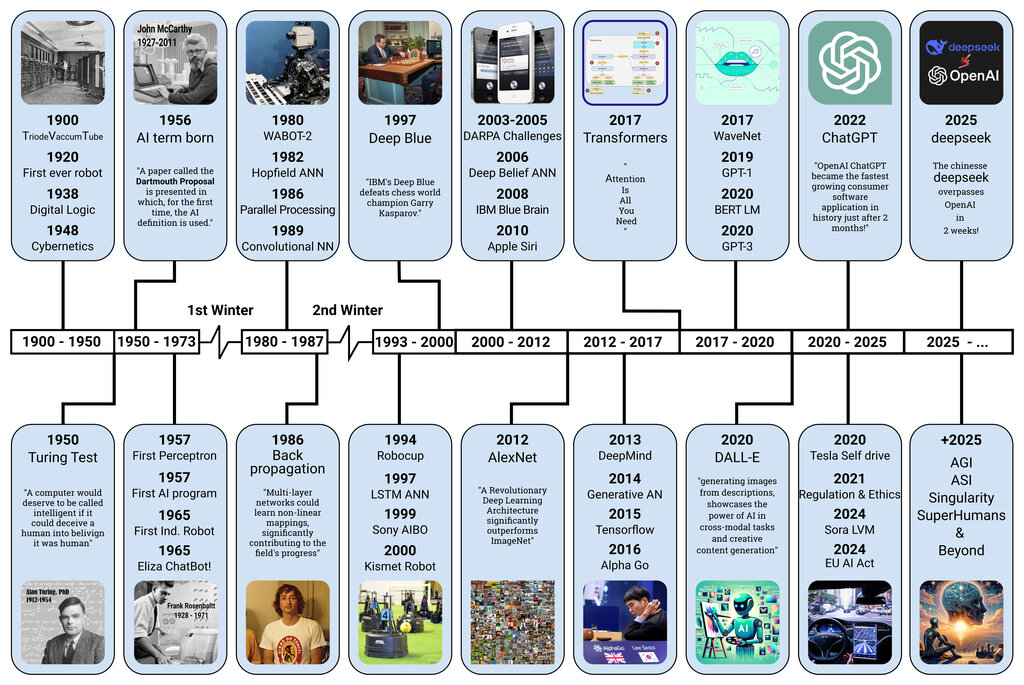
This innovation paved the way for models like OpenAI's GPT (Generative Pre-trained Transformer) series, Google's PaLM (Pathways Language Model), and Anthropic's Claude. Each new model has pushed the boundaries of what's possible, becoming more capable and fluent. These advancements have had a significant impact on technology, business, and creative fields.
The Transformer Architecture
The engine behind most modern LLMs is the Transformer architecture. Before the Transformer, models processed text sequentially, word by word. This was like reading a sentence through a narrow slit, making it hard to grasp the full context, especially in long sentences.
The Transformer can process all words in a sentence simultaneously. Its key innovation is the "attention mechanism," which allows the model to weigh the importance of different words when processing a particular word. It can learn that in the sentence "The dog chased the cat up the tree, and it was scared," the word "it" refers to the "cat," not the "dog" or the "tree."
This architecture generally consists of two parts: an encoder and a decoder. The encoder reads the input text and builds a numerical representation that captures its meaning. The decoder then uses this representation to generate the output text, one word at a time.
Training and Fine-Tuning
Creating an LLM is a two-step process: pre-training and fine-tuning.
1. Pre-training: This is where the model develops its general understanding of language. It's trained on a massive and diverse dataset of text and code. The training process can take months and requires enormous computational resources. The model learns grammar, facts, reasoning abilities, and even some biases from this data.
2. Fine-tuning: After pre-training, the general model is like a brilliant student who has read a library but hasn't specialized. Fine-tuning adapts the model to specific tasks, such as medical question answering or customer support. This is done by training it further on a smaller, more focused dataset. For example, a model could be fine-tuned on a collection of legal documents to become a legal assistant, or on a company's internal knowledge base to answer employee questions.
Fine-tuning makes a general-purpose model into a specialized expert, improving its accuracy and relevance for a particular application without having to retrain it from scratch.
Time to check your understanding of these core concepts.
What is the core capability of a Large Language Model (LLM)?
Which architectural innovation was a key breakthrough for modern LLMs, allowing them to process words simultaneously rather than sequentially?
Large Language Models are powerful tools that are rapidly changing how we interact with information and technology. Understanding their basic principles is the first step to harnessing their capabilities.