LLM Differences Explained
Introduction to Large Language Models
What Is a Large Language Model?
At its core, a large language model, or LLM, is a powerful text prediction engine. Think of the autocomplete on your phone, but on a massive scale. It's an AI system that has been trained on a vast amount of text and data from the internet, books, and other sources.
This extensive training allows it to understand the patterns, grammar, context, and nuances of human language. Its primary purpose is to process, understand, and generate text that is coherent and contextually relevant. The "large" in its name refers to two things: the enormous size of the dataset it learns from and the millions or billions of parameters within the model itself. These parameters are like adjustable knobs that the model tunes during training to capture the complexities of language.
Large language models (LLMs) are AI systems that understand and create human language, doing tasks like summarizing articles, answering questions, writing code, and more.
By learning the relationships between words and concepts, LLMs can perform a wide range of tasks that require linguistic intelligence.
The Engine Inside: Transformers
The technology that makes modern LLMs so effective is called the transformer architecture. Introduced in 2017, it solved a major problem that older models faced: understanding long-range context. Early models struggled to remember information from the beginning of a long paragraph by the time they reached the end.
Transformers changed the game with a mechanism called self-attention. This allows the model to weigh the importance of different words in the input text when processing information. As it reads a sentence, it can pay more attention to the words that are most relevant to understanding the meaning of each specific word. For example, in the sentence "The robot picked up the heavy box because it was strong," the attention mechanism helps the model figure out that "it" refers to the "robot," not the "box."
A transformer is typically composed of two main parts: an encoder and a decoder. The encoder's job is to read and understand the input text. The decoder then takes that understanding and generates the output, one word at a time, while constantly paying attention to the original input and the words it has already produced.
What Can LLMs Do?
Thanks to the transformer architecture and massive training data, LLMs are incredibly versatile. They form the foundation for a wide range of natural language processing (NLP) applications.
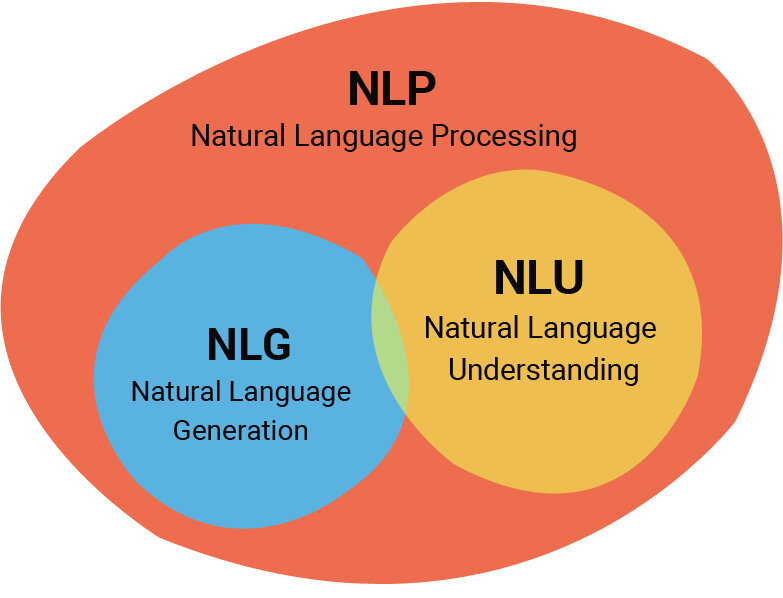
Some common applications include:
- Text Generation: Writing essays, emails, poems, and even computer code.
- Summarization: Condensing long articles or documents into key points.
- Translation: Translating text from one language to another with impressive accuracy.
- Question Answering: Providing direct answers to questions based on a given context or their learned knowledge.
- Sentiment Analysis: Determining the emotional tone of a piece of text, such as a customer review.
- Chatbots and Conversational AI: Powering sophisticated digital assistants that can hold natural, helpful conversations.
Essentially, LLMs are general-purpose language tools. Their ability to understand and manipulate text makes them a fundamental building block for countless AI-powered applications that are changing how we interact with information and technology.
Now that you have a sense of what LLMs are, let's test your understanding.
What is the core function of a large language model (LLM)?
The "large" in Large Language Model primarily refers to the size of the training dataset and the number of model parameters.
Understanding these core concepts provides the groundwork for exploring more specific and advanced language models.