Linear Programming Essentials
Introduction to Linear Programming
What is Linear Programming?
Linear programming is a mathematical tool for making the best possible decision when faced with limits. Imagine you run a small bakery. You have a limited amount of flour, sugar, and oven time. You want to bake cakes and cookies to make the most profit. How many of each should you make? This is exactly the kind of problem linear programming is designed to solve.
It helps find the optimal outcome, like maximum profit or lowest cost, in a situation where the requirements are represented by linear relationships. The “linear” part is key. It means the relationships between the variables are straightforward, like a straight line on a graph. There are no curves or sudden jumps.
In short, linear programming is a method for optimizing a desired outcome, subject to a set of constraints.
A Brief History
The foundations of linear programming were laid in the 1930s and 1940s. Its development accelerated during World War II, when military planners used it to solve complex logistical problems. They needed to figure out how to deploy troops and supplies in the most efficient way possible to support the war effort.
After the war, the methods were applied to a wide range of peacetime problems. In 1947, mathematician George Dantzig developed the simplex algorithm, a systematic procedure for solving linear programming problems. This breakthrough made it practical to solve large-scale problems and opened the door for its use across many industries.
Where Is It Used?
Today, linear programming is a cornerstone of operations research and is used everywhere, from scheduling flights to routing deliveries. It's a powerful tool for any situation involving resource allocation.
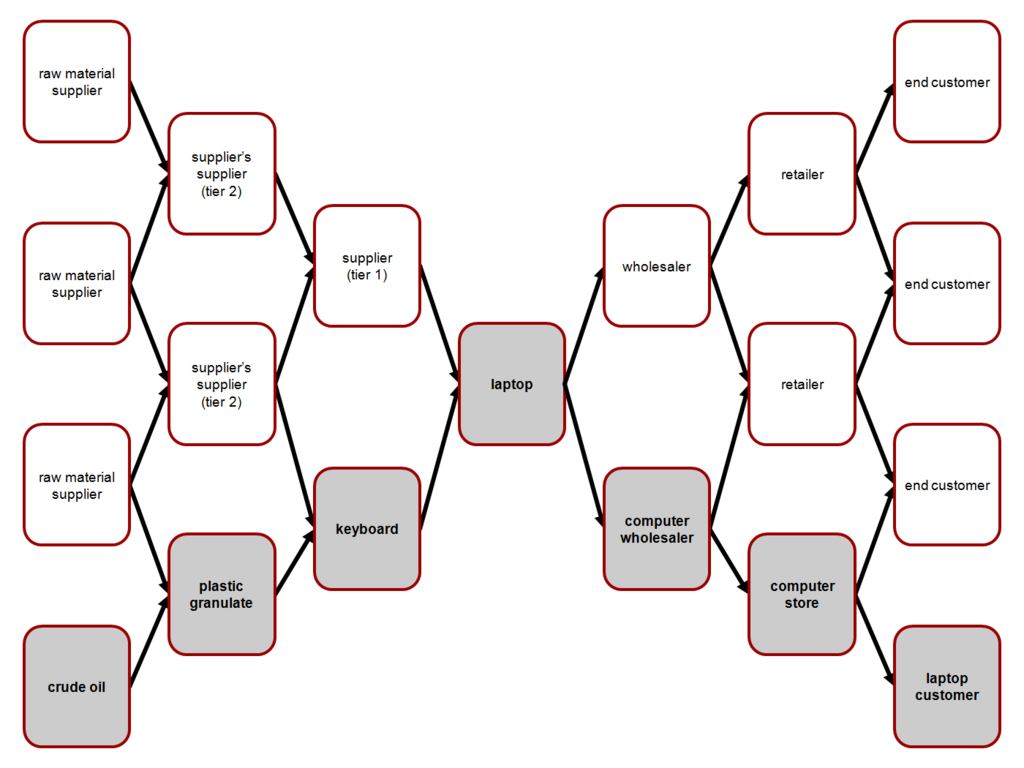
Companies use it to manage their supply chains, deciding where to build warehouses, how to route trucks, and how much inventory to keep. In manufacturing, it helps determine the most efficient production schedule to meet demand while minimizing costs. Financial analysts even use it to create investment portfolios that maximize returns for a given level of risk.
| Industry | Example Application |
|---|---|
| Manufacturing | Production Planning |
| Logistics | Vehicle Routing |
| Finance | Portfolio Optimization |
| Energy | Power Grid Management |
| Telecommunications | Network Design |
Problems LP Can Solve
Linear programming is best suited for a specific class of optimization problems. These generally involve allocating limited resources to achieve a particular goal.
Quantitative methods like linear programming help managers allocate scarce resources in an optimum manner while solving the problems involved in scheduling, product mix determination, and so on.
Here are a few classic examples:
- Resource Allocation: A company has a set budget for advertising across different channels like TV, radio, and online ads. Linear programming can determine how much to spend on each channel to maximize reach.
- Production Planning: A factory can produce several different products, each requiring different amounts of labor and materials. LP can find the production mix that maximizes profit, given the constraints on resources.
- Scheduling: An airline needs to create flight schedules for its pilots and crew that meet labor regulations and minimize costs. LP helps find the most efficient schedules.
By providing a mathematical framework for these decisions, linear programming turns complex challenges into solvable problems.
What is the primary goal of linear programming?
The development of linear programming was significantly accelerated by its application in which historical context?