Learn Basic Mandarin Chinese
Pinyin and Tones
What is Pinyin?
Before diving into Chinese characters, you need a way to pronounce them. That's where Pinyin comes in. It's the official system for writing Mandarin sounds using the Roman alphabet, the same one used for English. Think of it as a bridge that connects the sounds you hear to the characters you'll eventually read and write. For any beginner, mastering Pinyin is the essential first step.
Pinyin isn't a replacement for Chinese characters. It's a pronunciation guide.
The Four Tones
Mandarin Chinese is a tonal language. This means the pitch of your voice can completely change a word's meaning, even if the pronunciation of the consonants and vowels stays the same. The syllable "ma" can mean mother, hemp, horse, or scold, all depending on the tone you use.
There are four main tones, plus a fifth neutral tone.
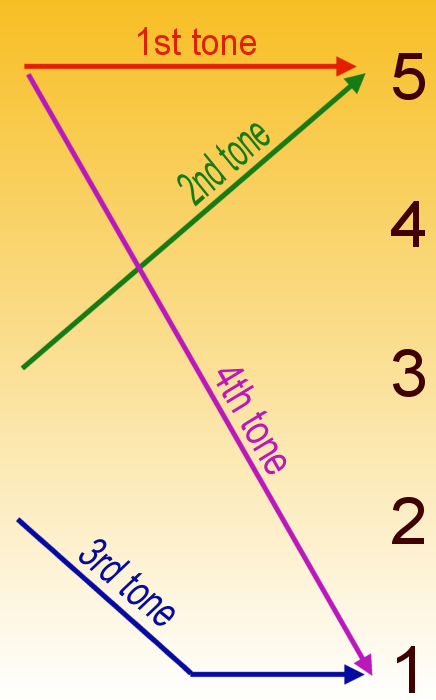
Here’s a breakdown of each tone:
- First Tone (High and Flat): Your voice stays high and level, like you're holding a single, high musical note. The Pinyin mark is a straight line: .
- Second Tone (Rising): Your voice starts at a medium pitch and rises, like you're asking a question. The mark is a rising line: .
- Third Tone (Dipping): Your voice starts mid-range, dips down, then rises again. In practice, especially in a sentence, you often only pronounce the low, dipping part. The mark is a dipping curve: .
- Fourth Tone (Falling): Your voice starts high and drops sharply, like a quick, firm command. The mark is a falling line: .
There's also a Neutral Tone, which has no mark. It’s short, light, and unstressed. Its pitch depends on the tone that comes before it.
| Tone | Pinyin | Sound | Meaning |
|---|---|---|---|
| 1st Tone | mā | high, level | 妈 (mother) |
| 2nd Tone | má | rising | 麻 (hemp) |
| 3rd Tone | mǎ | dipping | 马 (horse) |
| 4th Tone | mà | falling | 骂 (to scold) |
| Neutral Tone | ma | light | 吗 (question particle) |
Tone Pairs and Practice
Tone marks are written above the main vowel of a Pinyin syllable. Getting the tones right is crucial because it can be the difference between buying something and selling it, or asking a question and kissing someone.
Let's look at some examples where only the tone changes the meaning.
to buy
to sell
Here's another one. Be careful with this pair!
问 (wèn) means "to ask," while 吻 (wěn) means "to kiss."
Common Tone Change Rules
As you start speaking, you'll notice that tones can sometimes change depending on what other tones are around them. These are called "tone sandhi" rules. You don't need to memorize them all at once, but it's good to know the most common ones.
The most important rule involves two third tones in a row. When two 3rd-tone syllables are next to each other, the first one changes to a 2nd tone. The classic example is the word for "hello."
Although it's pronounced as a second tone, the Pinyin is still written with the original third tone mark: nǐ hǎo.
Two other characters with special tone rules are 一 (yī, one) and 不 (bù, not/no). Their tones can change based on the syllable that follows. For now, just be aware that these changes exist. You'll get a feel for them naturally as you listen and speak more.
Let's check your understanding of these core concepts.
What is the primary function of Pinyin in learning Mandarin Chinese?
Why are tones crucial in Mandarin Chinese?
Getting comfortable with Pinyin and tones is the foundation for everything else in Mandarin. Practice them a little every day, and you'll build the muscle memory you need to speak clearly and confidently.