Kubernetes Fundamentals
Introduction to Kubernetes
The Rise of Application Orchestration
Not long ago, running an application meant dedicating an entire physical server to it. This was simple but incredibly inefficient. If your application only used 10% of the server's power, the other 90% went to waste. It was like buying a whole bus just to drive yourself to work.
Then came virtualization. We could run multiple virtual machines (VMs) on a single physical server, each with its own operating system and application. This was a huge improvement, allowing for much better resource use. But VMs are still bulky; each one carries the weight of a full OS.
The next step was containerization. Containers are lightweight, portable packages that bundle an application's code with all its dependencies. They share the host server's operating system, making them much faster and more efficient than VMs. Suddenly, developers could build and ship applications that would run reliably anywhere.
This led to a new way of building software: microservices. Instead of one giant, monolithic application, developers started breaking it down into a collection of smaller, independent services. Each service could be developed, deployed, and scaled on its own, often in its own container. This is great for agility, but it creates a new problem. How do you manage hundreds, or even thousands, of containers running all these different services?
This is where Kubernetes comes in. It's a system for automating the deployment, scaling, and management of these containerized applications. Think of it as the conductor of an orchestra, ensuring all the different instruments (containers) play together in harmony.
What Kubernetes Does
Kubernetes is an open source container orchestration platform that automates many of the manual processes involved in deploying, managing, and scaling containerized applications.
At its core, Kubernetes (often abbreviated as K8s) takes a set of instructions from you—a configuration file describing what your application should look like—and works to make it a reality. You tell it you need three copies of your web server container and one copy of your database container. Kubernetes finds the right servers, starts the containers, and makes sure they can talk to each other.
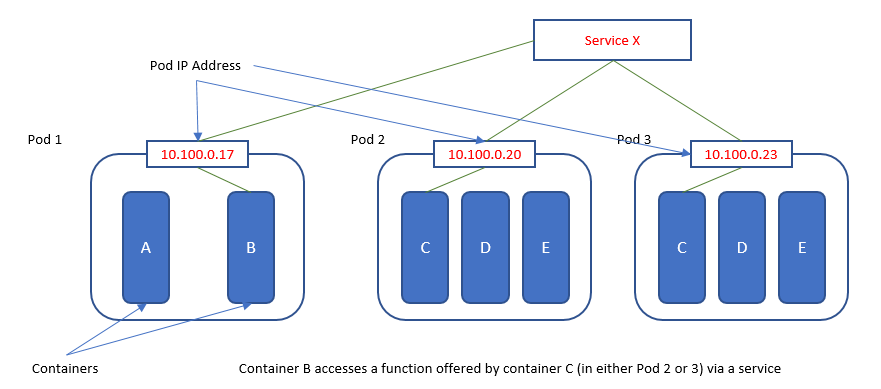
But it doesn't stop there. Kubernetes constantly monitors the state of your application. If a container crashes, Kubernetes automatically restarts it. This is called self-healing.
If your website suddenly gets a surge of traffic, you can tell Kubernetes to scale up the number of web server containers from three to thirty. It will handle the rest, distributing the load across all of them. When traffic dies down, you can scale back just as easily.
This automation removes a massive amount of manual work and complexity, allowing development teams to focus on building features instead of managing infrastructure.
Key Benefits
Using an orchestrator like Kubernetes provides several powerful advantages for modern applications.
Automatic Scaling: Easily adjust the number of running containers based on demand, ensuring performance without wasting resources.
This means your application can handle unexpected spikes in traffic without manual intervention. It's an efficient way to manage costs, as you only pay for the resources you're actually using.
High Availability: If a container or even a whole server fails, Kubernetes automatically reroutes traffic and starts new containers elsewhere to keep your application running.
This creates resilient, fault-tolerant systems. Kubernetes is designed to handle failures gracefully, which is critical for any application that needs to be online 24/7.
Service Discovery and Load Balancing: Kubernetes automatically assigns network addresses to containers and distributes traffic among them, so you don't have to manually configure networking.
As you add or remove containers, Kubernetes keeps track of them and ensures traffic flows smoothly. This simplifies the otherwise complex task of connecting different microservices together.
In short, Kubernetes provides a robust framework for running applications in a modern, scalable, and reliable way.