JD Program Essentials
Introduction to Legal Systems
The Three Branches of Government
The U.S. legal system is built on a framework that divides power among three distinct branches of government. This separation of powers ensures that no single part of the government becomes too dominant. Each branch has its own responsibilities, creating a system of checks and balances.
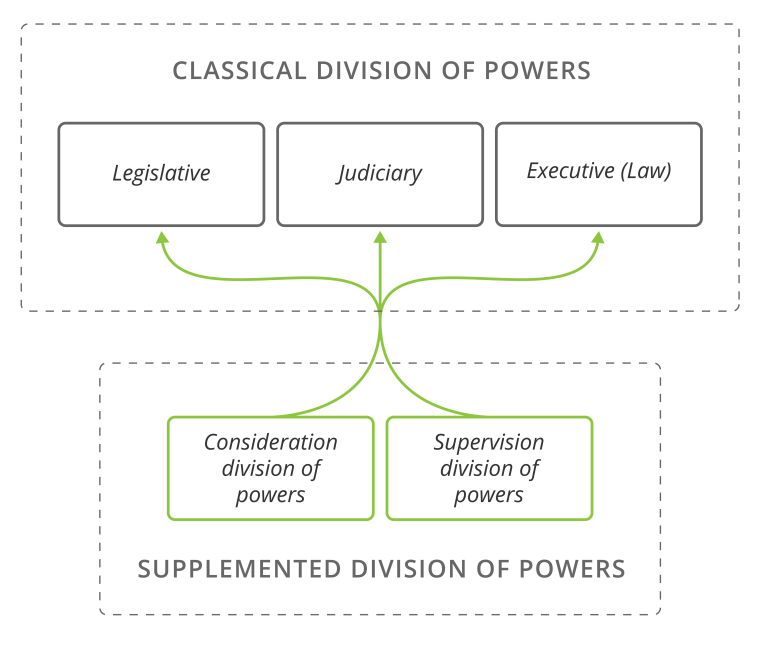
First is the Legislative Branch, which is Congress. Its primary job is to create our laws. Think of Congress as the rule-writers for the country. It is composed of two parts: the Senate and the House of Representatives.
Next is the Executive Branch, headed by the President. This branch is responsible for enforcing the laws that Congress makes. It includes federal agencies, like the Environmental Protection Agency (EPA) and the Food and Drug Administration (FDA), which carry out the day-to-day work of the government.
Finally, the Judicial Branch is our court system. Its role is to interpret the laws and resolve legal disputes. When there's a question about what a law means or whether it has been broken, the courts provide the answer. This branch ensures that laws are applied fairly.
Where Do Our Laws Come From?
Laws don't just appear out of thin air. They originate from several sources, each playing a different role in shaping our legal landscape.
Statute
noun
A written law passed by a legislative body.
The most common source is statutes. These are the laws passed by Congress at the federal level and by state legislatures at the state level. When you hear about a new bill being signed into law, that's a statute being created. For example, the Civil Rights Act of 1964 is a federal statute that prohibits discrimination.
Not every detail of how a law should work is spelled out in a statute. That's where regulations come in.
Regulations are rules created by executive agencies to implement statutes. Congress might pass a broad law—for instance, requiring clean drinking water—but it will delegate the specifics to an agency like the EPA. The EPA then creates detailed regulations, such as setting the maximum allowable level of a certain contaminant in water. These regulations have the force of law.
Case Law
noun
The law as established by the outcome of former cases.
The third source is case law, also known as common law. This type of law is made by judges. When a court decides a case, its ruling can become a guide for how similar cases should be decided in the future. This principle is called stare decisis, which means "to stand by things decided."
These judicial decisions fill in the gaps left by statutes and regulations, interpreting vague language and applying laws to new situations.
The Court System
The United States has a dual court system: a federal system and a state system. Each state has its own judicial structure to handle state laws, while the federal system handles laws passed by the U.S. Congress. While the exact structures can vary by state, both systems generally follow a three-tiered hierarchy.
-
Trial Courts: This is where cases start. Evidence is presented, witnesses testify, and a judge or jury makes an initial decision. In the federal system, these are called District Courts. State systems have various names for them, like Superior Courts or Circuit Courts.
-
Appellate Courts: If one of the parties believes there was a legal error in the trial, they can appeal the decision to a higher court. Appellate courts don't re-try the case; they review the trial court's record to see if the law was applied correctly. In the federal system, these are the Courts of Appeals, also known as Circuit Courts.
-
Supreme Courts: This is the highest court in the system, the final level of appeal. Both the federal government and each state have a supreme court. These courts have the final say on matters of law within their jurisdiction. The U.S. Supreme Court's decisions apply to the entire country and can only be overturned by a later Supreme Court decision or a constitutional amendment.
Now that you understand the basic framework, let's test your knowledge.
The U.S. Congress passes a law mandating stricter fuel efficiency standards for cars. Which branch of government would be primarily responsible for creating the specific rules and tests to enforce this law?
The body of law created by judges through their court decisions is known as ______.
These core components—the branches of government, sources of law, and court structure—form the foundation of the legal system in the United States.