JavaScript Fundamentals
Introduction to JavaScript
The Missing Piece of the Puzzle
Think of a website as a house. HTML is the framework—the walls, the floors, the roof. It gives the house its structure. CSS is the paint, the furniture, and the decorations. It provides the style and makes the house look good. For a long time, that was all a website could be: a static structure that you could look at.
But what if you could flip a light switch, open a window, or have the doorbell ring? That's where JavaScript comes in. It's the electrical wiring and plumbing of the web. It's the part that adds behavior and makes a website interactive.
JavaScript is the programming language that allows web pages to respond to user actions, turning them from static documents into dynamic applications.
When you click a button and a menu appears, that's JavaScript at work. When you fill out a form and get an instant message that your password is too weak, that's JavaScript. Image sliders, interactive maps, and animated graphics are all powered by this essential language. It runs directly in your web browser, making these interactions feel quick and seamless.

A Quick Trip Back in Time
In the mid-1990s, the web was a collection of static pages. Netscape, the creator of the most popular browser at the time, wanted to change that. They hired a programmer named Brendan Eich to create a simple language that could run in the browser and make web pages more dynamic. In 1995, in just ten days, he created the first version of what we now know as JavaScript.
It was a rush job, but it was revolutionary. To ensure the language would work across different browsers, it was later standardized under the name ECMAScript. This standard ensures that the core JavaScript language remains consistent, no matter which browser you use.
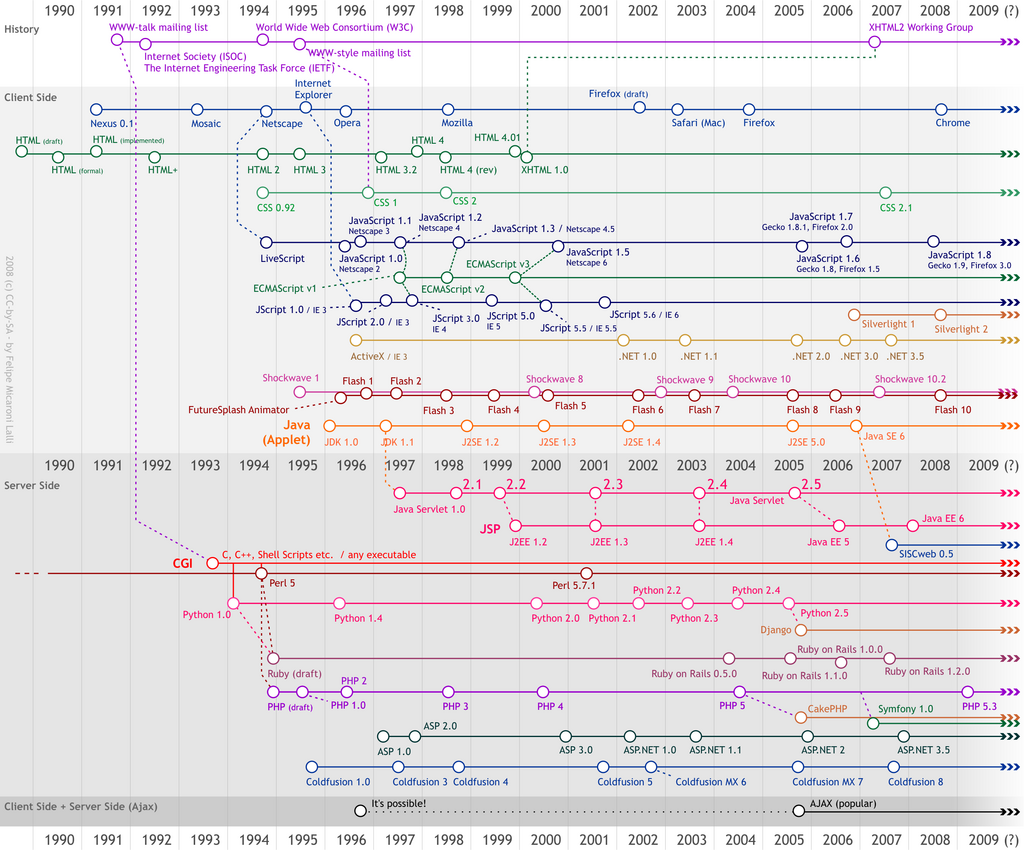
Since then, JavaScript has grown immensely. It's no longer just a simple tool for adding flair to websites. It has become a powerful, versatile language used to build entire applications, from complex front-end interfaces to server-side systems, mobile apps, and even desktop software. It’s one of the most popular and in-demand programming languages in the world.
The Three Musketeers of the Web
HTML, CSS, and JavaScript are the three core technologies of the World Wide Web. They are designed to work together, each with a distinct and crucial role.
- HTML provides the basic structure and content.
- CSS controls the presentation, formatting, and layout.
- JavaScript controls the behavior of the different elements.
This separation of concerns is a fundamental principle in web development. It keeps code organized, making it easier to manage and update websites. You typically write your JavaScript code in separate .js files and then link them to your HTML document, similar to how you link external CSS stylesheets.
When a browser loads a webpage, it first reads the HTML to understand the structure. Then it applies the CSS rules to style the content. Finally, it executes the JavaScript code to add interactivity. This allows JavaScript to manipulate the HTML and CSS of the page in real-time based on user input, time, or other events.
Using the analogy of a house to describe a website, what part represents JavaScript?
Which of the following website features is primarily controlled by JavaScript?
JavaScript transformed the web from a static medium into a dynamic and interactive experience. Understanding its role is the first step toward building modern, engaging websites.