Java Data Structures Explained
Introduction to Data Structures
What Are Data Structures?
Imagine your music collection. If all your songs were in one massive, unsorted folder, finding a specific track would be a nightmare. You'd have to scroll through everything. Now, what if you organized them by artist, then by album? Suddenly, finding what you want is fast and easy.
In programming, data structures are like those folders for your music. They are specific ways of organizing and storing data in a computer so it can be accessed and used efficiently. It’s not just about holding data; it’s about arranging it with a purpose.
A data structure is a collection of data values, the relationships among them, and the functions or operations that can be applied to the data.
Think of them as blueprints for building containers. Some containers are simple, like a shoebox where you toss things in. Others are more complex, like a filing cabinet with labeled drawers and folders. Each is designed for a different kind of task.
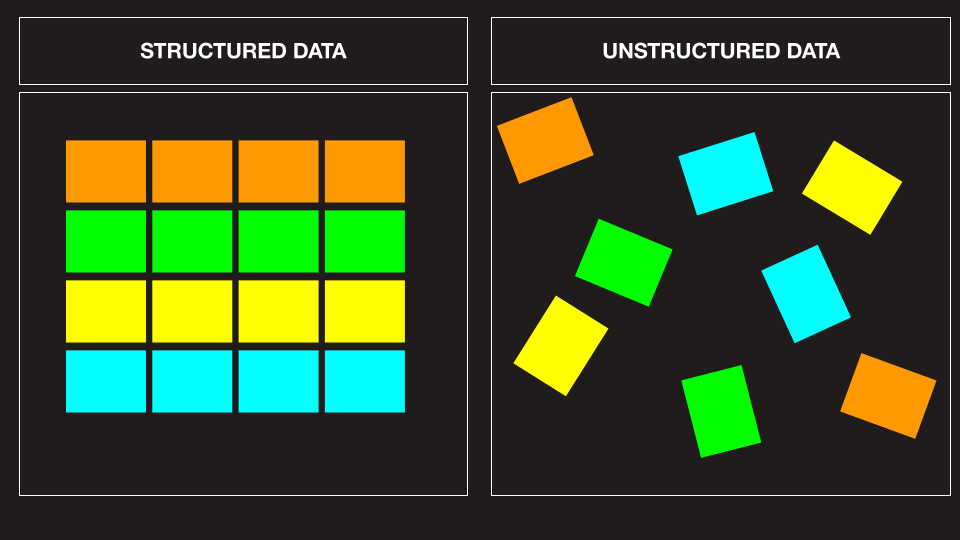
Without the right structure, even a powerful computer will struggle. A program that needs to find information quickly might become slow and clunky if its data is poorly organized. Choosing the right data structure is a fundamental part of writing efficient, scalable code.
An Overview of Structures in Java
Data structures generally fall into two main categories: linear and non-linear.
Linear data structures arrange data in a sequential order. Think of a conga line—each person is connected to the one in front and the one behind. Common examples include:
- Arrays: A fixed-size list of elements, like a row of mailboxes.
- Linked Lists: A series of elements where each one points to the next, like a scavenger hunt.
- Stacks: Data is added and removed from the top, like a stack of plates (Last-In, First-Out).
- Queues: Data is added to the back and removed from the front, like a line at a coffee shop (First-In, First-Out).
Non-linear data structures don't have a simple sequential arrangement. Data can be connected in multiple ways. Examples include:
- Trees: A hierarchical structure with a root node and branching child nodes, like a family tree.
- Graphs: A collection of nodes with edges connecting them in any way, like a map of cities and roads.
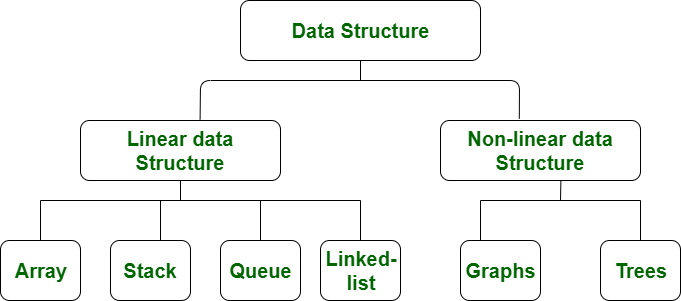
Java comes with built-in implementations for many of these, such as Array, ArrayList (a dynamic array), and LinkedList. Understanding these basic types is the first step toward building more complex applications.
Choosing the Right Tool
So, how do you pick the right data structure for your task? There's no single best option; it’s all about trade-offs. You need to think about what your program will be doing most often.
Ask yourself a few key questions:
- How will I access the data? Do you need to get to any element instantly, or will you mostly go through them in order? Arrays are great for instant access by index, while linked lists are better for sequential access.
- How often will the data change? If you're constantly adding or removing items, a structure like a
LinkedListmight be more efficient than anArray, which has a fixed size. - What is the most important operation? Are you prioritizing fast searches, quick insertions, or minimal memory usage? A
HashMap(a structure we'll cover later) is incredibly fast for searching, but it doesn't maintain the order of its elements. - Does the data have relationships? If your data is hierarchical, a tree is a natural fit. If it represents a network, a graph is the obvious choice.
The goal is to select a structure that best matches the patterns of your problem. Understanding these trade-offs is what separates a good programmer from a great one.
Let's test your understanding of these core concepts.
What is the primary purpose of a data structure in programming?
Which of the following data structures is considered non-linear?
Getting comfortable with these ideas is the foundation for everything that comes next. By choosing the right way to organize your data, you make your code faster, cleaner, and more powerful.