Introduction to Virtualization
Introduction to Virtualization
The Idea of Virtualization
Imagine you have a powerful computer. So powerful, in fact, that you only use a fraction of its capacity to run your email client and a web browser. The rest of its processing power, memory, and storage sits idle. What if you could split that single computer into several smaller, independent computers, each running its own applications? That's the core idea behind virtualization.
Virtualization refers to the process of creating a virtual version of something, such as a virtual machine (VM), virtual storage device, or virtual network.
It allows one physical machine to host multiple virtual machines (VMs). Each VM acts like a complete, self-contained computer with its own operating system (like Windows or Linux) and applications. These VMs share the resources of the physical hardware—the CPU, memory, and storage—but they are isolated from each other. A crash in one VM won't affect the others running on the same machine.
This is all made possible by a special layer of software called a hypervisor, which sits between the physical hardware and the virtual machines. The hypervisor is like a traffic cop for computer resources, managing and allocating them to each VM as needed.
A Brief History
Virtualization might seem like a modern concept, but its roots go back to the 1960s. During the era of mainframe computers—massive, room-sized machines that were incredibly expensive—companies like IBM developed virtualization to get the most out of their hardware. The goal was to run multiple applications and support many users simultaneously on a single mainframe, a practice known as time-sharing. This was a clever way to avoid letting costly processing power go to waste.
However, the idea faded into the background with the rise of cheaper, smaller servers in the 1980s and 90s. The common practice became dedicating one physical server to a single application. This led to a new problem: server sprawl. Data centers filled up with underutilized machines, each consuming power and requiring maintenance, but often running at only 5-15% of its total capacity.
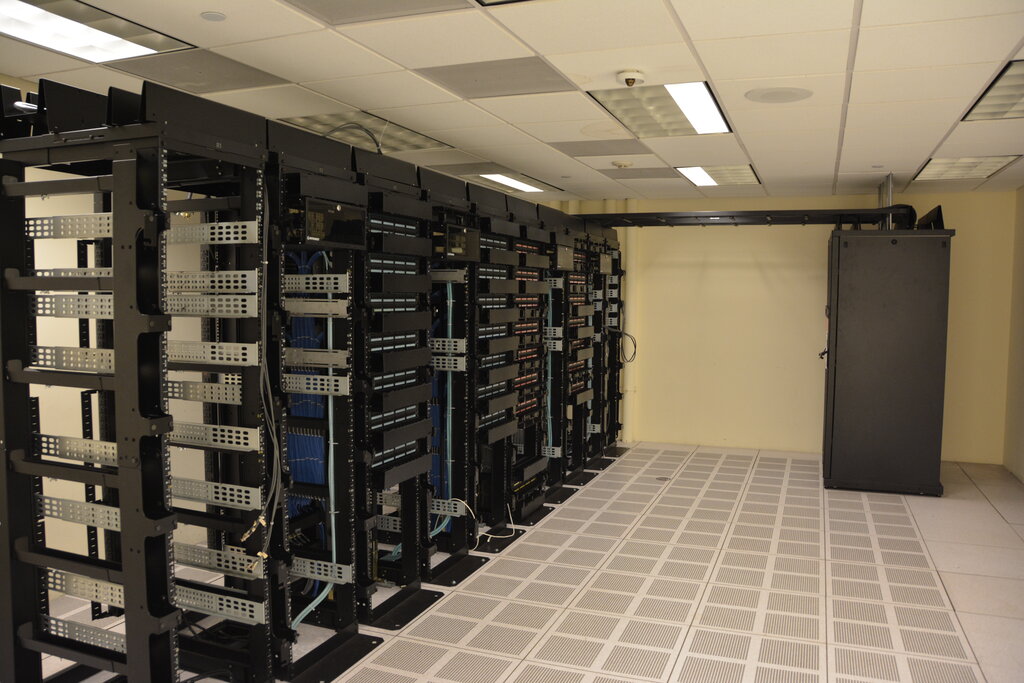
By the late 1990s, it became clear this model was inefficient. Virtualization re-emerged as a solution, this time for the commodity x86 servers that powered most businesses. It offered a way to consolidate many physical servers into fewer, more powerful machines, kickstarting the modern era of IT.
The Principles of Virtualization
At its core, virtualization operates on a few key principles. The first is partitioning. This is the ability to run multiple VMs on a single physical machine, with the system's resources divided among them.
Next comes isolation. Each virtual machine is logically separate from the others. If one VM experiences an error, gets a virus, or crashes completely, the other VMs on the same physical hardware are unaffected. This provides a secure, reliable environment.
A third principle is encapsulation. An entire virtual machine, including its operating system and applications, can be saved as a single file or a small set of files. This makes it incredibly easy to move, copy, and back up a VM, just as you would any other file.
Finally, there is hardware independence. Because a VM is just a software-based emulation of a computer, it can run on any physical hardware that supports the hypervisor, regardless of the underlying manufacturer or components.
Why It Matters
Today, virtualization is the bedrock of modern computing infrastructure. It's the technology that makes cloud computing possible. When you spin up a server instance on Amazon Web Services, Google Cloud, or Microsoft Azure, you are using a virtual machine.
At the heart of cloud computing is virtualization, which allows multiple virtual instances (Virtual Machines, VMs) to run on a single physical server.
This technology enables companies to use their hardware resources far more efficiently, saving money on equipment, power, and cooling. It also provides a level of flexibility and speed that was once unimaginable. New servers can be deployed in minutes, systems can be easily moved between physical machines, and developers can test software in safe, isolated environments.
Understanding virtualization is the first step toward understanding how today's data centers, cloud services, and complex IT systems are built and managed.