Introduction to the Science of Flight
Introduction to Flight
The Four Forces of Flight
Flight might seem complex, but it boils down to a constant tug-of-war between four basic forces. Every aircraft, from a tiny drone to a jumbo jet, is under the influence of these forces. Understanding them is the first step to understanding how anything flies.
Four primary forces influence flight: lift, weight, thrust, and drag.
Two of these forces, lift and thrust, are generated by the aircraft. The other two, weight and drag, are natural forces that the aircraft must overcome. Let's look at each one.
Weight is the force of gravity pulling the aircraft down toward the center of the Earth. To fly, an aircraft must generate an opposing force.
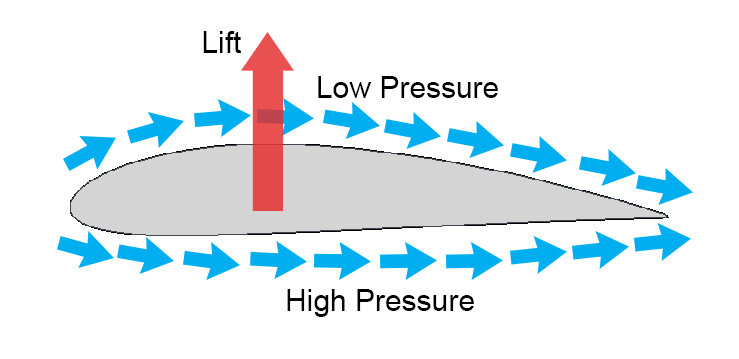
That opposing force is Lift. Lift is the upward force created by the movement of air over the wings. As the wings slice through the air, their special curved shape, called an airfoil, creates a pressure difference. The pressure below the wing becomes higher than the pressure above it, pushing the wing—and the entire aircraft—upwards.
Thrust is the force that propels the aircraft forward through the air. It's generated by the engines, which might be propellers or jets. Thrust must overcome the force of drag.
Drag is the resistance of the air pushing back on the aircraft as it moves forward. Think of it like the friction you feel when you stick your hand out of a moving car window. The sleeker and more streamlined an aircraft is, the less drag it creates.
A Balancing Act
Flying is all about managing the balance between these four forces. The relationship between them determines what the aircraft is doing—whether it's cruising, climbing, or descending.
When an aircraft is in straight, level flight at a constant speed, the forces are in equilibrium. Lift is equal to Weight, and Thrust is equal to Drag. The upward push of lift perfectly balances the downward pull of gravity. The forward push of thrust perfectly balances the backward pull of air resistance.
In steady, level flight:
Lift = Weight
Thrust = Drag
To climb, a pilot increases thrust from the engines. This makes Thrust greater than Drag, causing the plane to accelerate. This increased speed over the wings generates more lift. When Lift becomes greater than Weight, the aircraft climbs.
To descend, the pilot does the opposite. They reduce thrust, making Drag greater than Thrust. The aircraft slows down, which reduces lift. When Lift is less than Weight, the aircraft begins to descend.
Anatomy of an Airplane
These forces act on the key parts of an aircraft to enable and control flight.
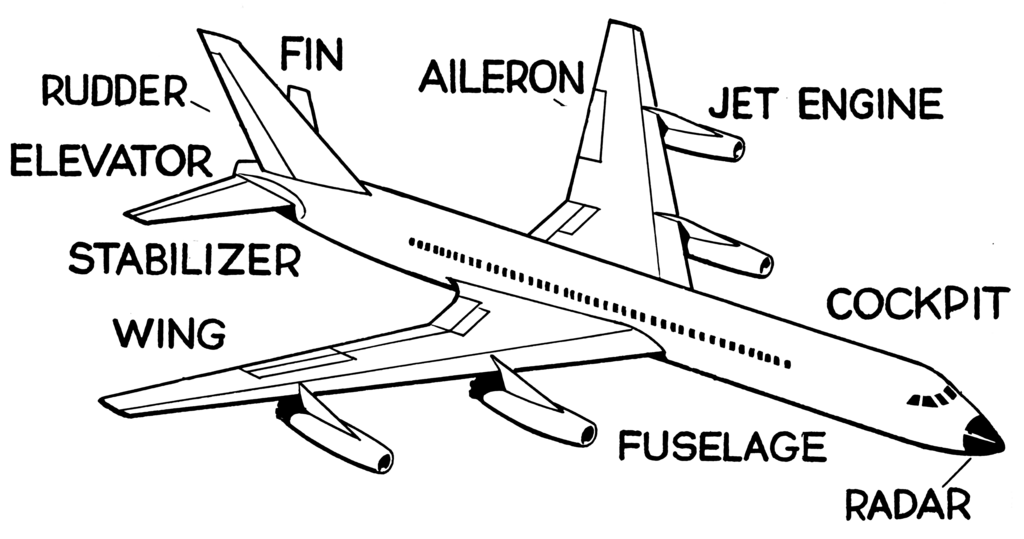
- Wings: Their primary job is to generate lift. They also hold the fuel on most large aircraft.
- Fuselage: This is the main body of the aircraft. It holds the passengers, cargo, and cockpit.
- Engines: Mounted on the wings or fuselage, the engines produce the thrust needed to move the aircraft forward.
- Tail Assembly (Empennage): This includes the vertical stabilizer (fin) and horizontal stabilizer. They provide stability and help control the aircraft's direction.
- Control Surfaces: These are hinged sections on the wings and tail, such as ailerons, elevators, and the rudder. By moving them, the pilot can change the airflow, alter the balance of forces, and steer the aircraft up, down, left, or right.
Which of the four forces of flight is a natural resistance that directly opposes the aircraft's forward motion?
For an aircraft to begin climbing, which two forces must be greater than their opposing forces?
By balancing these four forces and using the aircraft's components, a pilot can control its flight from takeoff to landing.