Introduction to the Internet Computer Protocol
Introduction to Blockchain
A New Kind of Ledger
At its heart, a blockchain is a new kind of database, or a digital ledger. Think of a simple notebook where you track transactions. Instead of one person holding the notebook, everyone in a group has an identical copy. When a new transaction happens, everyone updates their notebook at the same time.
This creates a shared, synchronized, and distributed record of information. No single person or organization owns it, which is the core idea of decentralization.
Each transaction is grouped into a "block" of data. Once a block is full, it's cryptographically linked to the previous block, forming a chain. This structure makes the data incredibly secure. If you wanted to change information in an old block, you would have to change every single block that came after it, across every copy of the ledger in the network. That's practically impossible.
Blockchain
noun
A distributed and immutable digital ledger that records transactions in a series of linked blocks, secured using cryptography.
Reaching an Agreement
If everyone has a copy of the ledger, how does the network agree on which new transactions are valid? This is solved through a "consensus mechanism." It's a set of rules that lets everyone agree on the state of the network without needing a central authority.
The two most common methods are Proof of Work (PoW) and Proof of Stake (PoS).
| Mechanism | How it Works | Analogy |
|---|---|---|
| Proof of Work (PoW) | Participants (miners) use computing power to solve complex math puzzles. The first to solve it gets to add the next block. | A race where the winner is the one who does the most physical work. |
| Proof of Stake (PoS) | Participants (validators) lock up a certain amount of cryptocurrency as collateral (a stake). Validators are chosen to create new blocks based on the size of their stake. | A lottery where your chances of winning depend on how many tickets you own. |
PoW, used by Bitcoin, is very secure but consumes a lot of energy. PoS, used by Ethereum and other newer blockchains, is much more energy efficient.
More Than Just Money
While cryptocurrencies like Bitcoin made blockchain famous, the technology's potential goes much further. Its ability to create a secure, transparent, and unchangeable record is useful in many industries.
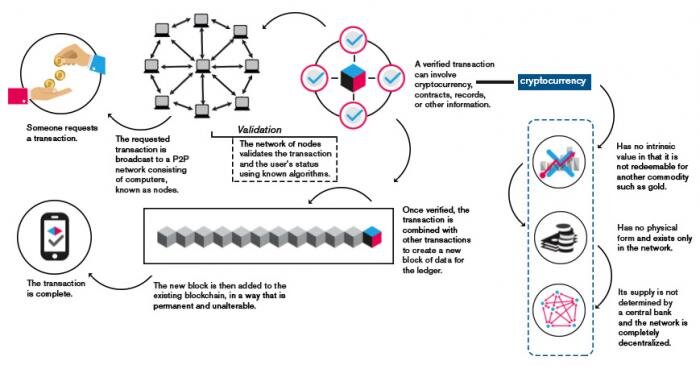
For example, it can be used for:
- Supply Chain Management: Tracking goods from the factory to the store shelf, ensuring authenticity and preventing fraud.
- Voting Systems: Creating secure and transparent voting records that can't be tampered with.
- Digital Identity: Giving individuals control over their own personal data, allowing them to share it securely without relying on third-party companies.
- Intellectual Property: Proving ownership and tracking the usage of digital art, music, or inventions.
These applications all leverage blockchain's core benefits of decentralization: transparency, security, and immutability. By removing the need for a central intermediary, blockchain allows for more direct and trustworthy interactions.
Let's review what you've learned.
What is the best analogy for a blockchain?
Why is it extremely difficult to alter a transaction in a blockchain?
Understanding these fundamentals is the first step toward exploring more advanced systems built on this technology.