Introduction to the English Language
Introduction to English Origins
The Ancient Ancestor
The story of English doesn't begin in England. It starts thousands of years ago with a language we can't read or hear, because no one ever wrote it down. Linguists call it Proto-Indo-European, or PIE for short. It's the great-great-grandparent of hundreds of modern languages, from Hindi and Persian to Spanish and English.
Think of PIE as the trunk of a massive tree. Over time, its branches grew in different directions, creating new language families.
We know PIE existed by comparing its descendant languages. When linguists see similar words for basic concepts—like 'mother,' 'father,' 'one,' and 'two'—across many languages, they can work backward to reconstruct the original root word. It's like finding family resemblances in a group of distant cousins to guess what their shared ancestor looked like.
A Germanic Branch
One of PIE's major branches is called Germanic. Around 2,500 years ago, a distinct group of tribes in northern Europe spoke what we call Proto-Germanic. This was the parent language of not only English, but also German, Dutch, Danish, Norwegian, Swedish, and Icelandic.
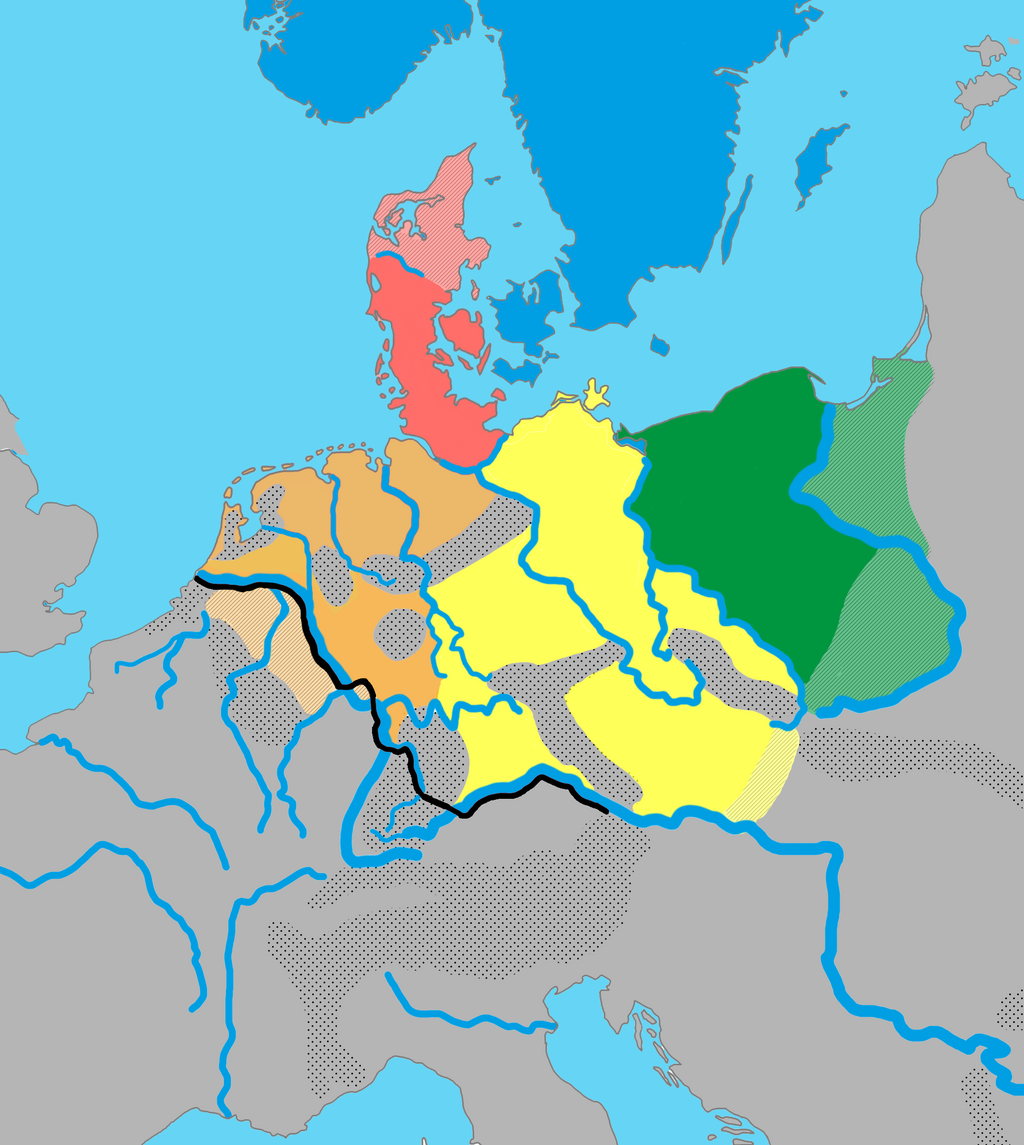
Speakers of Proto-Germanic developed their own unique accent. Over centuries, certain sounds shifted. A PIE 'p' sound, for example, often became an 'f' in Proto-Germanic. This is why the English word father starts with an 'f,' while related words in other Indo-European languages, like the Latin pater, start with 'p.' These predictable sound shifts are one of the key ways we can trace a language's ancestry.
Arrival in Britain
For thousands of years, the inhabitants of Britain spoke Celtic languages, the ancestors of modern Welsh, Irish, and Scottish Gaelic. But in the 5th century AD, after the Roman Empire withdrew its legions from the island, a new chapter began.
Seafaring tribes from what is now northern Germany and Denmark—the Angles, Saxons, and Jutes—started migrating to Britain. They were looking for new lands to farm and settle.
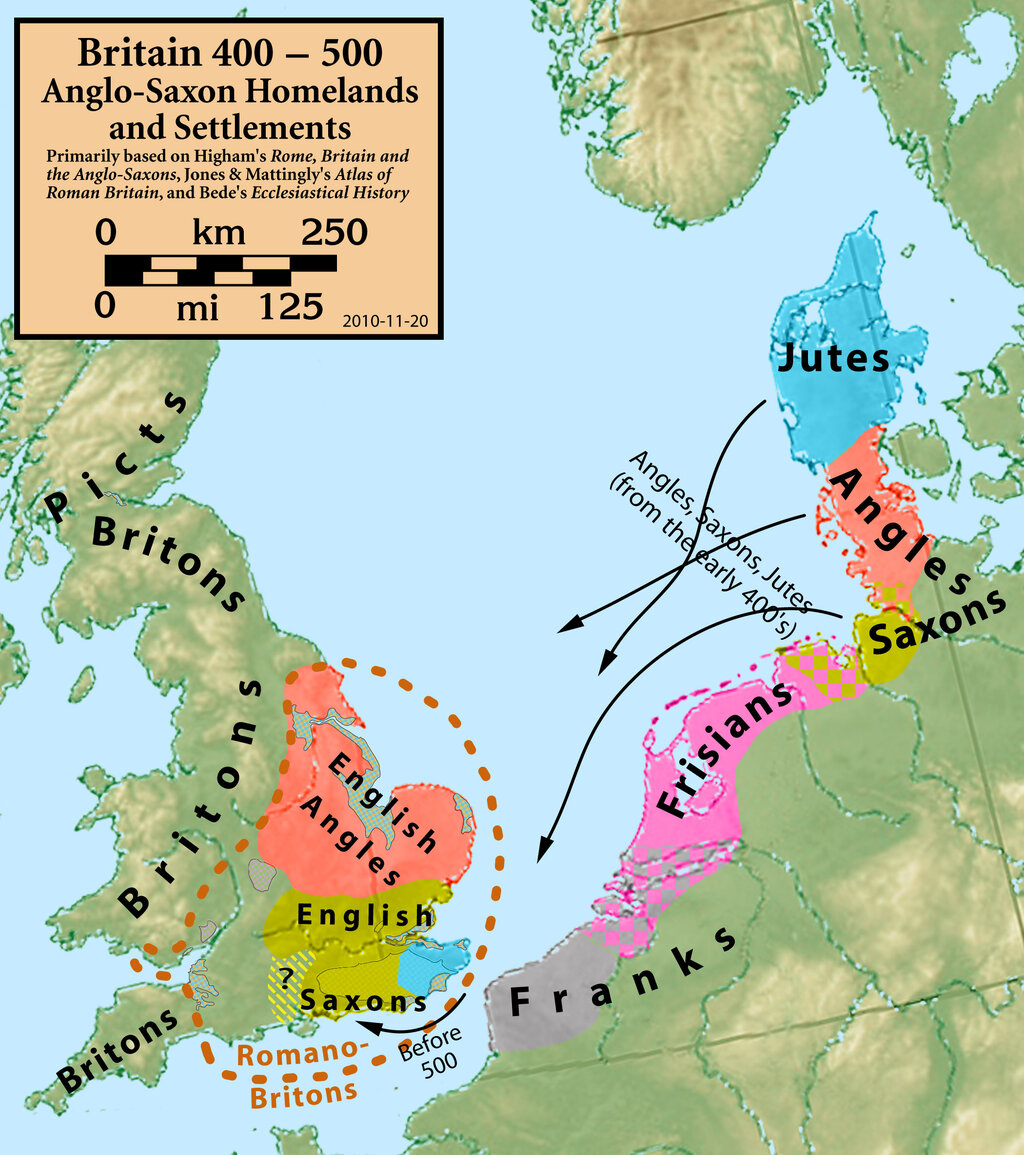
Old English developed out of the combined dialects of Germanic tribes called the Angles, Saxons, and Jutes, who invaded Britain in the 5th century.
These newcomers were warriors and farmers, not conquerors with a single united plan. They established different kingdoms across the land, and over time, their Germanic dialects began to push out the native Celtic languages in what would eventually become England.
The Birth of Old English
As the Anglo-Saxon settlements grew and their different kingdoms interacted, their dialects began to merge. This blend of West Germanic dialects became a new language: Old English, also known as Anglo-Saxon. It was spoken and written in England from about the mid-5th century to the mid-12th century.
If you heard Old English today, you probably wouldn't understand a word. Its grammar was much more complex than modern English, with nouns changing their endings depending on their role in a sentence, similar to modern German or Latin. The vocabulary was almost entirely Germanic.
The name 'England' comes from these tribes. It means 'land of the Angles' (Engla land).
Here is the opening line from Beowulf, the most famous epic poem written in Old English:
Hwæt! We Gardena in geardagum,
þeodcyninga, þrym gefrunon,
hu ða æþelingas ellen fremedon.
The letters may look somewhat familiar, but the words and structure are clearly foreign. This was the foundation. From this Germanic base, influenced by centuries of invasions, religion, and global contact, the English language would continue its long journey of transformation.
Let's review what we've covered about the early history of English.
What is the name of the reconstructed, unwritten language that is considered the ancestor of English, Persian, and Spanish?
The English word father begins with an 'f' sound, while the related Latin word pater begins with a 'p' sound. This difference is a key example of what linguistic phenomenon?
The journey from a shared ancestor to a new language in a new land set the stage for everything that came next. The core of English was now in place, ready to be shaped by future events.