Introduction to Tarot Cards
Origins of Tarot
From Game to Guidance
Before tarot cards told futures, they were used to play a game. In 15th-century Italy, nobility entertained themselves with lavishly painted card decks. These early decks were similar to today's playing cards, with four standard suits: swords, batons, cups, and coins. They were used for games of strategy and chance, much like bridge or poker.
The game evolved with the addition of a fifth suit of 22 special cards known as trionfi, or "triumphs." These were the trump cards. Unlike the standard suits, the trumps were illustrated with allegorical figures and scenes, such as the Pope, the Emperor, Death, and the Wheel of Fortune. This innovation, created for a game called Tarocchi, marked the birth of what we now call the tarot.
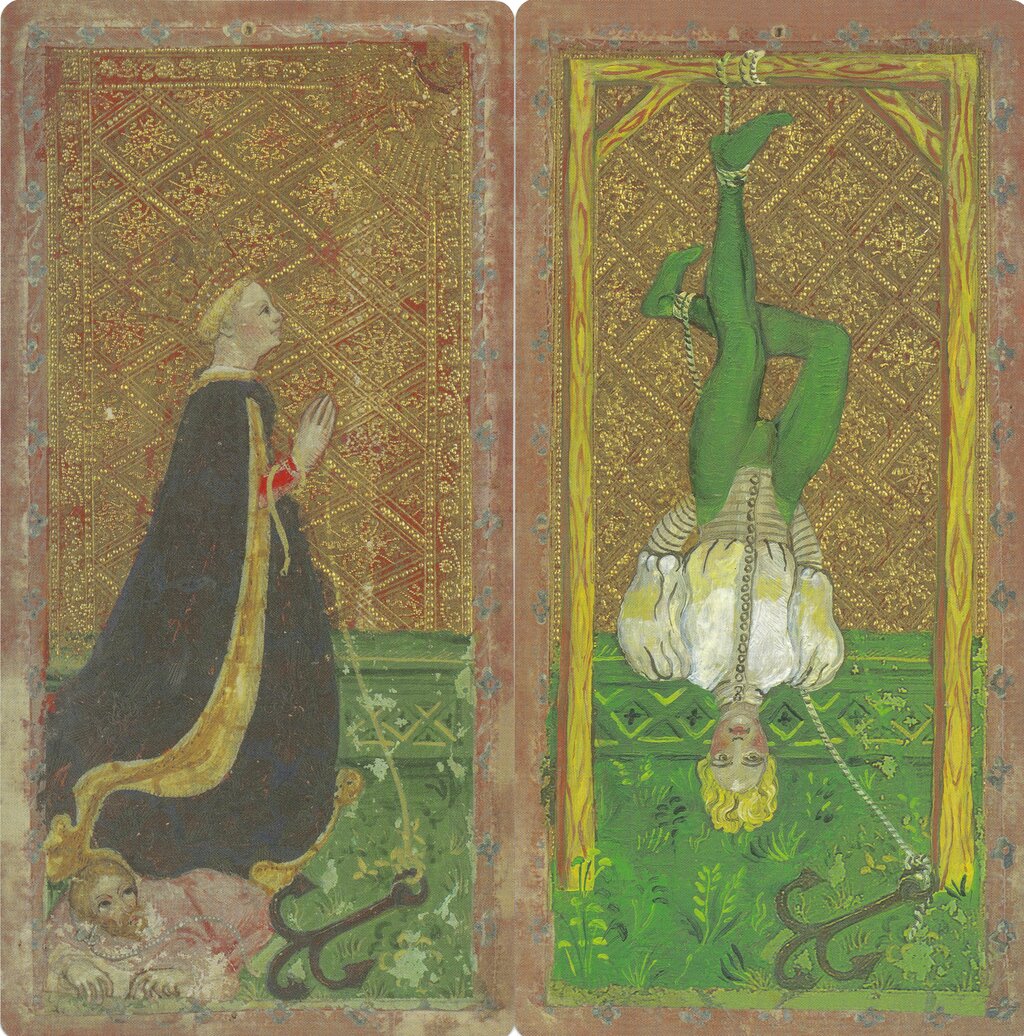
The transition from gameplay to fortune-telling was gradual. The rich symbolism on the trump cards was ripe for interpretation. People began using the cards not just to win tricks in a game, but to gain insight into their lives. This practice, known as cartomancy, wasn't unique to tarot, but the deck's allegorical images made it especially suitable for divination.
The Occult Revival
For centuries, tarot remained a niche interest. That changed in the late 18th century with the rise of occultism in France. A French scholar named Antoine Court de Gébelin published a book in 1781 claiming that tarot cards were not Italian game pieces, but rather the remnants of an ancient Egyptian book of wisdom, the Book of Thoth.
Though historically inaccurate, this idea captured the public's imagination and permanently linked tarot with esoteric knowledge and mysticism.
Nineteenth-century occultists like Eliphas Lévi built on this foundation. They connected the tarot's 22 trump cards, which they renamed the Major Arcana, to the 22 letters of the Hebrew alphabet and the mystical system of Kabbalah. This movement solidified tarot's transformation from a card game into a complex tool for spiritual exploration.
The Modern Deck
The most significant development in modern tarot came in 1909 with the publication of the Rider-Waite-Smith deck. Conceived by Arthur Edward Waite, a member of the Hermetic Order of the Golden Dawn, and illustrated by artist Pamela Colman Smith, this deck was revolutionary for one key reason.
For the first time, all 78 cards, including the numbered suit cards (the Minor Arcana), were fully illustrated with scenic images. Previously, cards like the Four of Swords or Seven of Cups would simply show four swords or seven cups. Smith's illustrations gave every card a narrative, making the deck's symbolism more accessible and intuitive for readers.
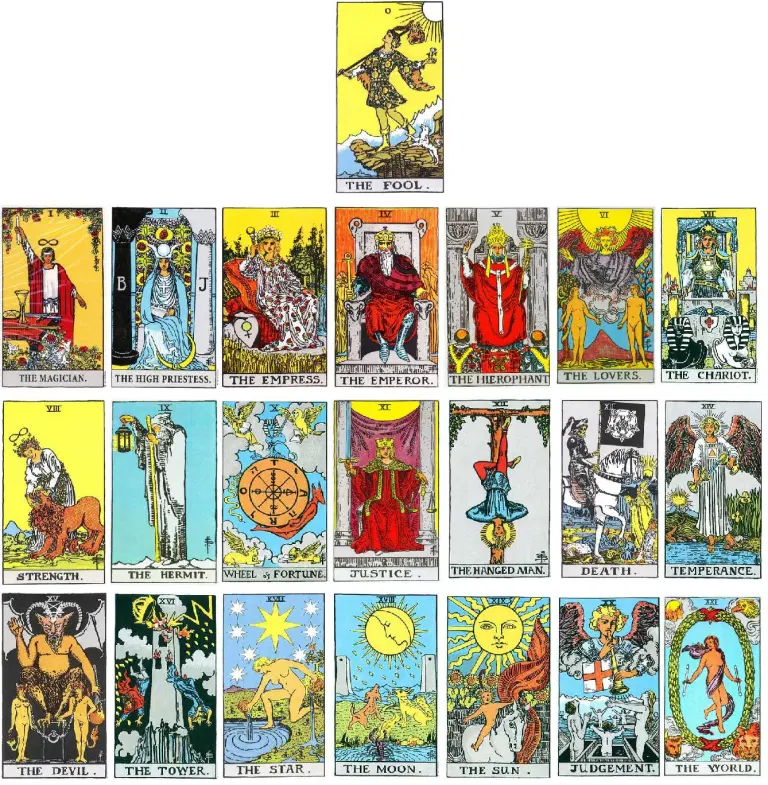
This deck set the standard for most modern tarot packs and remains the most popular version used today. Its influence cemented tarot's role not as a game, but as a reflective tool for personal insight.
Let's review the key terms from tarot's history.
Now, check your understanding of tarot's journey.
What was the original purpose of tarot cards when they were created in 15th-century Italy?
The addition of a fifth suit of 22 illustrated trump cards was a key innovation in the game of Tarocchi. What were these cards called?
The journey of tarot cards spans centuries, evolving from a simple game into a complex system of symbolism and guidance. What began in the parlors of Italian nobles is now a personal tool for people around the world.