Introduction to Spanish Language
Spanish Alphabet
The Spanish Alphabet
One of the best parts about learning Spanish is that it's very phonetic. This means words are almost always pronounced exactly as they are spelled. Once you learn the sound for each letter, you can confidently pronounce almost any word you see. This consistency is a huge advantage compared to English, where letters can have many different sounds.
Unlike English, spoken Spanish follows the written language almost perfectly. Each letter corresponds to one specific sound.
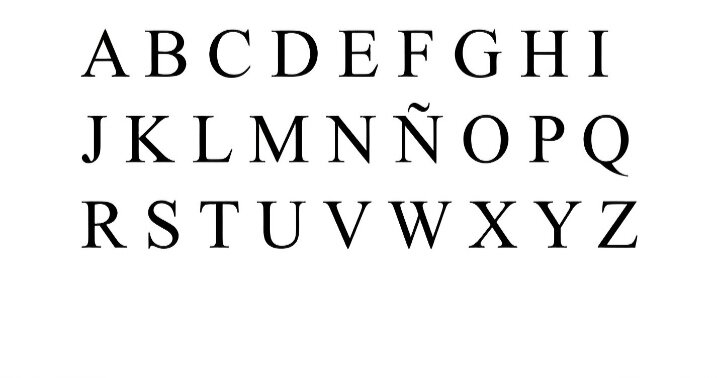
The Spanish alphabet, or abecedario, has 27 letters. It's the same as the English alphabet, plus one extra character: the ñ. Let's go through each letter, its Spanish name, and how to pronounce it.
| Letter | Spanish Name | Pronunciation Guide |
|---|---|---|
| A a | a | 'ah' as in father |
| B b | be | 'b' as in boy |
| C c | ce | 's' before e, i; 'k' otherwise |
| D d | de | 'd' as in dog |
| E e | e | 'eh' as in bet |
| F f | efe | 'f' as in fun |
| G g | ge | soft 'h' before e, i; hard 'g' otherwise |
| H h | hache | Always silent |
| I i | i | 'ee' as in see |
| J j | jota | 'h' as in hat |
| K k | ka | 'k' as in kite (rarely used) |
| L l | ele | 'l' as in love |
| M m | eme | 'm' as in mom |
| N n | ene | 'n' as in no |
| Ñ ñ | eñe | 'ny' as in canyon |
| O o | o | 'oh' as in go |
| P p | pe | 'p' as in pop |
| Q q | cu | 'k' sound, always followed by 'u' |
| R r | ere | Soft 'r', a quick tap of the tongue |
| S s | ese | 's' as in sun |
| T t | te | 't' as in top |
| U u | u | 'oo' as in moon |
| V v | uve | Same as the 'b' sound |
| W w | uve doble | 'w' as in water (rarely used) |
| X x | equis | 'ks' as in taxi |
| Y y | i griega | 'y' as in yes; 'ee' when alone |
| Z z | zeta | 's' as in sun |
Important Combinations
Beyond the individual letters, a few combinations have their own distinct sounds. You used to see ch and ll listed as separate letters in the alphabet, but they are now officially treated as two-letter combinations. Still, their sounds are unique.
Understanding these combinations is key to reading Spanish fluently.
First, we have ch. This pair sounds just like the 'ch' in the English word chair. You'll find it in words like chocolate and noche (night).
Next is ll. The sound of this combination can vary, but the most common pronunciation is like the 'y' in yes. So, a word like calle (street) sounds like 'CAH-yay'.
Finally, there's the rr. When you see two r's together, you need to roll your 'r'. This is the strong, trilled sound many people associate with Spanish. It's made by vibrating the tip of your tongue against the roof of your mouth. Think of the word perro (dog) or carro (car).
Tricky Sounds for English Speakers
A few letters can be tricky because their sounds differ from English.
The letter h is always silent in Spanish. Always. The word hola (hello) is pronounced 'OH-la', and huevo (egg) is 'WEH-vo'. Just pretend the 'h' isn't there.
The letter j makes the sound of the English 'h'. So, the name José is pronounced 'ho-SEH'.
The letters b and v make the exact same sound in Spanish. It's the sound of the English 'b' in boy. There is no difference in pronunciation between words like vaca (cow) and baca (roof rack).
Lastly, the letter ñ is a hallmark of Spanish. That little squiggle on top is called a tilde. It tells you to make a 'ny' sound, like in the English word canyon. A common example is the word año (year).
Learning these rules is the first major step toward speaking and reading Spanish. With a phonetic alphabet on your side, progress comes quickly.
True or false: In Spanish, words are almost always pronounced exactly as they are written.
How is the letter 'h' pronounced in the Spanish word 'huevo' (egg)?