Introduction to Soccer
Basic Rules
The Point of the Game
The objective of soccer is simple: score more goals than your opponent. A team scores a goal when the entire ball crosses the opponent's goal line, between the posts and under the crossbar. Players primarily use their feet, head, and chest to move the ball. Only one player on the field is allowed to handle the ball with their hands and arms.
The Playing Field
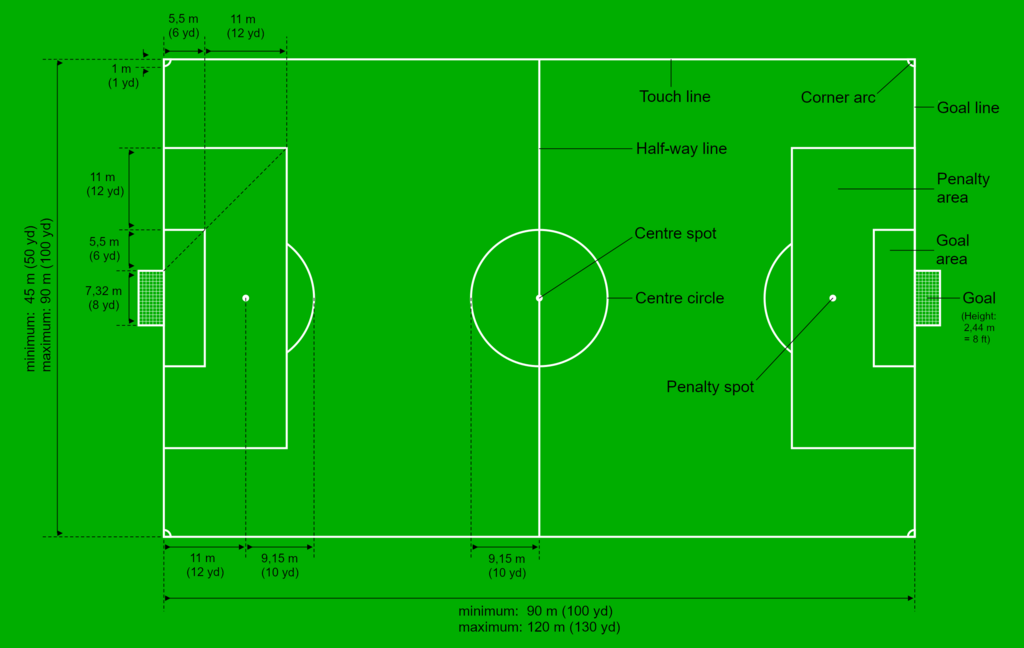
A soccer match is played on a rectangular field called a pitch. The longer boundary lines are touchlines, and the shorter lines are goal lines. The field is divided in half by the halfway line, which has a center circle in the middle. In front of each goal is a large rectangle called the penalty area. This area is important for several rules, especially for the goalkeeper and for penalty kicks.
Players and Positions
A standard soccer match features two teams of 11 players each. One of these players is the goalkeeper, the only player permitted to use their hands within their own penalty area. The other ten are outfield players, generally split into three categories.
- Defenders: Play closest to their own goal and are primarily responsible for stopping the opposing team from scoring.
- Midfielders: Operate in the middle of the field, linking defense and attack. They do a lot of running, both defending and creating scoring chances.
- Forwards: Positioned closest to the opponent's goal, their main job is to score.
These positions are just general guidelines, and players will move all over the field during a game. The formation, or how the players are arranged, can change depending on the team's strategy.
Key Rules of Play
While there are many laws in soccer, a few fundamental rules govern most of the game's flow. Understanding them is key to following the action.
Game Duration: A standard game consists of two 45-minute halves with a 15-minute halftime break. The clock does not stop when the ball is out of play.
Perhaps the most confusing rule for newcomers is the offside rule. In simple terms, an attacking player cannot be ahead of both the ball and the second-to-last defender (which includes the goalkeeper) when the ball is played forward to them. This rule prevents players from simply waiting near the opponent's goal for an easy scoring opportunity.
A foul occurs when a player acts in a way deemed unfair or unsafe by the referee, such as tripping, pushing, or holding an opponent. Handling the ball with hands or arms is also a foul for any player other than the goalkeeper in their penalty area.
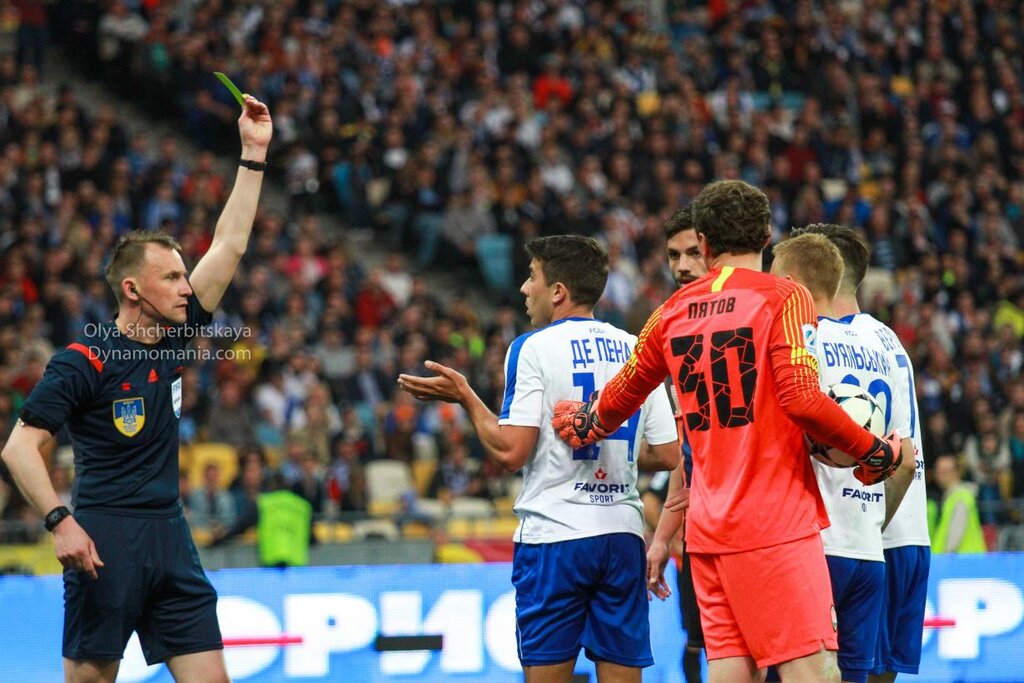
For more serious fouls, the referee can issue cards. A yellow card is a warning. A second yellow card for the same player results in a red card, meaning they are sent off the field and their team must play with one fewer player for the rest of the game. A straight red card can be given for very serious offenses.
When a foul is committed or the ball goes out of play, the game is restarted in a specific way.
| Restart | When It Happens | How It's Done |
|---|---|---|
| Throw-in | Ball crosses a touchline | Player throws the ball in from the spot it went out, using two hands over their head. |
| Goal Kick | Attacking team kicks the ball over the defending team's goal line | A player from the defending team kicks the ball from anywhere inside the goal area. |
| Corner Kick | Defending team kicks the ball over their own goal line | An attacking player kicks the ball from the corner arc. |
| Free Kick | A foul is committed | A kick is taken from the spot of the foul. Opponents must be 10 yards away. Can be direct (can score) or indirect (must touch another player before scoring). |
| Penalty Kick | A foul is committed by the defending team inside their own penalty area | An attacker takes a one-on-one shot against the goalkeeper from the penalty spot. |
Now that you know the basic rules, let's check your understanding.
What is the primary objective of a soccer game?
Which player is uniquely allowed to handle the ball with their hands and arms during play?
These rules form the foundation of soccer. While there are more nuances, understanding these basics is all you need to start playing or watching your first game.