Introduction to Scuba Diving
Introduction to Scuba Diving
From Diving Bells to Aqualungs
Humans have always been drawn to the world beneath the waves. For centuries, the only way down was to hold your breath. Early divers, like the Ama pearl divers of Japan, relied on lung capacity alone to explore the shallows. To go deeper, inventors created diving bells in the 16th century. These were large, bell-shaped chambers, open at the bottom, that trapped air and allowed people to work on the seafloor for short periods.
The next major leap was the surface-supplied helmet, the classic brass-helmeted suit you might see in old movies. Air was pumped down from a boat through a long hose, giving the diver a continuous supply of air. This allowed for much deeper and longer dives, but the diver was always tethered to the surface, limiting their freedom.
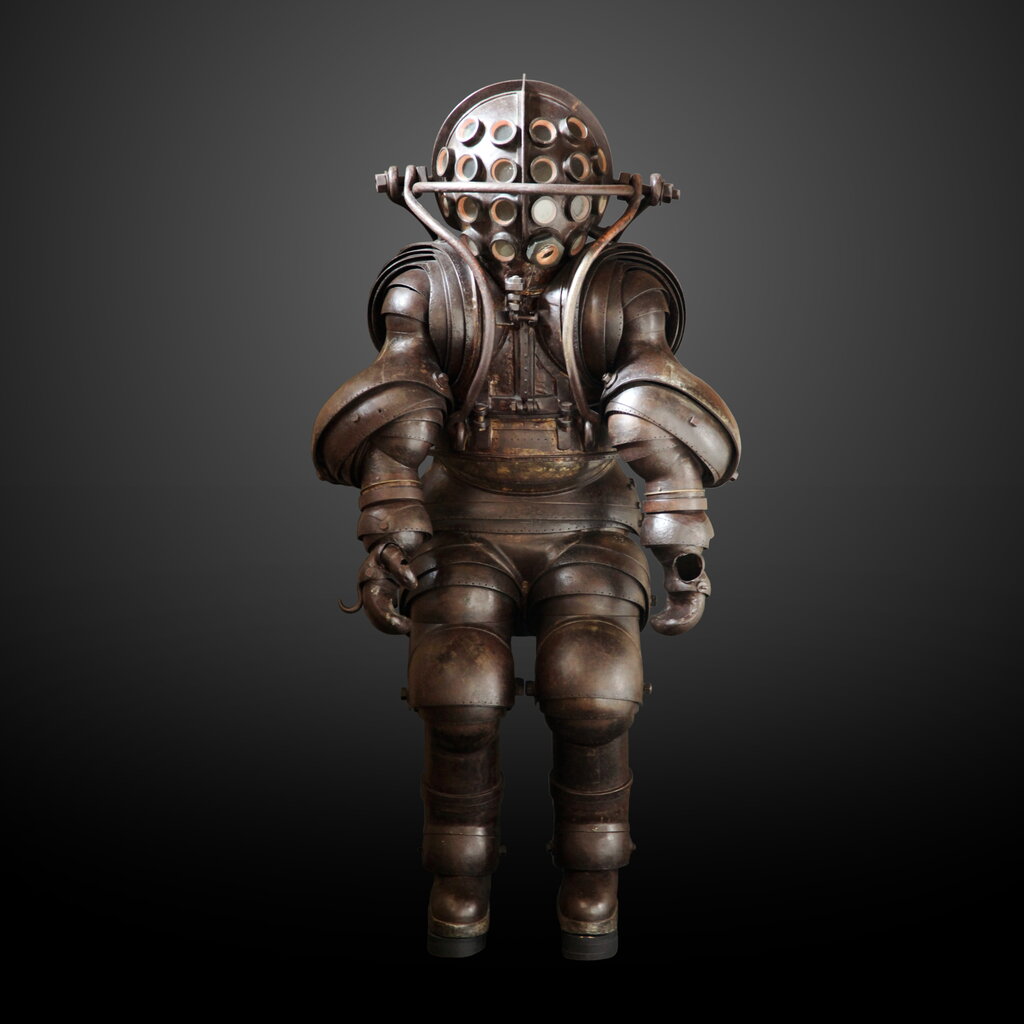
The game changed completely in 1943. French naval officer Jacques Cousteau and engineer Émile Gagnan developed the first successful self-contained underwater breathing apparatus, or SCUBA. They called it the Aqua-Lung.
This device consisted of a high-pressure air tank and a regulator that delivered air to the diver on demand, at the same pressure as the surrounding water. For the first time, explorers could swim untethered, moving with the grace of a fish. This invention opened up the oceans to scientists, filmmakers, and recreational divers, sparking the modern era of underwater exploration.
The Rules of the Deep
Diving is an encounter with physics. The most important force to understand is pressure. At sea level, the air around you exerts about 14.7 pounds per square inch (psi) of pressure. We call this 1 atmosphere (atm) of pressure. Water is much denser than air, so as you descend, the pressure increases rapidly. For every 33 feet (10 meters) you go down, the pressure increases by another atmosphere.
This mounting pressure dramatically affects any air-filled space, including your lungs, ears, sinuses, and even your scuba gear. The relationship between pressure and the volume of a gas is described by Boyle's Law.
Boyle's Law states that if the temperature remains constant, the volume of a gas is inversely proportional to the pressure. In simple terms: as pressure goes up, volume goes down.
Imagine a balloon filled with one gallon of air at the surface. At 33 feet deep, where the pressure is double (2 atm), that balloon would be squeezed to half its size, or half a gallon. At 99 feet (4 atm), it would be a quarter of a gallon. This principle is why you must continuously exhale during an ascent; the air in your lungs expands as pressure decreases, and failing to release it can cause serious injury.
Another key principle is buoyancy, the upward force exerted by a fluid. An object that weighs more than the water it displaces will sink (negative buoyancy). An object that weighs less will float (positive buoyancy). A diver's goal is to achieve neutral buoyancy, a state of weightlessness where you neither sink nor float. This is managed by adjusting the amount of air in a vest called a buoyancy compensator (BC) and by controlling your breathing. Mastering buoyancy is the key to effortless, graceful movement underwater.
Your Body Underwater
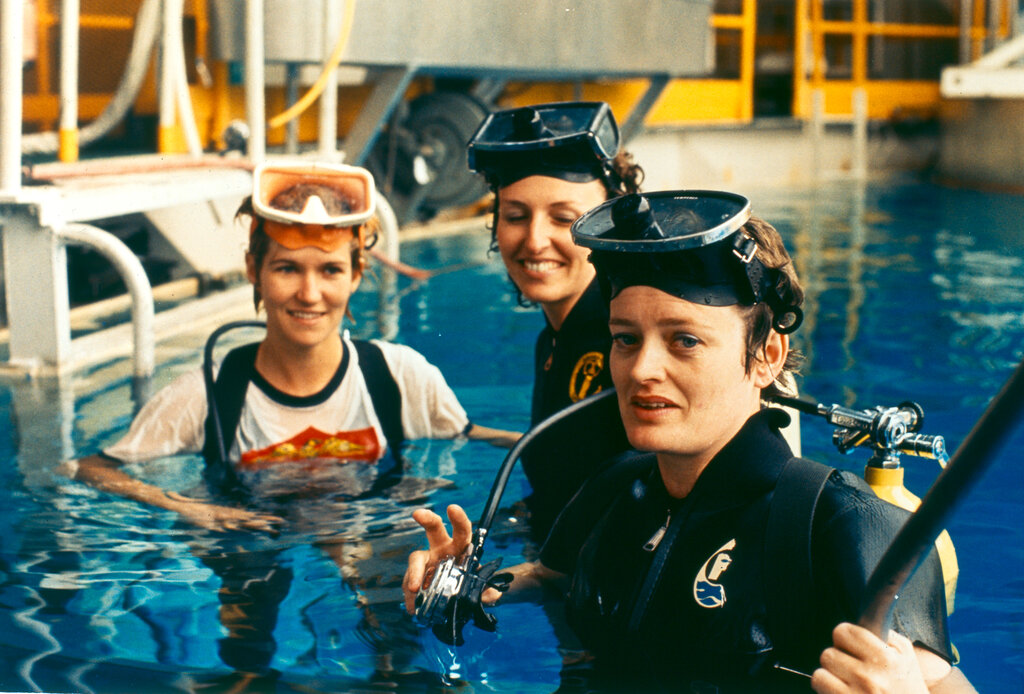
The physics of diving directly impacts your body's physiology. The most immediate effect of pressure is on your air spaces. As you descend, the increasing pressure will squeeze your eardrums inward. To counteract this, divers must equalize by gently pinching their nose and blowing, which pushes air into the middle ear and balances the pressure. This must be done frequently during descent.
Pressure also changes the way your body handles the air you breathe. Air is about 78% nitrogen and 21% oxygen. Your body uses the oxygen, but the nitrogen is mostly inert. Under the high pressure of a dive, however, that nitrogen gas dissolves into your bloodstream and tissues.
Think of it like a soda bottle. When it's sealed, the high pressure keeps the carbon dioxide gas dissolved in the liquid. When you open it, the pressure is released, and the gas comes out of solution as bubbles.
A similar thing happens in your body. If you ascend too quickly, the pressure drops rapidly, and the dissolved nitrogen can come out of your blood too fast, forming tiny bubbles. These bubbles can block blood flow and cause a painful, and sometimes fatal, condition called decompression sickness, or "the bends." To avoid this, divers must ascend slowly and may need to perform decompression stops at specific depths to allow the nitrogen to safely and gradually leave their system.
Understanding these basic principles of history, physics, and physiology is the first and most important step to becoming a safe and confident scuba diver. It's not just about breathing underwater; it's about respecting the environment you're in.
Who are credited with inventing the first successful self-contained underwater breathing apparatus (SCUBA), known as the Aqua-Lung?
According to Boyle's Law, if a balloon is filled with 4 liters of air at the surface, what will its volume be at a depth of 33 feet (10 meters)?