Introduction to Python Programming
Introduction to Python
What is Python?
Python is one of the world's most popular programming languages. It's known for being powerful, versatile, and surprisingly easy to learn. Unlike some languages that look like cryptic puzzles, Python code often reads a lot like plain English. This focus on simplicity and clarity is a big reason why it's a favorite for everyone from beginners to experts at companies like Google, Netflix, and NASA.
It’s a general-purpose language, which is a fancy way of saying you can use it for almost anything. Whether you want to build a website, analyze data, create a game, or automate tedious tasks, Python has the tools to get the job done.
A Brief History
Python was created in the late 1980s by a Dutch programmer named Guido van Rossum. At the time, he was looking for a hobby project to keep him busy during the week around Christmas. He wanted to create a language that was easy to read and could bridge the gap between complex system languages and simple shell scripts.
The name doesn't come from the snake. Guido was a big fan of the British comedy group Monty Python's Flying Circus, and he wanted a name that was short, unique, and a little bit mysterious. He chose "Python" and it stuck.
The Zen of Python
Every language has a philosophy that guides its development, and Python's is particularly clear. It’s summed up in a collection of 19 guiding principles known as "The Zen of Python," written by a longtime contributor named Tim Peters. These aren't strict rules, but they capture the spirit of the language.
Beautiful is better than ugly. Simple is better than complex. Readability counts.
This philosophy prioritizes clarity and simplicity above all else. The idea is that code is read far more often than it is written, so making it easy to understand is crucial. This design choice makes Python code easier to maintain, debug, and share with others. It’s a major reason why Python is so welcoming to newcomers.
Features and Applications
Python’s popularity comes from a powerful combination of features. It's an interpreted language, which means you can run your code line by line and see the results immediately, making it great for learning and experimenting. It also comes with a massive standard library, often described as having "batteries included." This means a huge amount of useful code for common tasks (like working with files or connecting to the internet) is available right out of the box.
Python is also free and open-source, which has helped it build a massive, active community. This community contributes libraries and frameworks that extend Python's capabilities into nearly every field imaginable.
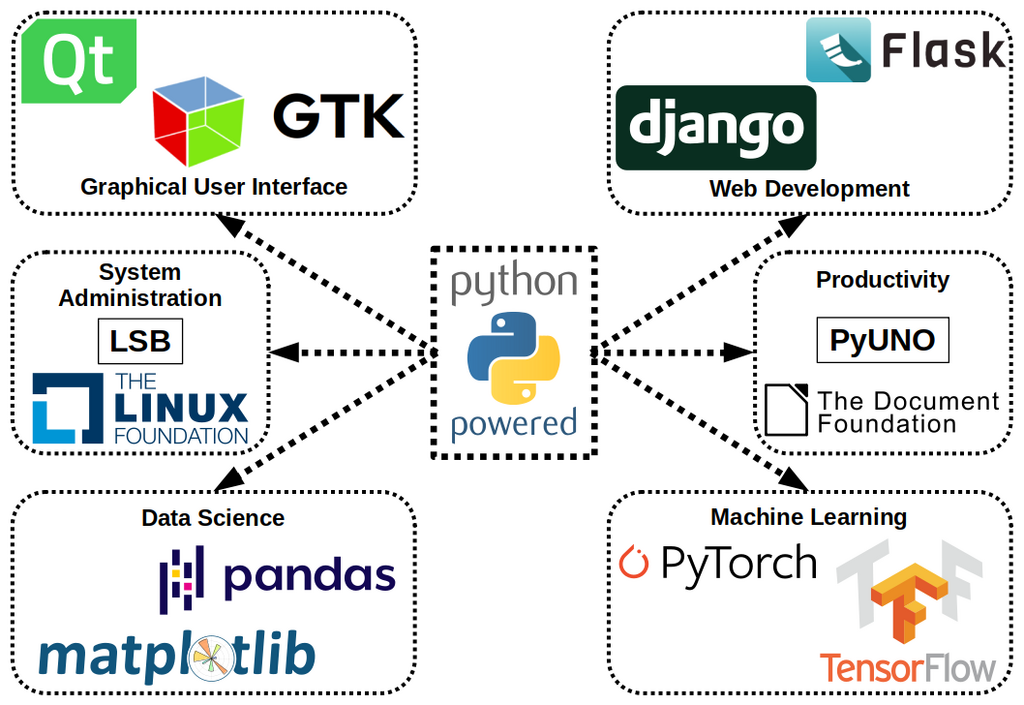
Because of its flexibility, Python is used everywhere:
- Web Development: Frameworks like Django and Flask power complex websites and web applications.
- Data Science and Machine Learning: It's the go-to language for data analysis, visualization, and artificial intelligence, thanks to libraries like Pandas, NumPy, and TensorFlow.
- Automation and Scripting: Python is perfect for writing simple scripts to automate repetitive tasks, like organizing files or sending emails.
- Software and Game Development: It's used to build desktop applications, developer tools, and even video games.
This versatility means that learning Python opens doors to a wide range of career paths and projects. Now that you know what Python is and where it came from, you're ready to start exploring how it works.
What is the primary philosophy behind Python's design, as described in 'The Zen of Python'?
Where did the name 'Python' originate?