Introduction to Python Programming
Introduction to Python
What Makes Python Special?
Python is a high-level, general-purpose programming language. Think of it as a versatile tool, like a Swiss Army knife for coders. Created in the late 1980s by Guido van Rossum, its core philosophy is simple: code should be easy to read and write. This focus on clarity and simplicity has made it one of the most popular programming languages in the world.
Python is a versatile, high-level programming language known for its readability and simplicity.
Unlike some languages that look like cryptic puzzles, Python code often reads a bit like plain English. This isn't an accident. It's a deliberate design choice that makes it easier for developers to work together and for newcomers to learn.
The Zen of Python
The language's guiding principles are summed up in a collection of 20 aphorisms known as "The Zen of Python." You can actually see them by typing import this into a Python interpreter. They include ideas that champion simplicity, readability, and practicality over complex, confusing code.
Beautiful is better than ugly. Explicit is better than implicit. Simple is better than complex.
One of the most distinctive features born from this philosophy is its use of indentation. In Python, the spacing at the beginning of a line isn't just for looks—it's part of the syntax. It's how Python structures code blocks, forcing a clean, organized layout that's easy to follow.
One Language, Many Styles
Python isn't picky about how you solve problems. It supports several different ways of thinking about and structuring your code, known as programming paradigms.
- Procedural Programming: This is a straightforward, step-by-step approach. You write a sequence of instructions for the computer to follow, like a recipe.
- Object-Oriented Programming (OOP): This approach involves creating "objects" that contain both data and functions. It's like building with digital LEGO blocks, where each block has its own properties and can perform certain actions.
- Functional Programming: This style treats computation as the evaluation of mathematical functions. It avoids changing state and mutable data, leading to more predictable code.
Behind the Curtain
Two key features make Python remarkably flexible and beginner-friendly: dynamic typing and automatic memory management.
Imagine you have a set of boxes. In some languages, you have to label each box for a specific item—one for apples, one for books, etc. You can't put a book in the apple box. This is called static typing.
Python is different. Its boxes are more like universal containers. You can put an apple in a box, then take it out and put a book in instead. The box's type is determined by what's inside it at that moment. This is dynamic typing, and it gives programmers a lot of freedom.
Dynamic Typing
other
A programming language feature where variable types are checked at runtime, meaning a variable can hold different types of values during the program's execution.
Python also handles its own cleanup. Programmers don't have to manually allocate and free up computer memory. Python's automatic memory management works like a diligent janitor, tidying up memory that's no longer being used. This prevents common errors and lets developers focus on solving problems rather than managing memory.
Finally, Python comes with a massive standard library. It's a built-in collection of tools and modules that can handle all sorts of common tasks, from working with text to connecting to websites. Having this powerful toolkit included right from the start is a huge advantage.
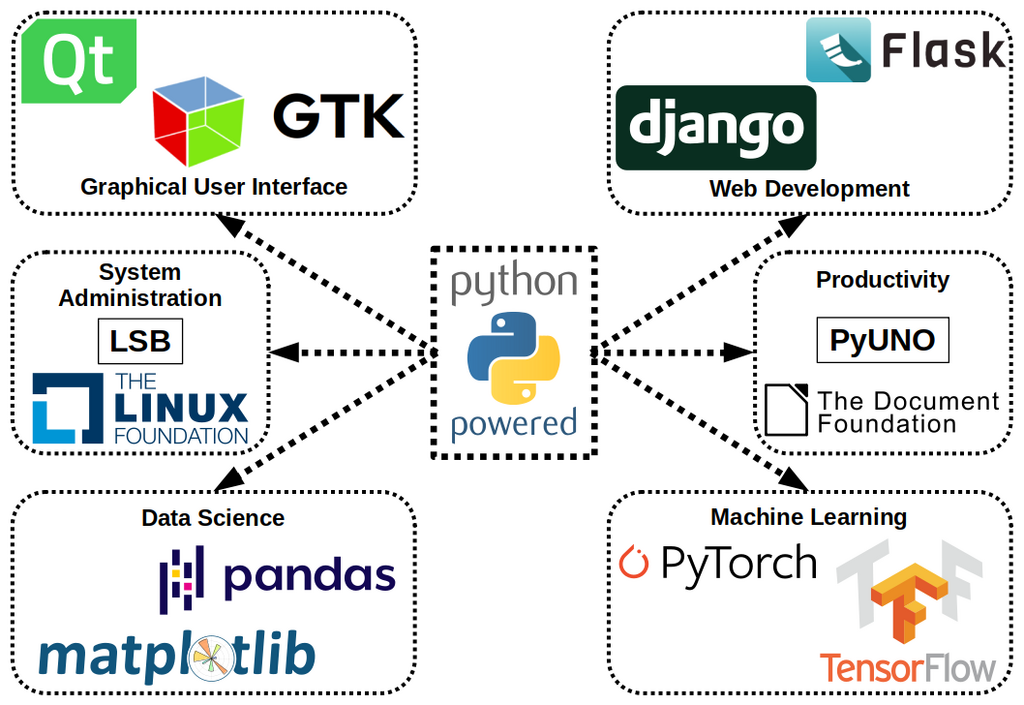
This combination of simplicity, flexibility, and power has led to Python's adoption in a huge range of fields. It's a driving force behind data science and machine learning, a popular choice for building websites and automating tasks, and a go-to language for scientific and numeric computing. Whether you're analyzing financial data, building a game, or programming a robot, there's a good chance Python can help.
What is the central philosophy guiding the design of the Python programming language?
In Python, what is the primary purpose of using indentation?
That's a high-level look at what makes Python tick. Its focus on readability and its powerful, flexible features are why so many people start—and continue—their programming journey with it.