Introduction to Python Programming
Introduction to Python
What Is Python?
Python is a programming language created in the late 1980s by Guido van Rossum. He wanted to make a language that was easy to read and write. The core idea is that code should be clear and simple, almost like plain English. This focus on readability is a big reason why Python has become so popular, especially for beginners.
Fun fact: Python isn't named after the snake. Van Rossum was a fan of the British comedy group Monty Python, and the name is a tribute to their show, "Monty Python's Flying Circus."
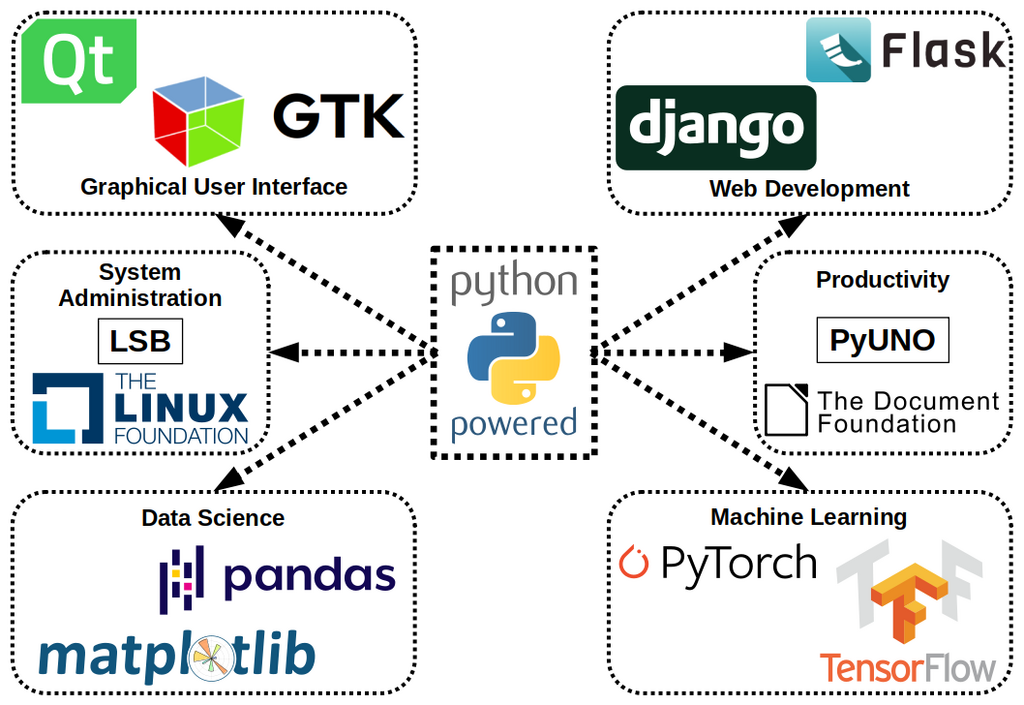
Python is incredibly versatile. You can find it everywhere, from building websites and automating repetitive tasks to analyzing data and creating artificial intelligence models. Major companies like Google, Netflix, and NASA use Python extensively in their operations. Its large collection of pre-written code, called libraries, makes it powerful for tackling all sorts of problems without having to start from scratch.
Setting Up Your Workspace
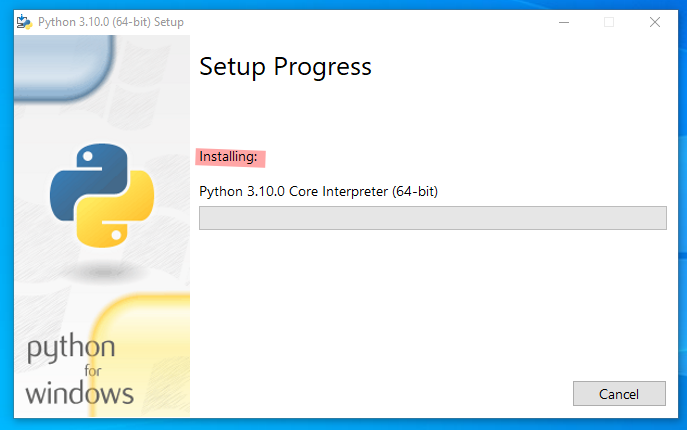
To start writing Python, you need two things: the Python interpreter and a place to write your code. The interpreter is the program that reads your Python code and carries out its instructions. You can download it directly from the official Python website, python.org. The installation process is straightforward for Windows, macOS, and Linux.
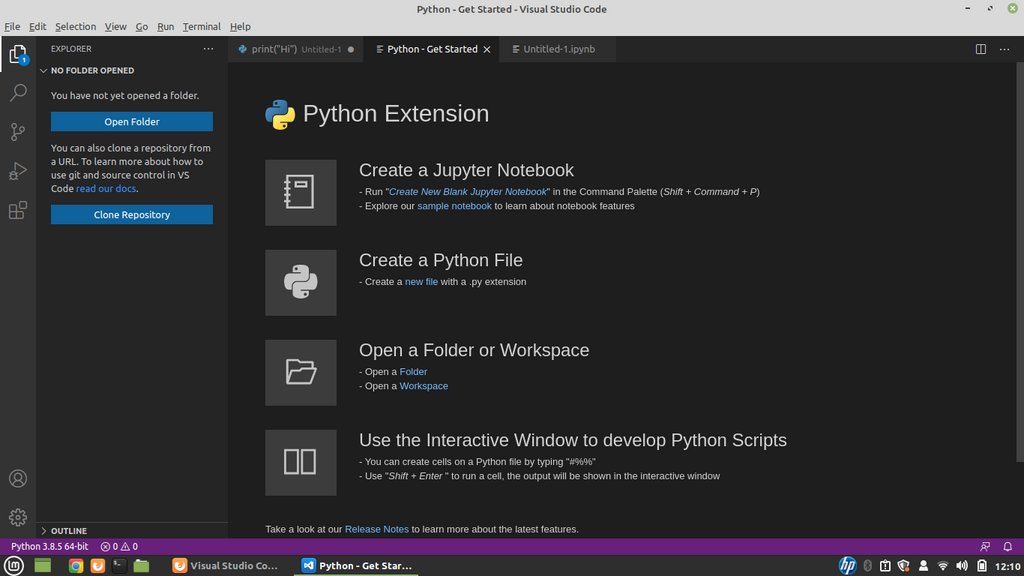
Once Python is installed, you need a code editor. While you could use a basic text editor, most developers use an Integrated Development Environment, or IDE. An IDE is a special-purpose editor that comes with tools to make coding easier, such as syntax highlighting (which colors your code to make it more readable) and debugging tools (which help you find and fix errors).
Popular IDEs for Python include Visual Studio Code (VS Code), PyCharm, and Spyder. They are all excellent choices, and what you pick often comes down to personal preference.
Your First Python Script
It's a tradition in programming to start with a "Hello, World!" program. This simple script just prints the phrase "Hello, World!" to the screen. It's a great way to confirm that your setup is working correctly.
Open your IDE, create a new file, and save it with a .py extension, like hello.py. Then, type the following line of code.
print("Hello, World!")
Here, print() is a built-in Python function that outputs text to the console. The text you want to print goes inside the parentheses, wrapped in quotes.
To run the script, you can usually click a "run" button in your IDE or open a terminal, navigate to the folder where you saved your file, and type python hello.py. If everything is set up correctly, you'll see Hello, World! printed in the output.
What was the core philosophy behind the creation of Python by Guido van Rossum?
What is the primary role of the Python interpreter?
That's it! You've set up your environment and run your very first Python program. You're now ready to start exploring the fundamentals of the language.