Introduction to Python Programming
Python Syntax
The Rules of the Road
Every language, whether spoken or for programming, has its own grammar. These rules, called syntax, allow us to communicate clearly. Python is famous for its clean and readable syntax. It almost looks like plain English. This isn't an accident. It was designed to be easy to write and, just as importantly, easy to read. The two most important rules you need to know relate to indentation and whitespace.
Indentation Is Everything
Many programming languages use curly braces { } to group lines of code together into a block. Python does things differently. It uses indentation—the spaces at the beginning of a line—to define the structure of your code. Think of it like an outline for a paper. The indented points belong to the main topic above them.
In Python, indentation is not just for style. It's a rule the interpreter strictly enforces.
When you start a new block of code, like the body of a function, you indent the lines that belong inside it. All lines in the block must be indented by the same amount. The standard is to use four spaces for each level of indentation. When the block is finished, you simply stop indenting.
# We're defining a simple function here
def greet_user():
    # These two lines are inside the function
    # because they are indented.
    print("Hello!")
    print("Welcome to Python.")

# This line is not indented, so it's outside the function.
print("Let's get started.")
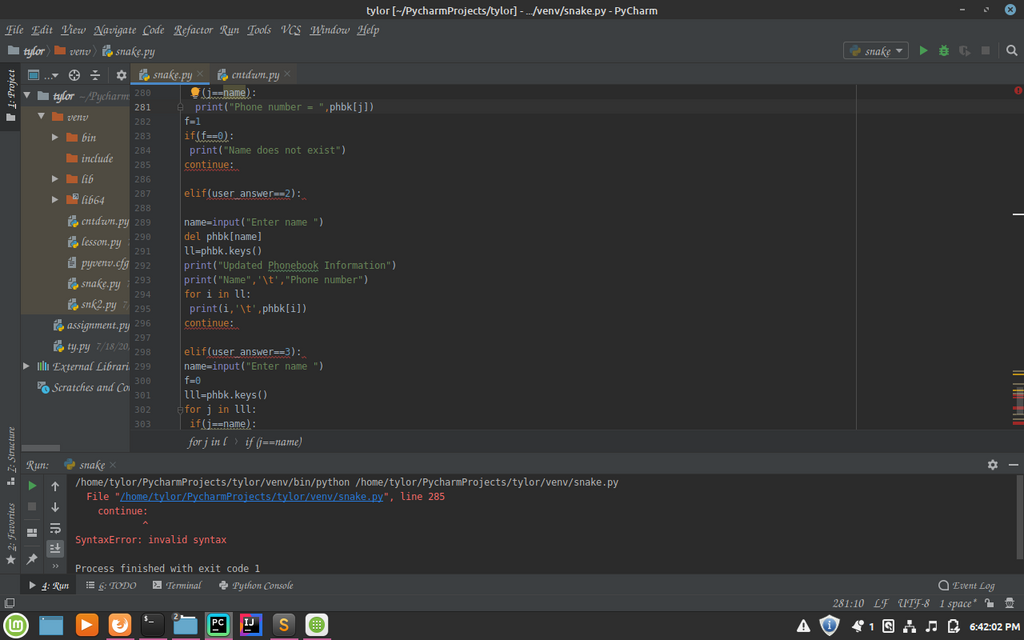
If you forget to indent, or indent inconsistently, Python will give you an IndentationError. It's one of the most common errors for beginners, but once you get the hang of it, this rule makes Python code incredibly organized and easy to follow.
The Quiet Role of Whitespace
Besides the indentation at the start of a line, other whitespace (spaces, tabs, and blank lines) also plays a role. While indentation is a strict rule, whitespace within lines of code is for human readability. For example, Python understands both of these lines perfectly:
# Hard to read
x=10+5*2

# Easy to read
x = 10 + 5 * 2
Both lines do the exact same thing, but the second one is much easier on the eyes. Using spaces around operators like +, *, and = is a standard convention that makes your code cleaner.
You can also use blank lines (vertical whitespace) to separate different parts of your code. Just as a new paragraph signals a new idea in an essay, a blank line in your script can separate logical sections, making the whole program easier to scan and understand.
And that's the core of Python's syntax. It’s built on simple, readable rules. By mastering indentation and using whitespace wisely, you're already on your way to writing clean, effective Python code.