Introduction to Python Programming
Introduction to Python
What is Python?
Python is a programming language, which is a way for humans to give instructions to computers. Think of it like a recipe. You write down the steps, and the computer follows them to bake a cake, or in this case, run an application.
What makes Python so popular, especially for beginners, is its readability. The code often looks a lot like plain English, which makes it easier to learn and understand than many other languages. It was created in the late 1980s by Guido van Rossum, who wanted to create a language that was both powerful and easy to read.
Where Is Python Used?
Python is incredibly versatile, like a multi-tool for the digital world. It's not just for one specific task; it's used across a huge range of industries and applications. You've almost certainly used an app built with Python without even realizing it.
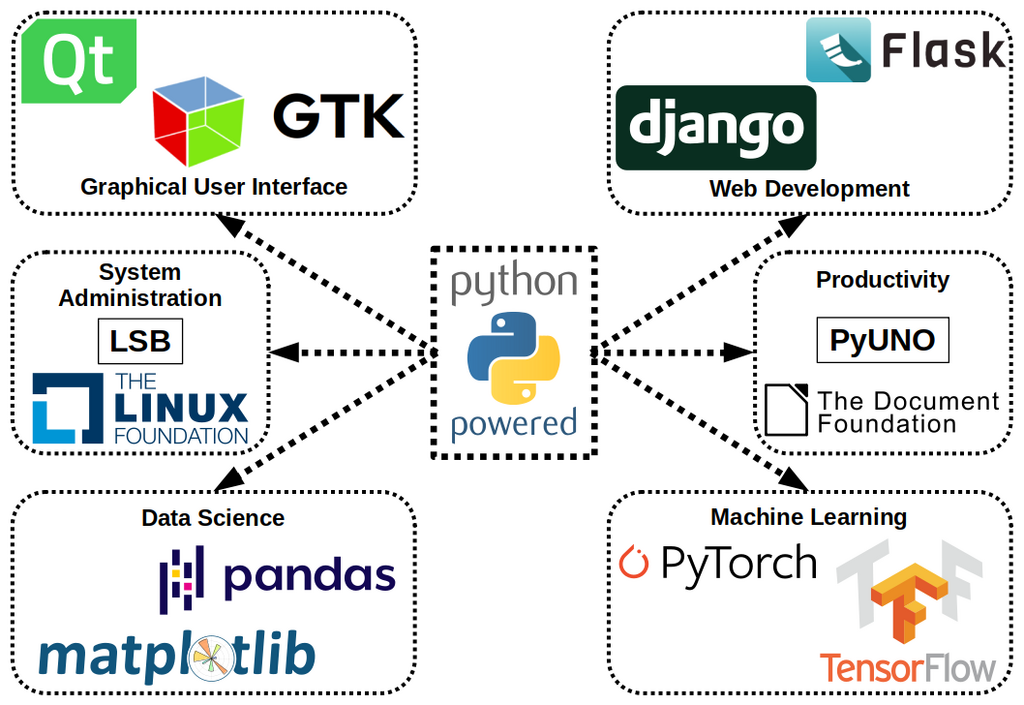
Here are a few major areas where Python shines:
- Web Development: It's used to build the server-side logic of websites. Popular web frameworks like Django and Flask are written in Python. Instagram and Spotify both use it extensively.
- Data Science and Machine Learning: This is one of Python's biggest strengths. Libraries like Pandas, NumPy, and TensorFlow make it the top choice for analyzing data, creating visualizations, and building artificial intelligence models.
- Automation and Scripting: Python is excellent for writing simple scripts to automate repetitive tasks, like renaming thousands of files or sending emails automatically. This saves a lot of time and effort.
Setting Up Your Workspace
To start writing Python, you need two key things: the Python interpreter and an Integrated Development Environment (IDE).
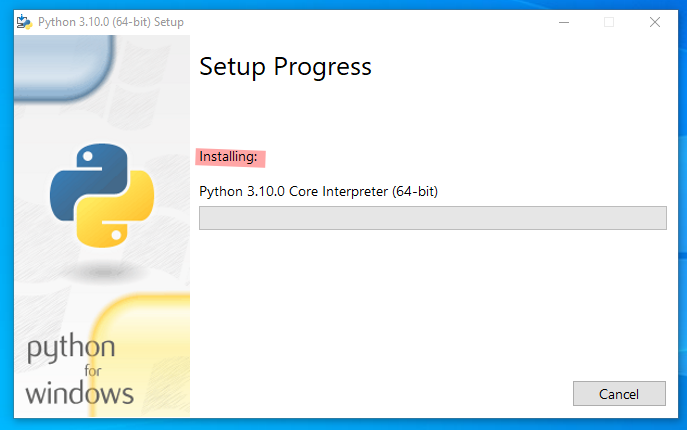
- The Python Interpreter: This is the core program that understands and executes your Python code. You can download it for free from the official website, python.org. Just download the latest stable version for your operating system (Windows, macOS, or Linux).
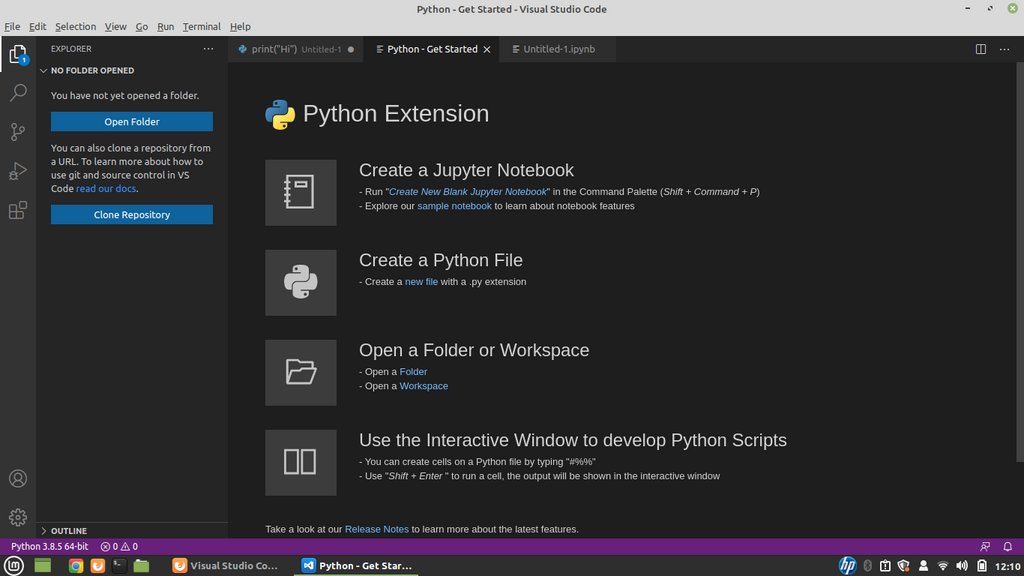
- An IDE: While you can write code in a simple text editor, an IDE makes your life much easier. It's a specialized software that combines a code editor with helpful tools like syntax highlighting (coloring your code to make it readable), debugging tools to find errors, and a way to easily run your code.
For beginners, some great options are Visual Studio Code (VS Code), PyCharm, or Thonny. We recommend starting with VS Code because it's powerful, free, and widely used in the industry.
Your First Python Script
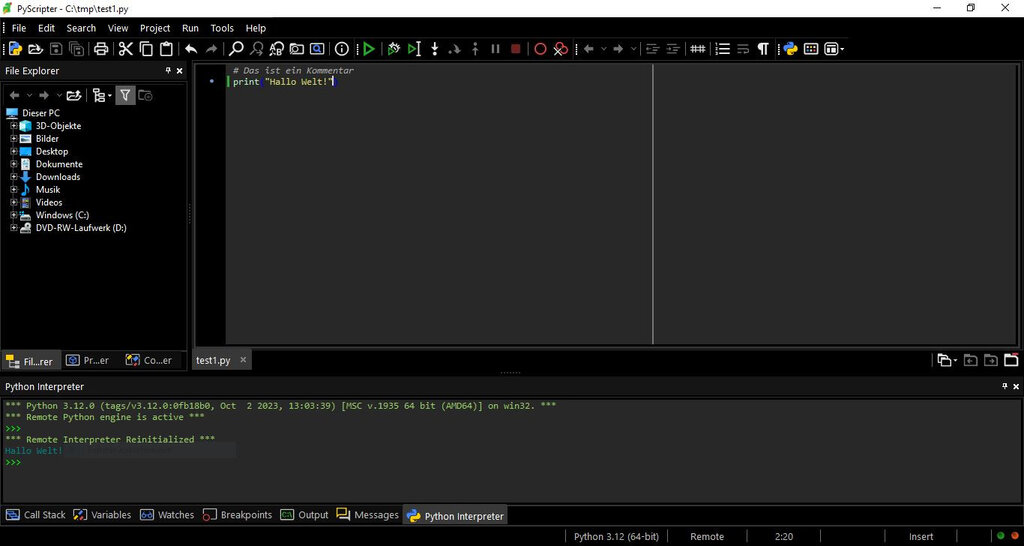
Let's write the traditional first program for any new language: "Hello, World!". This simple program just prints that text to the screen. It's a great way to confirm your setup is working correctly.
Open your IDE, create a new file, and save it as hello.py. The .py extension is important because it tells your computer that this is a Python file.
# This is a comment. Python ignores anything after a #
# The print() function displays text on the screen.

print("Hello, World!")
In this code, print() is a built-in function that takes whatever is inside the parentheses and displays it. The text inside the quotation marks is called a string.
Most IDEs have a "Run" button (often a green triangle) that will execute your script. You can also run it from your IDE's built-in terminal by typing python hello.py and pressing Enter. If everything is set up correctly, you should see the words "Hello, World!" appear in the output.
What is the primary reason for Python's popularity, especially among beginners?
Which of the following components is essential for executing Python code?
Congratulations, you've just written and run your first Python program! You now have a working development environment, which is the foundation for everything you'll learn next.