Introduction to Python Programming
Introduction to Python
What is Python?
Python is a high-level programming language known for its readability and simplicity. Created in the late 1980s by Guido van Rossum, its name was inspired by the British comedy troupe Monty Python. Van Rossum wanted a language that was easy to learn and fun to use, and his philosophy is baked right into the language itself. It emphasizes clean, readable code, which makes it a great starting point for beginners.
Unlike some other languages that can be rigid and complex, Python feels more like writing in plain English. This design choice has made it incredibly popular not just for learning to code, but also for building complex applications in fields like web development, data science, and artificial intelligence.
Why Use Python?
Python stands out for a few key reasons. Its simple syntax means you can write programs with fewer lines of code than you might in other languages. It's also incredibly versatile. The same language can be used to build a website, analyze data, or even control a robot. Finally, Python has a huge and supportive community, which means if you ever get stuck, help is usually easy to find.
Python's design philosophy is often summarized as: "There should be one, and preferably only one, obvious way to do it."
Here's a quick look at its main benefits:
| Feature | Benefit |
|---|---|
| Simple Syntax | Easy for beginners to learn and read. |
| Versatile | Used in web development, AI, data science, and more. |
| Large Standard Library | Comes with many pre-built tools for common tasks. |
| Active Community | Plenty of free resources, tutorials, and support. |
Getting Started
To start writing Python, you first need to install it on your computer. Many Mac and Linux computers come with Python pre-installed, but you might need to install a newer version. The official source for Python is the website python.org. You'll want to download the latest version of Python 3, as Python 2 is no longer supported.
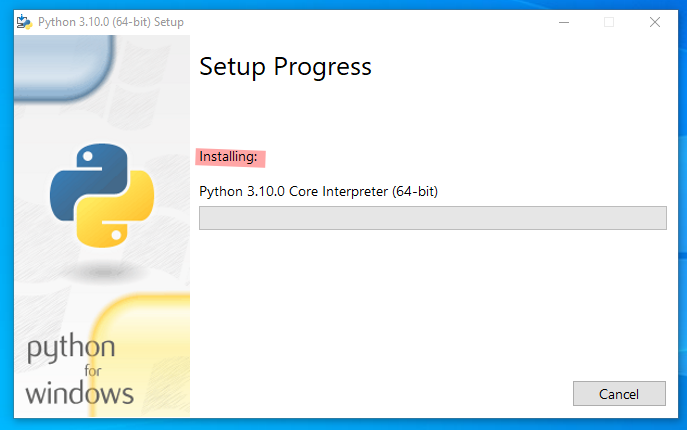
When you install Python, it comes with a basic program called IDLE (Integrated Development and Learning Environment). Think of an IDE as a text editor with special features for programming, like syntax highlighting and tools to run your code. While there are many advanced IDEs, IDLE is a great place to start.
Your First Program
It's a tradition in programming to start by writing a program that simply displays "Hello, World!" on the screen. In Python, this is incredibly straightforward. It takes just one line of code.
# This line of code prints a message to the console.
print("Hello, World!")
Let's break that down:
print()is a function. A function is a named block of code that performs a specific task. Theprint()function's job is to display output."Hello, World!"is a string, which is a sequence of characters. We put it inside the parentheses to tell theprint()function what we want to display.
To run this code, open a plain text editor (like Notepad, TextEdit, or IDLE), type the line above, and save the file as hello.py. The .py extension is important because it tells the computer that this is a Python file. Then, open your computer's terminal or command prompt, navigate to the directory where you saved the file, and type python hello.py and press Enter. You should see Hello, World! printed on the screen.
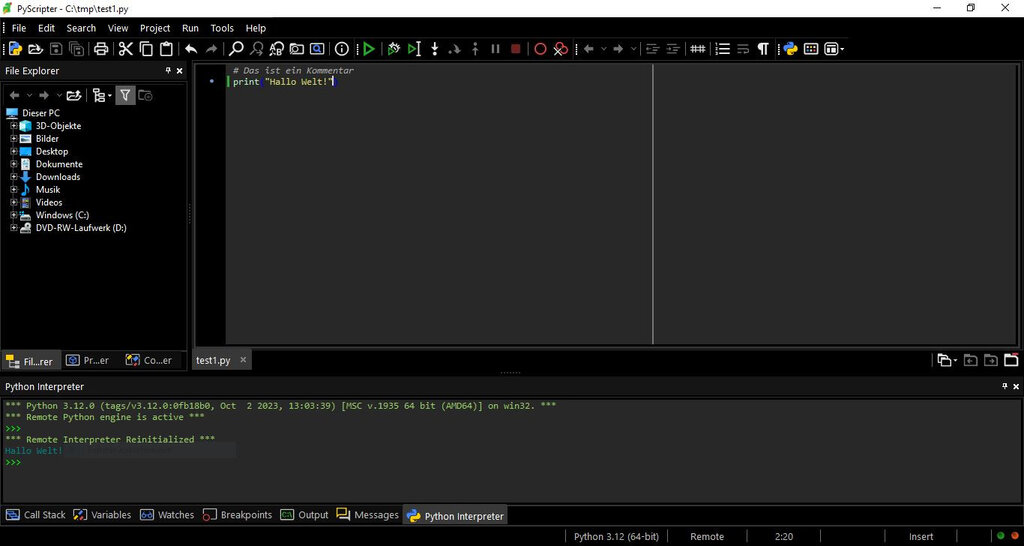
That's it! You've just written and executed your first Python program. Let's review what we've covered.
What is the primary design philosophy behind Python?
Which line of code correctly prints the text "Hello, World!" to the screen?
You now have a basic understanding of what Python is, why it's useful, and how to write a simple program. The journey into programming begins with small steps like these.