Introduction to Python Programming
Introduction to Python
What Is Python?
Python is a popular, high-level programming language. Think of it as a set of instructions and grammar rules that let you talk to a computer and tell it what to do. Created in the late 1980s by Guido van Rossum, Python wasn't named after the snake. Van Rossum was a fan of the British comedy troupe Monty Python, and the name is a nod to their show, Monty Python's Flying Circus.
One of Python's biggest strengths is its simplicity. Its syntax is designed to be clean and readable, almost like plain English. This makes it an excellent language for beginners who are just starting their programming journey. But don't let its simplicity fool you; Python is incredibly powerful and is used by some of the world's largest companies, including Google, Netflix, and NASA.
A Focus on Readability
Every programming language has a philosophy that guides its development. Python's philosophy is famously summarized in a document called "The Zen of Python." It’s a collection of 19 guiding principles for writing computer programs. You don't need to know all of them, but they boil down to a few key ideas.
Beautiful is better than ugly. Simple is better than complex. Readability counts.
The core idea is that code is read much more often than it is written. When you or someone else comes back to a project months later, the code should be easy to understand. This emphasis on clarity and simplicity is what makes Python so approachable. Programmers can express concepts in fewer lines of code than might be possible in languages like C++ or Java, which helps in writing clean, maintainable programs.
Where Is Python Used?
Python's versatility is one of its most celebrated features. It's not just for one specific task; it's a general-purpose language used across a vast range of fields.
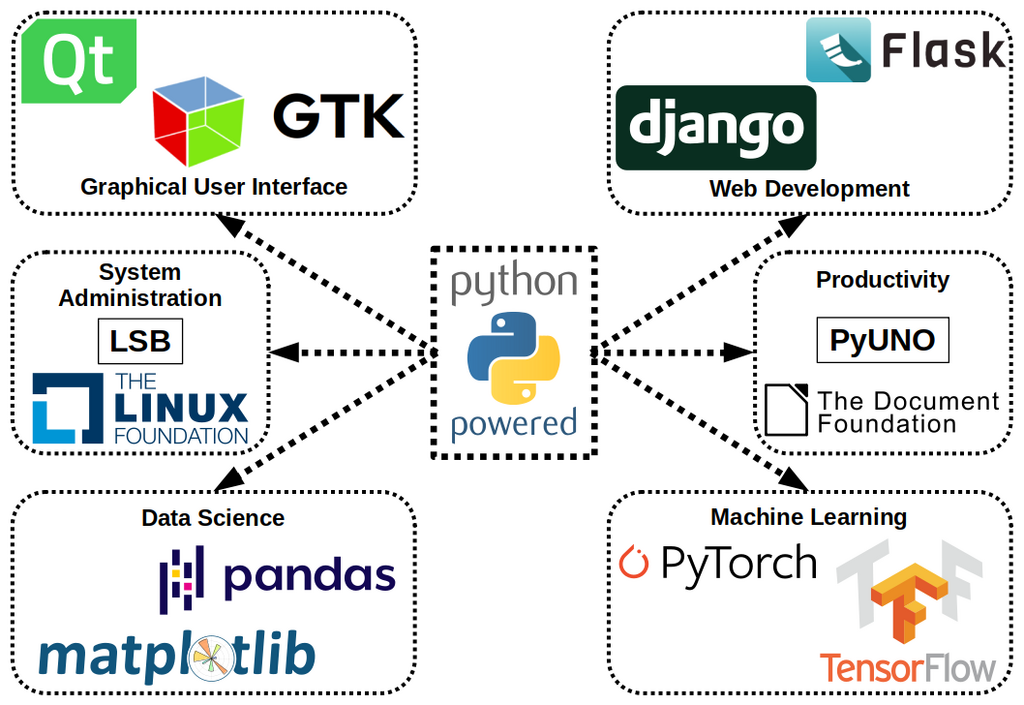
Web Development: Python is a major player in building the server-side of websites—the behind-the-scenes logic that handles user accounts, interacts with databases, and makes a website function. Frameworks like Django and Flask allow developers to build robust web applications quickly.
Data Science and Machine Learning: This is where Python truly shines. It has become the go-to language for data analysts, scientists, and machine learning engineers. A rich ecosystem of libraries like NumPy, Pandas, and Scikit-learn makes it easy to manipulate data, perform complex calculations, and build predictive models.
Automation and Scripting: Tired of doing the same repetitive task over and over? Python is perfect for writing small scripts to automate your work. This could be anything from renaming thousands of files at once to filling out online forms or sending emails automatically. It's a powerful tool for boosting productivity.
And More: Beyond these major areas, Python is used in scientific computing, finance, game development, and creating desktop applications. Its adaptability means that once you learn it, you have a tool that can be applied to almost any problem.
What is the origin of the name 'Python'?
What is the central idea guiding Python's design philosophy, often summarized as 'The Zen of Python'?