Introduction to Python Programming
Introduction to Python
Meet Python
Python is a high-level programming language known for its clear syntax and readability. It was created in the late 1980s by Guido van Rossum, a Dutch programmer. Van Rossum wanted to design a language that was easy to read and write, emphasizing code that looked clean and uncluttered. The name doesn't come from the snake, but from the British comedy group Monty Python's Flying Circus.
Since its first release in 1991, Python has grown immensely. It's managed by the non-profit Python Software Foundation and has a massive, active community of developers who contribute to its extensive collection of libraries and frameworks. This community support is one of Python's greatest strengths.
The Zen of Python
Python's design isn't accidental. It's guided by a set of 19 principles known as "The Zen of Python." These are not strict rules but rather a collection of aphorisms that capture the language's core philosophy. You can actually see them by typing import this into a Python interpreter.
Beautiful is better than ugly. Explicit is better than implicit. Simple is better than complex.
This philosophy leads to some of Python's most important features. The emphasis on readability means that Python code often looks a lot like plain English, making it easier for beginners to pick up and for teams to maintain.
Let's break down a few other key features:
-
Multiple Programming Paradigms: Python isn't rigid. It allows you to write code in several styles. You can write simple, step-by-step instructions (procedural), create reusable blueprints for objects (object-oriented), or treat computation as the evaluation of mathematical functions (functional). This flexibility makes it a versatile tool for nearly any task.
-
Dynamic Typing: In many languages, you have to declare the type of a variable before you use it (e.g., this is a number, this is text). In Python, you don't. The interpreter figures out the type on the fly. This makes the code shorter and more flexible.
-
Automatic Memory Management: Programmers don't have to worry about manually allocating and freeing up memory. Python handles this automatically in the background, which prevents many common bugs and lets developers focus on solving problems.
Setting Up Your Workspace
To start writing Python, you first need to install it. Python is free and open source. You can download the latest version from the official website, python.org. The site provides installers for Windows and macOS. On most modern Linux distributions, Python is already installed.
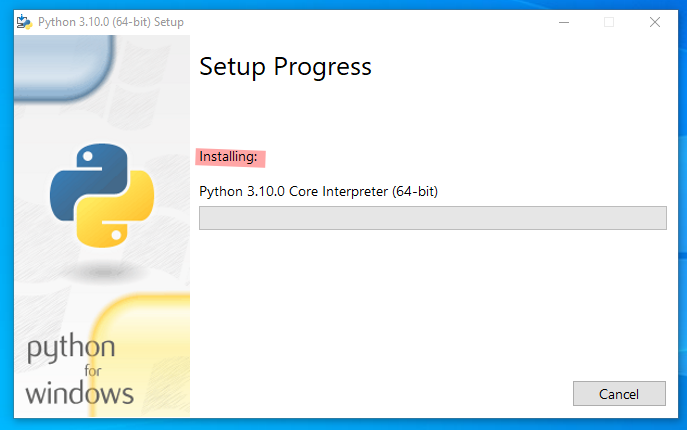
Once Python is installed, you have a few ways to run code. The installation includes a simple program called IDLE (Integrated Development and Learning Environment), which gives you a basic text editor and a place to run your code.
Here's how you can run a classic "Hello, World!" program. This is often the very first program anyone writes in a new language. It simply prints the phrase "Hello, World!" to the screen.
print("Hello, World!")
You can type this directly into the Python interpreter or save it in a file (usually with a .py extension, like hello.py) and run the file from your computer's terminal. As you advance, you'll likely want a more powerful code editor, but for now, the built-in tools are all you need to get started.