Introduction to Python Programming
Introduction to Python
What is Python?
Python is a programming language created in the late 1980s by Guido van Rossum. If programming languages were tools, Python would be a versatile multi-tool. It's used for everything from building websites and automating repetitive tasks to conducting complex data analysis and creating artificial intelligence.
What makes Python so popular, especially for beginners, is its design philosophy. It prioritizes readability and simplicity. Writing Python code often feels like writing in plain English. This means you can focus more on solving problems and less on wrestling with complicated syntax.
The core idea is that code is read far more often than it is written. Therefore, making it easy to read is crucial.
This simplicity doesn't limit its power. Python has a massive collection of pre-written code, called libraries, that you can use for specialized tasks. Need to work with data? There's a library for that. Want to build a game? There's a library for that, too. This vast ecosystem makes it a practical choice for almost any project.
Getting Set Up
To start writing Python, you need two things: the Python interpreter and a code editor. The interpreter is the program that understands and runs your Python code. The code editor is where you'll write it.
First, you'll need to install Python on your computer. It's free and available from the official website.
You can download the latest version of Python from python.org. Be sure to download the version appropriate for your operating system (Windows, macOS, or Linux).
Next, you need a good place to write your code. While you could use a basic text editor like Notepad, a dedicated code editor makes life much easier. Code editors offer features like syntax highlighting, which colors your code to make it more readable, and auto-completion, which suggests code as you type.
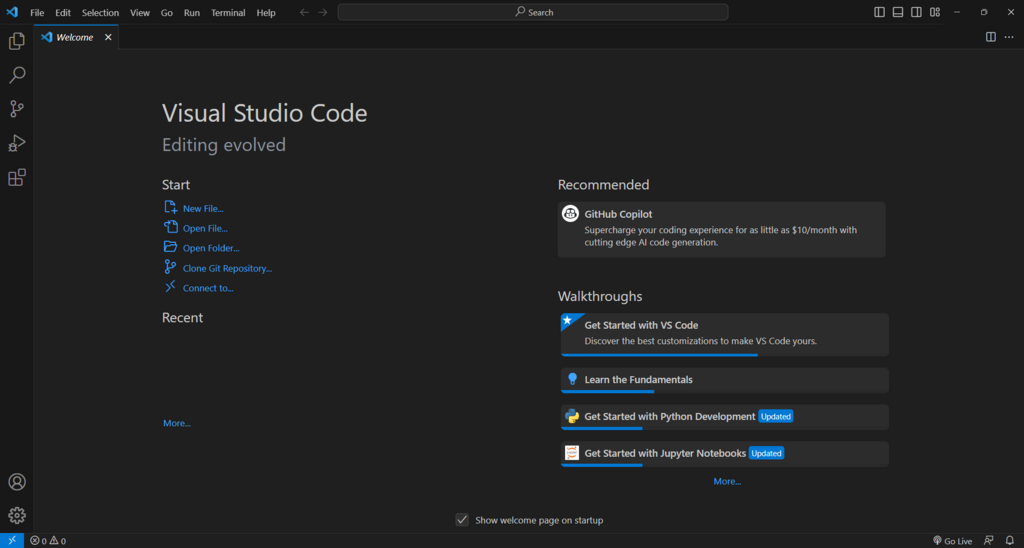
A great choice for beginners is Visual Studio Code. It's free, popular, and supports Python right out of the box with the help of an extension.
Your First Program
Let's write your first line of Python. It's a tradition in programming to start with a program that simply displays "Hello, World!" on the screen. This small step confirms that your setup is working correctly.
In Python, you can do this with the print() function. A function is a named block of code that performs a specific task. The print() function's job is to display whatever you put inside its parentheses.
# This is a comment. Python ignores lines that start with a #

# The print() function displays text to the screen.
print("Hello, World!")
To run this code, follow these steps:
- Open your code editor (like Visual Studio Code).
- Create a new file and type the code above into it.
- Save the file with a
.pyextension, for example,hello.py. This extension tells your computer it's a Python file. - Open your computer's terminal or command prompt.
- Navigate to the folder where you saved your file. You can do this using the
cd(change directory) command. - Type
python hello.pyorpython3 hello.pyand press Enter.
You should see the text Hello, World! appear in your terminal. Congratulations, you've just run your first Python program!
Who is the creator of the Python programming language?
What is the primary design philosophy of Python?
That's the first step on your programming journey. You've learned what Python is, set up your environment, and executed your first piece of code.