Introduction to Python Programming
Introduction to Python
What Is Python?
Python is a high-level, general-purpose programming language. Think of it as a set of instructions a computer can understand, but written in a way that’s much closer to human language than the ones and zeros a computer actually uses. Its core philosophy is all about readability and simplicity, which makes it a favourite for everyone from absolute beginners to seasoned developers at companies like Google, Netflix, and NASA.
Unlike some languages that force you into a rigid structure, Python is flexible. It allows you to solve problems in different ways, whether you're building a simple script to automate a boring task or constructing a complex machine learning model.
A Brief History
Python was created in the late 1980s by a Dutch programmer named Guido van Rossum. He wanted to design a language that was easy to read and use, building on the strengths of other languages while fixing their frustrations. He valued clean, uncluttered code.
Development began in 1989, and the first version was released in 1991. Over the years, Python has evolved significantly. The two major versions you might hear about are Python 2 and Python 3. While Python 2 was popular for a long time, Python 3 is the present and future of the language, with ongoing support and development.
What Makes Python Stand Out?
Several key features contribute to Python's popularity. The most important one is its simple, elegant syntax. Writing Python code feels a lot like writing in English, which lowers the barrier to entry for new programmers.
Instead of complex symbols and punctuation, Python uses plain words and indentation. This makes the code not just easier to write, but also much easier to read and maintain.
For example, here’s how you would print the phrase "Hello, World!" to the screen:
# This line of code will display a message.
print("Hello, World!")
Python is also incredibly versatile. It comes with a massive standard library, often described as a "batteries-included" approach. This means a huge collection of pre-written code, called modules, is available right out of the box. Need to work with dates, connect to the internet, or read files? There's likely a built-in module for that, saving you time and effort.
Finally, Python is supported by a large and active global community. This means if you ever get stuck, help is easy to find through forums, tutorials, and open-source libraries. This community contributes a vast repository of third-party packages, expanding Python's capabilities for virtually any task imaginable.
Where Is Python Used?
Python's flexibility means it's used in a wide range of fields. It's not a niche language for just one type of job; it’s a multi-purpose tool.
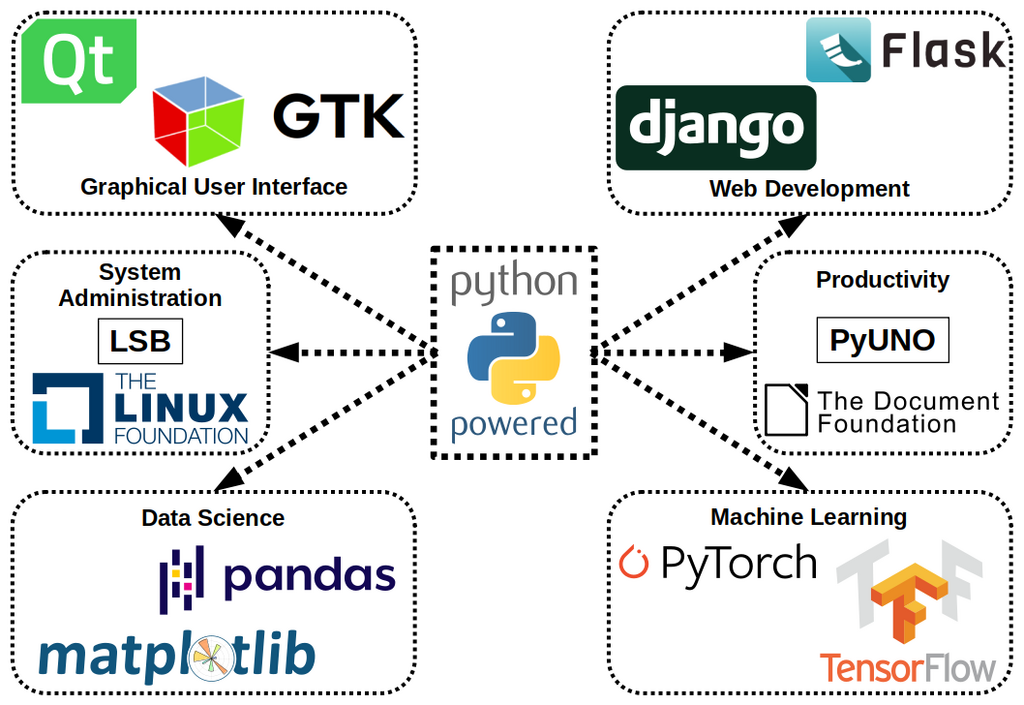
Some of the most common applications include:
| Field | Description | Examples |
|---|---|---|
| Web Development | Building the server-side logic of websites and applications. | Django, Flask |
| Data Science & AI | Analysing data, creating visualisations, and building machine learning models. | pandas, NumPy, TensorFlow |
| Automation & Scripting | Writing small programs to automate repetitive tasks like renaming files or sending emails. | System administration scripts |
| Software Development | Creating desktop applications, games, and development tools. | Dropbox, BitTorrent |
This wide applicability is a key reason why learning Python is such a valuable skill in today's tech landscape.
Ready to check your understanding?
What is the core design philosophy behind Python?
The phrase "batteries-included" when referring to Python describes its...
Now that you have a sense of what Python is and where it came from, you're ready to start exploring how it works.