Introduction to Python Programming
Introduction to Python
Getting Started with Python
Python is a programming language known for its simplicity and readability. Its design philosophy emphasizes code that is easy to read and write, making it a popular choice for beginners and professionals alike. Unlike some languages that use complex syntax with lots of brackets and semicolons, Python uses clean, straightforward English-like commands and indentation to structure code.
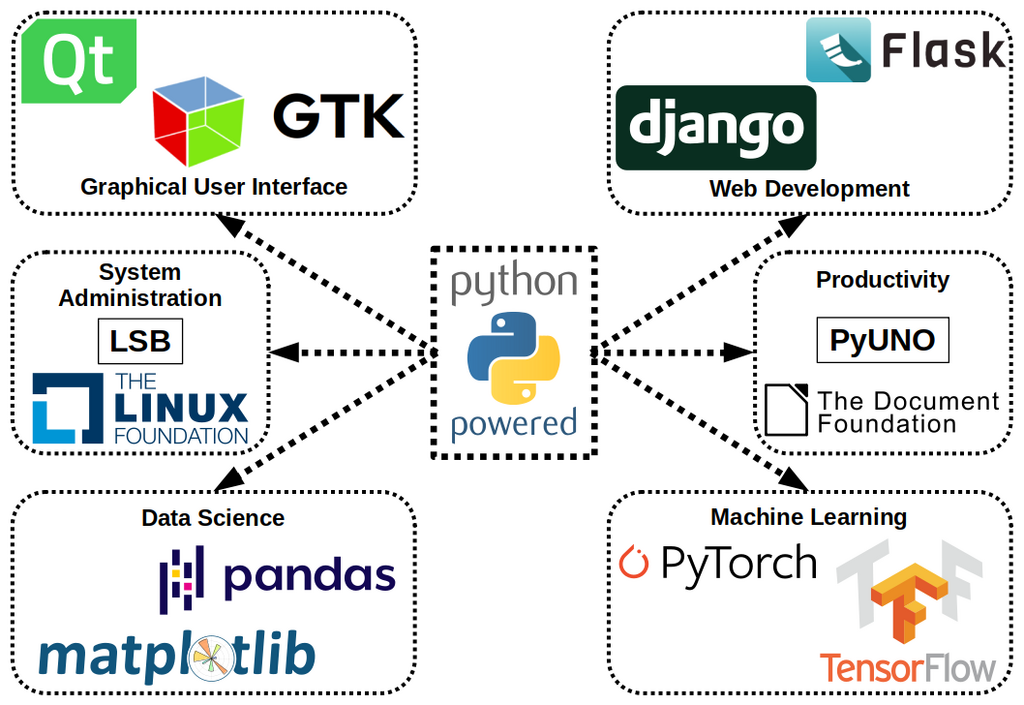
This simplicity doesn't limit its power. Python is incredibly versatile and used across many industries. Tech giants use it for web development (like Instagram and Spotify), data analysis (like Netflix's recommendation engine), and automating repetitive tasks. From building websites to analyzing scientific data or creating games, Python provides the tools to get the job done.
Setting Up Your Workspace
To start writing Python, you need two key things: the Python interpreter and a code editor. The interpreter is the program that reads your Python code and carries out its instructions. A code editor is a program where you write and save your code. While you can use a basic text editor, an Integrated Development Environment (IDE) is often better because it combines a code editor with other helpful tools, like a way to run your code and check for errors.
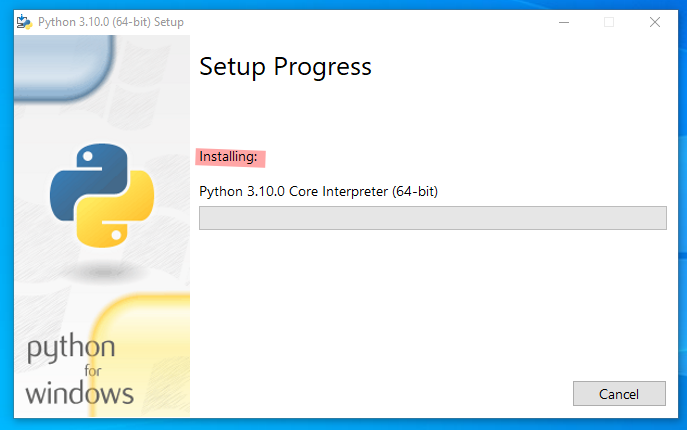
First, you'll need to install Python. You can download the official installer from the Python website at python.org. The site automatically suggests the best version for your operating system.
- Windows: Run the installer and make sure to check the box that says "Add Python to PATH." This lets you run Python from your computer's command line.
- macOS: Run the installer just like any other application.
- Linux: Most Linux distributions come with Python pre-installed. You can check by opening a terminal and typing
python3 --version.
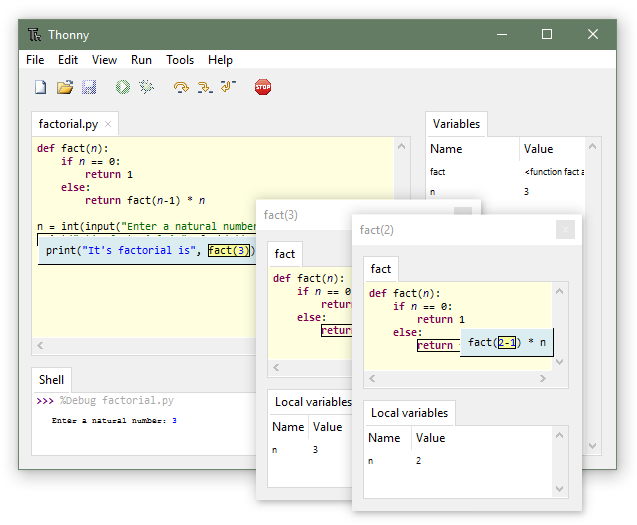
Next, you'll need an IDE. We recommend Thonny, an IDE designed specifically for beginners. It has a very simple interface and comes with Python built-in, so you don't have to configure anything. You can download it for free from thonny.org.
Your First Program
A long-standing tradition in programming is to write a "Hello, World!" program as your first piece of code. It's a simple way to make sure your setup is working correctly.
Open Thonny. You'll see a code editor at the top and a "Shell" area at the bottom. The editor is where you'll write your script. The shell is where you'll see the output.
In the editor, type the following line of code:
print("Hello, World!")
This code uses the built-in print() function to display text on the screen. The text you want to display, called a string, goes inside the parentheses and is wrapped in quotation marks.
Now, click the green "Run" button (it looks like a play symbol) in the toolbar. Thonny will ask you to save the file first. Save it as hello.py. The .py extension is important as it tells the computer that this is a Python file.
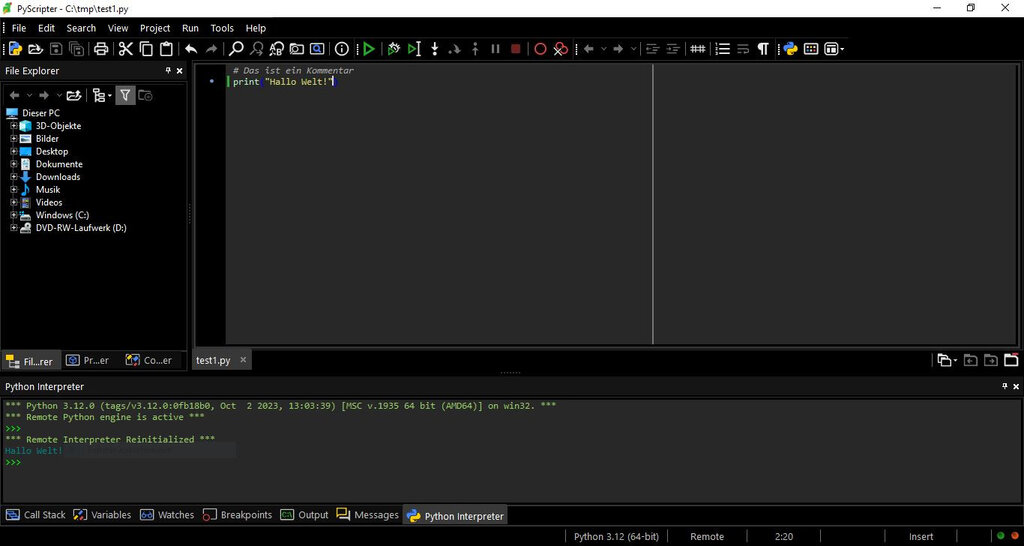
Once you save it, the code will run. You should see the text Hello, World! appear in the shell at the bottom of the window.
That's it! You've successfully written and run your first Python program.
Ready to test what you've learned about getting started?
What is a key design philosophy of the Python programming language?
What are the two essential components you need to start writing and running Python code?