Introduction to Python Programming
Introduction to Python
The Story of Python
Python is a powerful programming language used for everything from building websites to training artificial intelligence. It was created in the late 1980s by a Dutch programmer named Guido van Rossum. He wanted to design a language that was easy to read and write, with a clean and uncluttered syntax.
Fun fact: The name doesn't come from the snake. Van Rossum was a big fan of the British comedy group Monty Python, and he needed a short, unique, and slightly mysterious name for his new creation.
Python's core philosophy emphasizes code readability and simplicity. This design choice makes it one of the easiest languages for beginners to learn, but it's also powerful enough for large-scale projects at companies like Google, Netflix, and NASA.
What Makes It Special?
Several key features make Python stand out from other programming languages.
| Feature | Description |
|---|---|
| Simple & Readable | Python code often looks like plain English, making it intuitive to understand what a program is doing. |
| Interpreted | Python code is run line by line by an interpreter. This is like having a live translator who translates one sentence at a time, making it easier to find and fix errors as you go. |
| High-Level | Python handles a lot of complex computer operations, like memory management, behind the scenes. This lets programmers focus on solving problems rather than dealing with the computer's inner workings. |
| "Batteries Included" | Python comes with a massive standard library, which is a collection of pre-written code for common tasks. Need to work with files, connect to the internet, or handle data? There's likely a built-in module for that. |
It's also cross-platform, meaning a Python program written on a Windows computer will run on a Mac or a Linux machine without any changes. This versatility is a huge advantage for developers.
What's It Used For?
Python is a general-purpose language, which means it can be used to build almost anything. Its versatility has made it a favorite in many different fields.
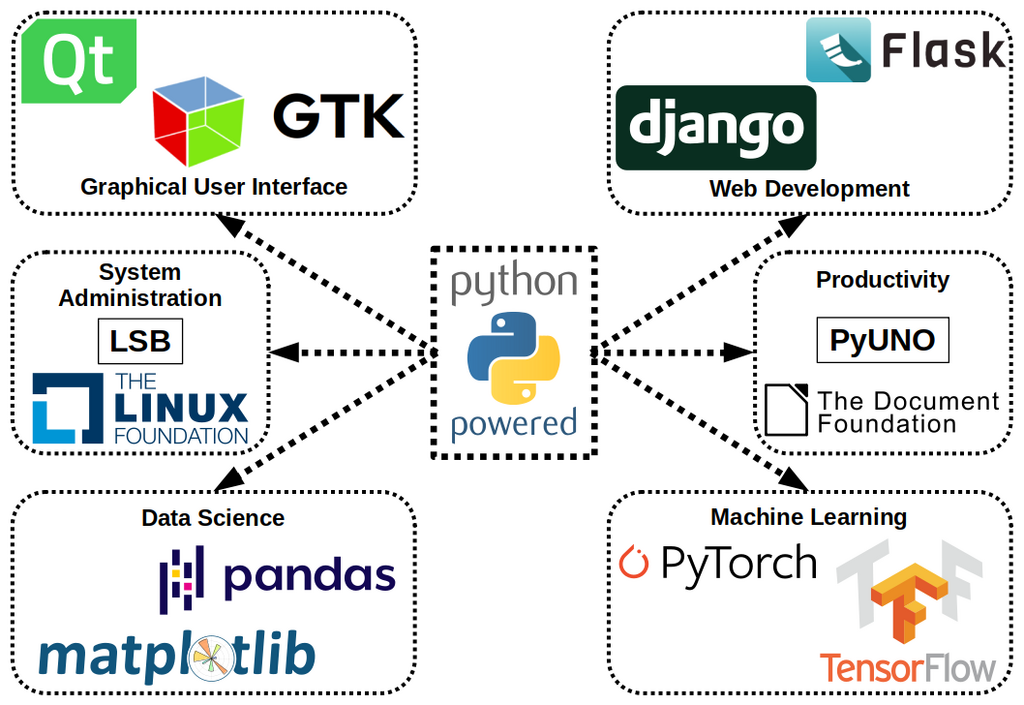
Some of its most popular applications include:
-
Data Science and Machine Learning: Python is the undisputed leader in this field. Powerful libraries like pandas, NumPy, and TensorFlow allow analysts and scientists to manipulate data, create visualizations, and build sophisticated AI models.
-
Web Development: Frameworks like Django and Flask provide the tools to build the server-side logic of websites and web applications, from simple blogs to complex e-commerce platforms.
-
Automation and Scripting: If you have a repetitive task, like renaming thousands of files or filling out an online form, you can write a simple Python script to do it for you in seconds. This is often called a "life hack" for programmers.
-
Software Development: Python is also used to create desktop applications, games, and tools for system administration.
Who is the creator of the Python programming language?
What is the primary design philosophy of Python?
With its simple design and vast capabilities, Python serves as an excellent starting point for new programmers and a powerful tool for seasoned experts.