Introduction to Python Programming
Introduction to Python
Meet Python
Python is a high-level, general-purpose programming language. That sounds a bit technical, but the core idea is simple. It was created in the late 1980s by Guido van Rossum, who wanted to build a language that was powerful yet easy to read and write. Think of it as a tool designed for clarity.
Its main goal is to let developers write code that is clear, logical, and effective, whether they're building a small script or a massive, complex application. Unlike some languages that require a lot of boilerplate code and strict punctuation, Python prioritizes human readability.
The philosophy behind Python is that code is read far more often than it is written. Making it easy to read saves time and prevents headaches for everyone involved.
Readability Is King
One of Python's most distinctive features is its use of indentation. In many other programming languages, programmers use braces {} or keywords like begin and end to group blocks of code. Python, however, uses whitespace—spaces or tabs—to define the structure of a program.
This isn't just a stylistic choice; it's a rule. If you indent your code incorrectly, your program won't run. This might seem strict, but it enforces a clean, consistent visual structure across all Python projects. It forces programmers to write code that's organized and easy to follow at a glance, making it simpler to understand the logic and flow of a program.
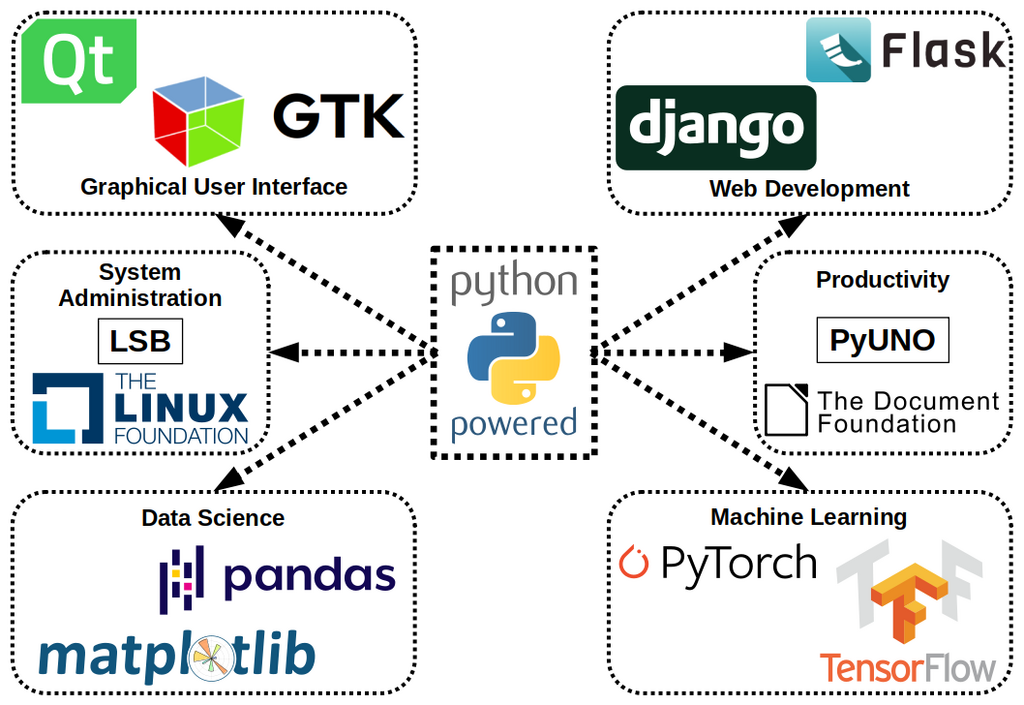
A Language for Every Style
Programming isn't a one-size-fits-all activity. Different problems are best solved with different approaches, or "paradigms." Python is flexible and supports several popular programming paradigms, so you can choose the style that best fits your project.
- Procedural Programming: This is like following a recipe. You write a sequence of steps or procedures for the computer to follow in order.
- Object-Oriented Programming (OOP): This approach involves creating "objects" that bundle together data and the functions that operate on that data. Think of it like building with LEGO bricks—each brick is an object with its own properties (color, size) and abilities (connecting to other bricks).
- Functional Programming: This style treats computation as the evaluation of mathematical functions. It avoids changing state and mutable data. It’s like an assembly line where data flows through a series of stations, each performing a specific transformation.
Python Does the Housekeeping
Python also handles a lot of complexity behind the scenes, which makes it easier for beginners to get started. Two key features that help with this are dynamic typing and automatic memory management.
Dynamic typing means you don't have to declare the type of a variable when you create it. If you want to store a number, you just assign it. If you later want to store text in that same variable, you can. Python figures out the type on the fly. This provides a lot of flexibility, letting you write code more quickly.
Automatic memory management, often called "garbage collection," means you don't have to worry about allocating and freeing up memory yourself. Python automatically keeps track of which objects and variables are no longer in use and cleans them up. This prevents common bugs called memory leaks and lets you focus on solving your problem, not on managing computer memory.
Think of it this way: Python gives you a self-organizing toolbox (dynamic typing) and a workshop that cleans itself up (automatic memory management).
Now that you understand the core ideas behind Python, let's check your knowledge.
What was the primary goal behind the creation of Python by Guido van Rossum?
In Python, how are blocks of code, such as the body of a function, defined?
These core principles—readability, flexibility, and automation—are what make Python one of the most popular programming languages in the world. They create a foundation that's easy for newcomers to build on and powerful enough for experts to rely on.