Introduction to Python Programming
Introduction to Python
What is Python?
Python is a popular, high-level programming language known for its readability and simple syntax. Think of it as a language designed to be understood by humans as much as by computers. This focus on clarity makes it an excellent choice for beginners and a powerful tool for experienced developers.
Unlike some languages that require complex setup and strict rules, Python lets you write code that is clean and concise. It’s a versatile language, meaning you can use it to build almost anything, from web applications and data analysis tools to artificial intelligence and video games.
A Brief History
Python was created in the late 1980s by Guido van Rossum in the Netherlands. He wanted to design a language that was easy to read and could bridge the gap between complex system languages and simple shell scripting. As a successor to a language called ABC, Python was intended to be highly extensible and intuitive.
And the name? It doesn't come from a snake. Van Rossum was a fan of the British comedy troupe Monty Python's Flying Circus, and he chose the name to reflect a spirit of fun and creativity.
Over the years, Python has evolved significantly. The two major versions were Python 2 and Python 3. While Python 2 was popular for a long time, Python 3 was released in 2008 with major improvements and is now the standard for all new development.
The Zen of Python
Python's design isn't accidental. It's guided by a set of principles known as "The Zen of Python," written by longtime contributor Tim Peters. These ideas emphasize simplicity, beauty, and readability over complexity. You can actually read them by running a simple command in Python.
# In a Python interpreter, type:
import this
This command prints out a poem-like list of aphorisms that capture the language's core philosophy. Here are a few key lines:
Beautiful is better than ugly. Explicit is better than implicit. Simple is better than complex. Readability counts.
This philosophy means that Python code often looks clean and is structured in a way that’s easy to follow, even for someone who didn't write it. This makes collaboration easier and reduces the cost of program maintenance.
Features and Applications
Python's popularity stems from a powerful combination of features. It's an interpreted language, which means you can run your code line by line without needing to compile it first. This makes development and debugging faster. It's also dynamically typed, so you don't have to declare the type of a variable before you use it.
These features, along with its support for multiple programming styles, have led to Python's adoption in a huge range of fields.
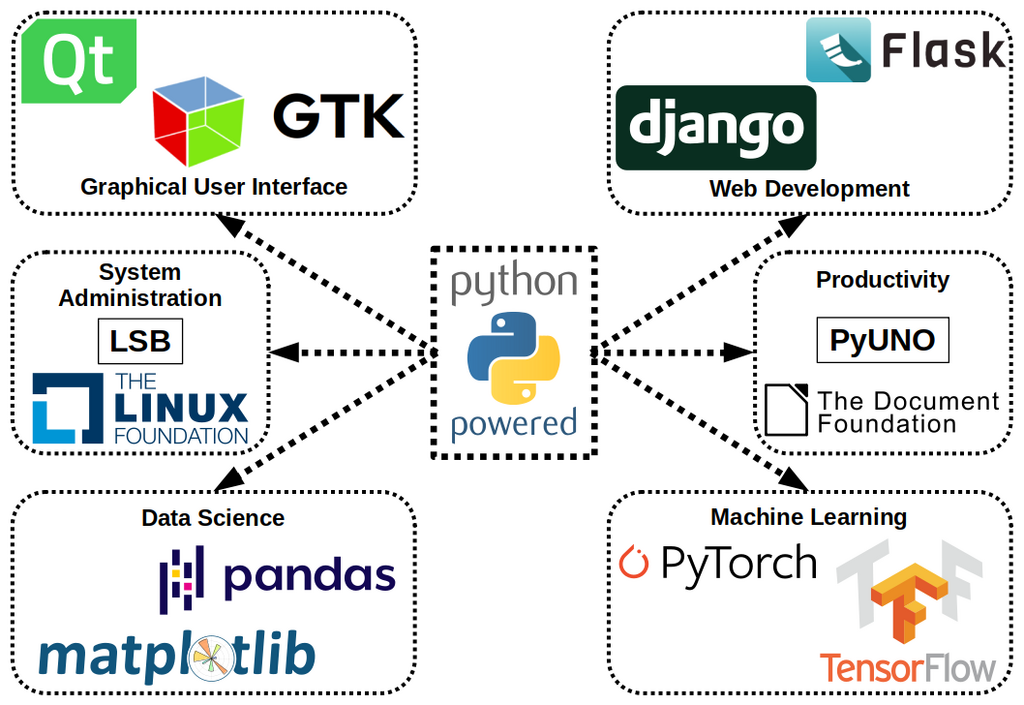
One of Python's greatest strengths is its extensive standard library. Think of it as a built-in toolkit that comes with the language, free of charge. It provides modules for all sorts of common tasks, from working with text and dates to handling network connections and reading files.
This "batteries-included" approach means you can get a lot done without having to search for and install third-party libraries. When you do need more specialized tools, a massive ecosystem of external packages is available through the Python Package Index (PyPI).
Who is the creator of the Python programming language?
What does it mean that Python is an "interpreted" language?