Introduction to Programming
Introduction to Programming
What is Programming?
At its heart, programming is simply the act of giving a computer a set of instructions to follow. Think of it like writing a recipe. A recipe lists ingredients and provides step-by-step directions to turn those ingredients into a meal. A computer program does something similar: it takes some data (the ingredients) and follows a series of precise commands (the steps) to produce a result.
The key difference is that a computer is incredibly literal. If a recipe says "add a pinch of salt," a human cook uses their judgment. A computer needs an exact measurement, like "add 0.5 grams of salt." Every instruction must be clear, unambiguous, and logical. Programming is the skill of breaking down a problem into these tiny, literal steps that a computer can understand and execute.
Talking to Computers
We can't just write instructions for a computer in English or Spanish. Computers have their own native tongue, known as machine code, which consists entirely of ones and zeros. Writing directly in machine code is incredibly tedious and difficult for humans.
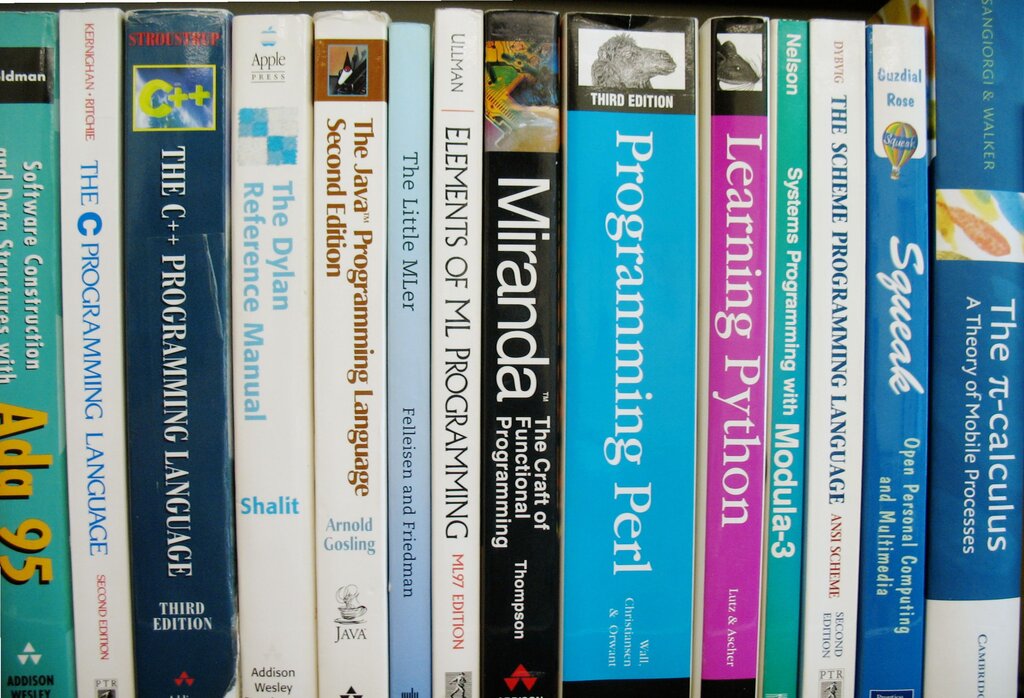
This is where programming languages come in. They act as a bridge, or a translator, between what we want to say and what the computer can understand. A programming language provides a set of rules and keywords that we can use to write our instructions in a more human-readable format. There are hundreds of different programming languages, each with its own strengths, much like there are many human languages used for different purposes.
The Blueprint of a Program
While every program is different, most follow a fundamental structure. They take in some information, process it, and then produce some kind of result. This is often called the Input-Process-Output model.
Imagine a simple calculator program. The input is you typing "2+2". The process is the program recognizing the numbers and the plus sign, then performing the addition. The output is the number "4" appearing on your screen. Nearly every app, website, or piece of software you use can be broken down into this basic flow.
From Human to Machine
So you've written your instructions in a programming language. How does the computer actually run them? The code you wrote, called source code, still needs to be translated into the ones and zeros of machine code. This translation is done by a special program, and there are two main ways it can happen: compiling and interpreting.
A compiler is like a translator who takes an entire book and translates it from English to French all at once. Before you can read any of it, they hand you a completely translated French version. In programming, the compiler scans all of your source code and, if there are no errors, creates a separate, executable file. This file contains all the machine code and can be run by the computer directly.
An interpreter, on the other hand, is like a live interpreter at a conference. They listen to one sentence, translate it, and say it out loud immediately. Then they move on to the next sentence. The interpreter reads your source code one line at a time, translates it, and tells the computer to execute it right away. It doesn't create a separate file; it translates and runs on the fly.
| Method | Analogy | Process |
|---|---|---|
| Compiler | Translates the whole book | Reads all code, then creates an executable file |
| Interpreter | Translates line-by-line | Reads and runs one line at a time |
Both approaches have their own advantages. Compiling often results in faster programs, while interpreting can make it easier to find and fix errors as you go. Many modern languages even use a combination of both methods. Understanding this translation step is key to seeing how human ideas become computer actions.
A computer program is often compared to a recipe. What is a key difference in how a computer follows instructions compared to a human cook?
Programming languages act as a bridge between human-readable instructions and __________, which is the language computers directly understand.
Now you know the fundamental concepts behind programming. It's all about providing clear, step-by-step instructions in a language that can be translated for a computer to execute.