Introduction to Neuroscience
Introduction to Neuroscience
What is Neuroscience?
Neuroscience is the study of the nervous system. That includes the brain, the spinal cord, and the vast network of nerves that run throughout your body. It’s a field dedicated to understanding how this complex system allows us to think, feel, learn, and move.
At its core, neuroscience seeks to answer a fundamental question: How does the activity in our brain create our mind and our behavior?
Neuroscientists explore this question at many different levels. Some look at the very small, studying molecules and individual cells called neurons. Others examine how circuits of neurons work together in systems to produce functions like vision or memory. Still others focus on the big picture, investigating how brain activity relates to complex behaviors, emotions, and consciousness itself.
A Brief History of the Brain
For much of human history, the brain was a mystery. Ancient Egyptians, for example, preserved the heart during mummification but discarded the brain, believing the heart was the center of intelligence and emotion. It was ancient Greek thinkers like Hippocrates who first proposed that the brain was the seat of thought.
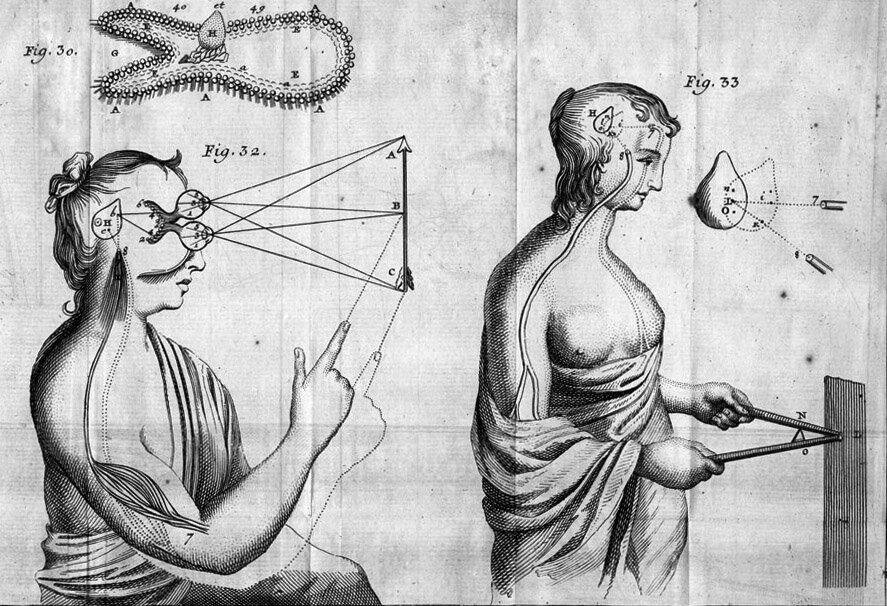
Our understanding grew slowly. In the 19th century, scientists discovered that the nervous system uses electricity to send signals, a key insight that opened up new avenues of research. But perhaps the biggest leap came from Spanish scientist Santiago Ramón y Cajal.
Through painstaking microscopic drawings, Ramón y Cajal showed that the nervous system wasn't one continuous network, but was made of distinct, individual cells. This idea, known as the Neuron Doctrine, is the foundation of modern neuroscience.
A Team Effort
Because the nervous system is so complex, understanding it requires a team effort. Neuroscience is a highly interdisciplinary field that brings together experts from many different areas of study.
Here’s a quick look at how these fields connect:
- Biology provides the fundamentals of how cells, genes, and molecules work.
- Psychology links brain processes to thoughts, emotions, and behaviors.
- Medicine, particularly neurology and psychiatry, applies this knowledge to diagnose and treat disorders of the nervous system.
- Computer Science creates models of neural networks and tools to analyze the massive amounts of data generated in research.
- Chemistry helps us understand neurotransmitters and the chemical reactions that power our brain.
The Goals of Neuroscience
The ultimate goals of neuroscience are ambitious and far-reaching. Researchers are working to:
- Understand normal function: To figure out how the brain develops, learns, remembers, perceives the world, and generates consciousness.
- Find cures for disorders: To uncover the causes of neurological and psychiatric conditions like Alzheimer's disease, Parkinson's disease, depression, and schizophrenia, and to develop effective treatments.
- Enhance human potential: To explore ways to improve learning, memory, and overall brain health throughout our lives.
By piecing together the puzzle of the nervous system, neuroscience helps us understand what it means to be human.