Introduction to Kotlin Programming
Introduction to Kotlin
What is Kotlin?
Kotlin is a modern programming language designed to be clear, powerful, and fun to use. It was created by JetBrains, the company behind many popular developer tools, and was first unveiled in 2011. Since then, it has become a favorite for developers working on all sorts of applications, from mobile apps to web services.
Kotlin is a statically typed, cross-platform, general-purpose programming language for JVM developed by JetBrains.
One of Kotlin's biggest moments came in 2017 when Google announced it as an official language for Android development. Just two years later, it became Google's preferred language for building Android apps, solidifying its place in the mobile world.

Core Principles
The creators of Kotlin focused on four key principles: pragmatism, conciseness, safety, and interoperability. Let's break down what these mean.
Pragmatic: Kotlin is built to solve real-world problems. It blends the best features of object-oriented and functional programming, allowing developers to choose the best style for the task at hand without forcing them into a rigid structure.
Concise: The language is designed to reduce the amount of repetitive, or "boilerplate," code a developer needs to write. For example, creating a simple class to hold data can take many lines of code in a language like Java, but in Kotlin, it can often be done in a single line. This makes code easier to read and maintain.
The major benefits of working with Kotlin are its simplicity, and a cleaner working platform.
Safe: Kotlin has features that help prevent common programming errors. The most famous is its approach to null values. In many languages, trying to access a variable that has no value results in a crash known as a "null pointer exception." Kotlin's type system is designed to catch these potential errors during compilation, before the program even runs.
With Kotlin, you needn't worry about NPEs because null safety is built into Kotlin's type system.
Interoperable: A crucial goal for Kotlin was to work seamlessly with existing Java code. This means developers can add Kotlin code to a Java project piece by piece or use established Java libraries in a new Kotlin project. This 100% interoperability made it easy for millions of Java developers to adopt Kotlin without having to rewrite their entire applications.
Kotlin in Action
While Kotlin is the star of Android development, its use cases don't stop there. It's a true general-purpose language. Developers use it to build:
- Web applications: Both server-side logic and front-end interfaces.
- Cross-platform mobile apps: Code that runs on both Android and iOS.
- Data science: Analyzing data and building machine learning models.
- Desktop applications: Programs that run on Windows, macOS, and Linux.
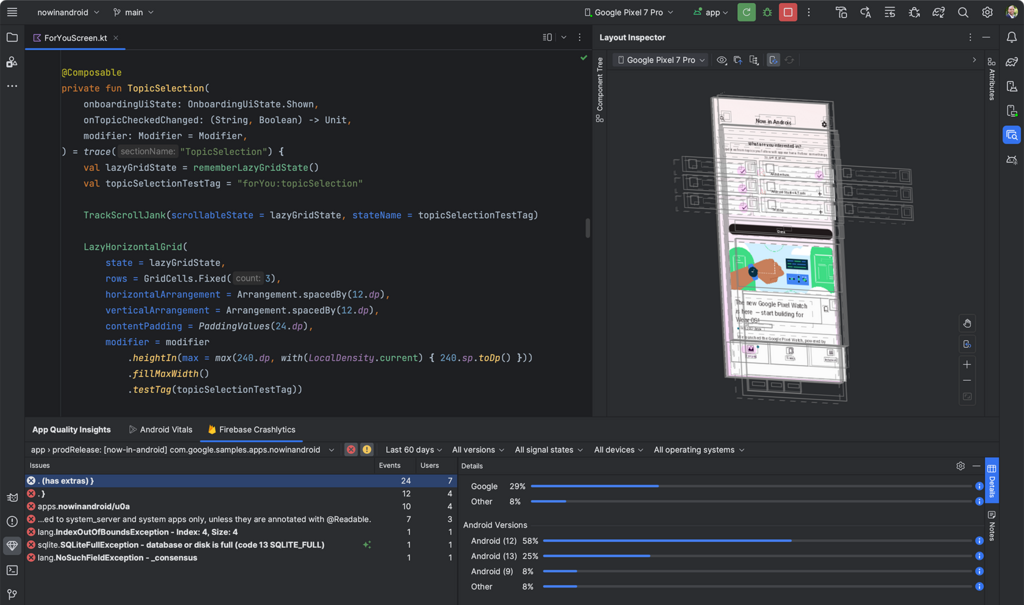
Kotlin's combination of modern features, safety, and practicality has made it a versatile tool. It offers a fresh alternative to older languages while respecting and integrating with the vast ecosystem of existing code, particularly in the Java world.
Which company created the Kotlin programming language?
One of Kotlin's core principles is "safety." What common programming error does its type system specifically help prevent before the code runs?
Now that you have an overview of what Kotlin is and why it was created, you're ready to dive into the specifics of the language itself.