Introduction to French
French Alphabet
The Building Blocks
The French alphabet uses the same 26 letters as English, which is a great start. The main difference, and the first major step to sounding French, is learning how to pronounce their names. Many letters sound quite different from their English counterparts.
Start with the French alphabet and core pronunciation rules to build a rock-solid foundation.
Let's go through the whole alphabet. Notice how many letter names end in a similar vowel sound.
| Letter | Pronunciation (approximate) |
|---|---|
| A | ah |
| B | bay |
| C | say |
| D | day |
| E | euh (like the 'u' in 'uh') |
| F | eff |
| G | jhay |
| H | ash |
| I | ee |
| J | jhee |
| K | kah |
| L | el |
| M | em |
| N | en |
| O | oh |
| P | pay |
| Q | koo |
| R | air |
| S | ess |
| T | tay |
| U | ew (pucker your lips) |
| V | vay |
| W | doo-bluh-vay |
| X | eeks |
| Y | ee-grek |
| Z | zed |
Vowels and Accents
Vowels are the heart of French pronunciation. Their sounds are pure and clipped, unlike the gliding vowels often used in English. You'll also notice little marks on some vowels. These are called accents, or diacritics, and they are not optional. They change how a letter is pronounced or distinguish between words that are otherwise spelled the same.
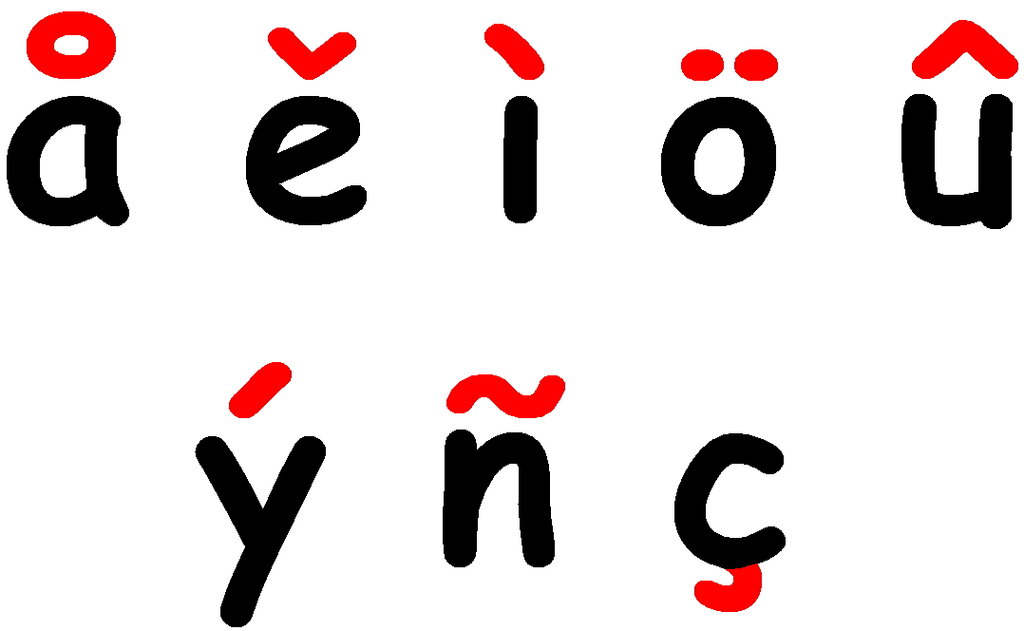
The letter 'e' is the most common place to find accents. A single 'e' with no accent often makes an "uh" sound, similar to the 'e' in 'the'. Accents give it a whole new identity.
The letter 'c' also has a special diacritic. Let's look at the most common ones you'll see.
| Accent | Example | Name | What it does |
|---|---|---|---|
| ´ | é | accent aigu | Makes an "ay" sound, like in "say." |
| ` | è | accent grave | Makes an "eh" sound, like in "get." |
| ˆ | ê | accent circonflexe | Also makes an "eh" sound, like in "get." |
| ¨ | ë | tréma | Pronounce this vowel separately from the one before it. |
| ¸ | ç | cédille | Changes a hard 'c' (k) sound to a soft 's' sound. |
Key Consonant Sounds
While most French consonants sound similar to English, a few have their own distinct personalities. Mastering these will make your French sound much more authentic.
The French 'h' is almost always silent. Think of words like 'hôpital' (hospital) or 'hôtel' (hotel). You pronounce the vowel that follows it directly, as if the 'h' isn't there.
The letters 'c' and 'g' are chameleons. Their sound changes based on the vowel that comes after them.
- C is hard (like a 'k') before a, o, u. Exemple: café, comme.
- C is soft (like an 's') before e, i, y. Exemple: merci, cinéma.
- G is hard (like in 'go') before a, o, u. Exemple: gare, gomme.
- G is soft (like the 's' in 'measure') before e, i, y. Exemple: manger, girafe.
The French j always has that soft 'g' sound, like in 'measure' or 'vision'. A great example is bonjour.
Finally, there's the famous French r. It's not rolled like in Spanish. The sound is made in the back of your throat, almost like a light gargle. Practice making a 'k' sound and notice where your tongue hits the back of your mouth. The French 'r' is made in that same area.
Common Letter Teams
In French, letters often team up to create a single, new sound. You'll see these combinations everywhere, so learning to recognize them is crucial for reading and pronunciation.
| Combination | Sound (approximate) | Example |
|---|---|---|
| ou | "oo" as in 'soup' | vous (you) |
| oi | "wa" as in 'water' | moi (me) |
| au / eau | "oh" as in 'boat' | eau (water) |
| ch | "sh" as in 'shoe' | chat (cat) |
| gn | "ny" as in 'canyon' | montagne (mountain) |
You'll also encounter nasal sounds, where a vowel is followed by 'n' or 'm'. For these, the air passes through your nose, and the 'n' or 'm' is barely pronounced. This happens with combinations like on, an, en, and in.
Now that you've seen the building blocks, let's test your knowledge.
What is the primary function of accents (diacritics) on vowels in French?
The letter 'c' in French sounds like an 's' before which set of vowels?
Understanding these letters and sounds is your first big step. With practice, they'll become second nature.