Introduction to Computers
Introduction to Computers
What Is a Computer?
At its heart, a computer is a machine that follows instructions. It's an electronic device designed to work with information, or data. Think of it as an incredibly fast and obedient assistant. You give it a task, and it uses a set of instructions—a program—to get the job done.
When you hear the word "computer," you might picture a desktop or a laptop. But computers are everywhere. They are in your phone, your car, your microwave, and your smartwatch. They range from massive supercomputers that can predict weather patterns to tiny chips that make your coffee maker programmable. What they all have in common is their ability to take in data and process it to achieve a specific goal.
Why Computers Matter
Computers have fundamentally changed how we live, work, and connect with each other. They are the backbone of modern society. We use them to send messages to friends across the globe, to stream movies, to manage our finances, and to learn new skills.
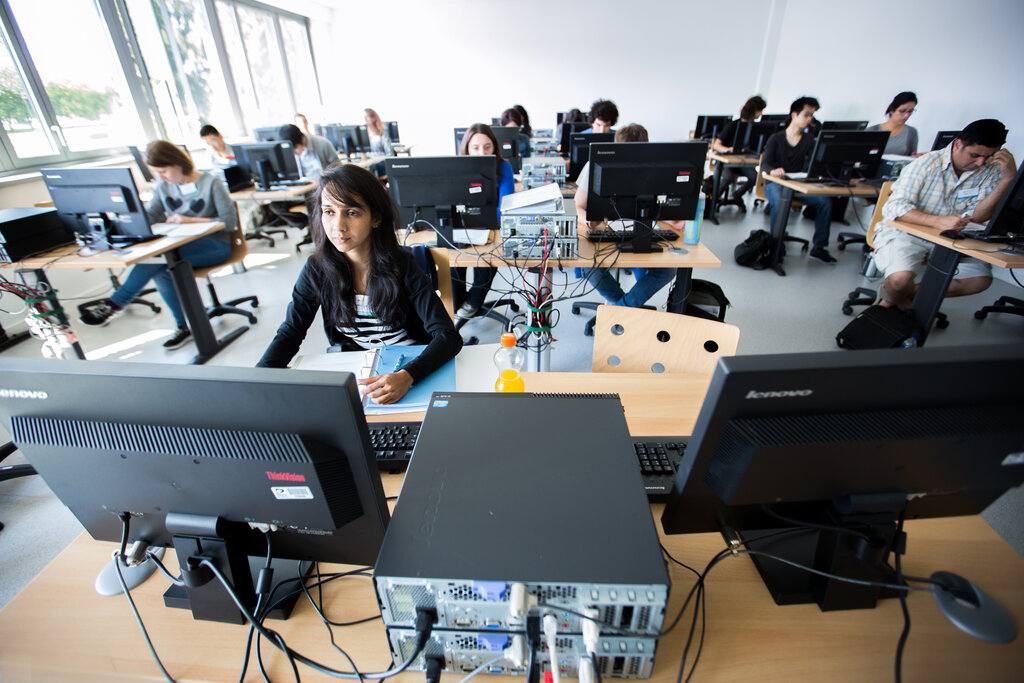
Beyond personal use, computers drive entire industries. They help scientists analyze massive datasets to make new discoveries in medicine and astronomy. Engineers use them to design safer cars and more efficient buildings. Artists create stunning visual effects for movies, and businesses rely on them to manage everything from inventory to customer relationships. Without computers, much of the world as we know it would grind to a halt.
The Four Basic Jobs
No matter how complex, every computer performs four fundamental functions: input, processing, storage, and output. You can think of it like cooking. You gather ingredients (input), follow a recipe to mix and bake them (processing), put the finished cake on a shelf (storage), and then serve it on a plate (output).
Let's break down what each of these jobs entails.
Input: This is how a computer receives data from the outside world. When you type on a keyboard, click a mouse, or talk to a voice assistant, you're providing input. The data can be letters, numbers, clicks, or sounds.
Processing: This is the computer's "brain" at work. The Central Processing Unit (CPU) takes the input data and follows instructions from a program to manipulate it. This could be anything from calculating a sum in a spreadsheet to applying a filter to a photo.
Storage: Computers need a place to keep data. Storage comes in two main forms. Memory (like RAM) is short-term storage for data the computer is actively using. A hard drive or solid-state drive is long-term storage, where you save files, applications, and the operating system.
Output: After processing the data, the computer needs a way to show you the result. This is output. It could be text appearing on your screen, a song playing from your speakers, or a document printing out.
These four functions work together seamlessly in a continuous cycle, allowing computers to perform the vast range of tasks we rely on every day.
What are the four fundamental functions every computer performs?
True or False: A device must have a screen and keyboard to be considered a computer.