Introduction to Coding and Programming
Introduction to Programming
What Is Programming?
At its heart, programming is simply the act of giving a computer a set of instructions to follow. Think of it like writing a recipe. A recipe lists precise steps to turn raw ingredients into a finished dish. A computer program does the same, listing precise instructions to turn data into a useful result.
Computers, however, are extremely literal. They don't understand nuance or unspoken assumptions. Every single step must be spelled out perfectly, from the most complex calculation to the simplest task. This need for precision is why we have specialized languages to communicate with them.
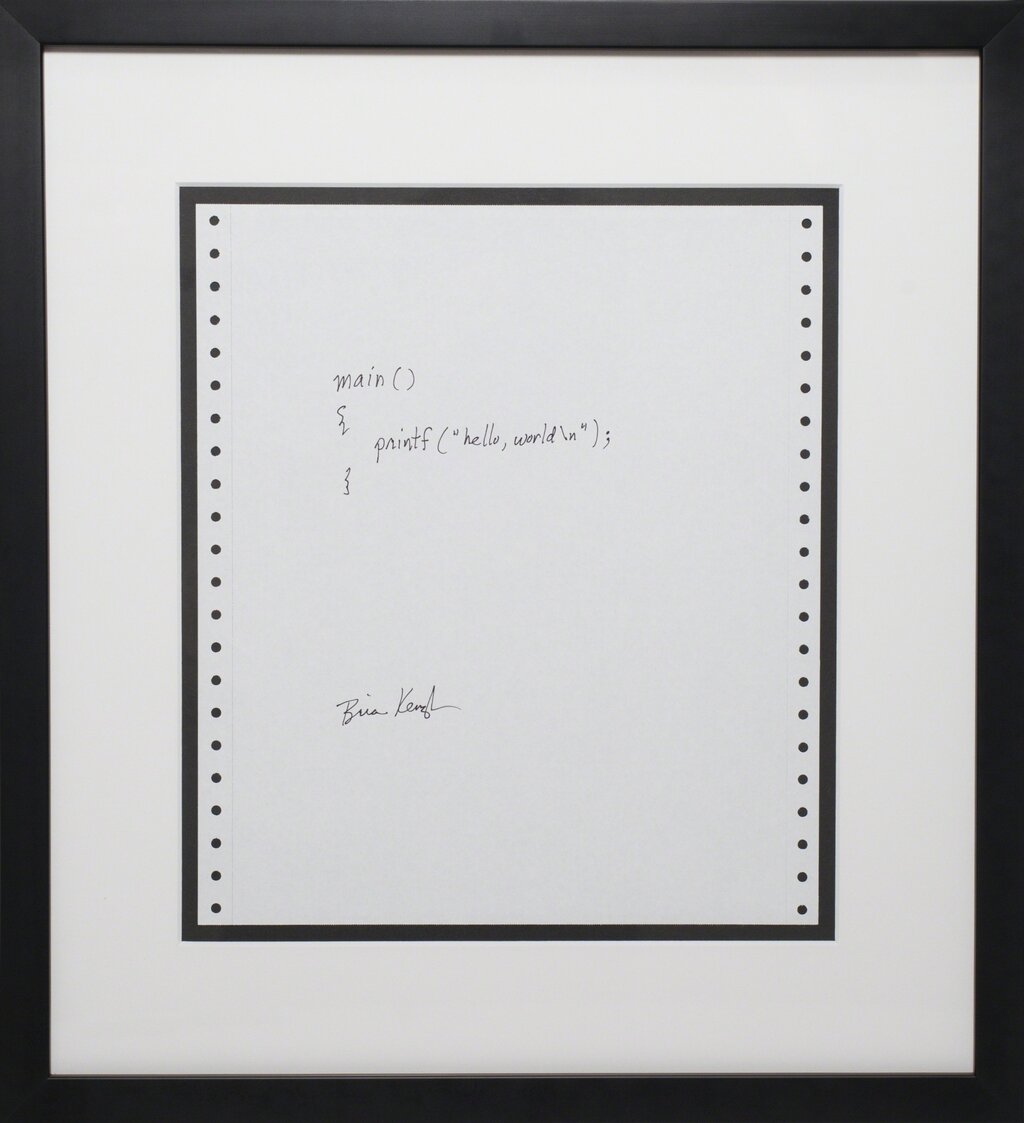
programming
noun
The process of creating a set of instructions that tell a computer how to perform a task.
The Language of Computers
Computers don't understand English, Spanish, or any other human language. Their native tongue is binary code, a series of ones and zeros that represent electrical on/off states. Writing instructions directly in binary would be incredibly slow and difficult for people.
This is where programming languages come in. They act as a bridge, allowing us to write instructions in a way that is more understandable to us. These instructions are then translated into the binary code the computer's processor can execute. Languages exist on a spectrum, from those that are very close to the machine's own language to those that are much more abstract and human-readable.
This spectrum is generally divided into two categories: low-level and high-level languages.
| Feature | Low-Level Languages | High-Level Languages |
|---|---|---|
| Readability | Difficult for humans | Closer to human language |
| Control | Direct control over hardware | Abstracted from hardware |
| Speed | Very fast execution | Generally slower |
| Use Case | Device drivers, operating systems | Web apps, data science, games |
Choosing a language depends on the task. To write an operating system, a programmer needs the fine-grained control and speed of a low-level language. To build a website or analyze data, the speed of development and ease of use offered by a high-level language is far more important.
The Plan Before the Code
Before you can write instructions in any language, you need a plan. In programming, that plan is called an algorithm. It's the specific, step-by-step procedure for solving a problem or accomplishing a task. An algorithm is completely separate from the programming language itself.
Think about sorting a deck of cards. You could do it in many ways. One method might be to go through the deck, find the lowest card, and place it at the beginning. Then, you'd repeat that process for the rest of the cards. That sequence of steps is an algorithm.
algorithm
noun
A finite sequence of well-defined, computer-implementable instructions, typically to solve a class of specific problems or to perform a computation.
Once you have the algorithm, you can translate those steps into the syntax of a specific programming language, like Python or C++. A good algorithm is efficient and correct, and it forms the backbone of any successful program. Learning to think algorithmically, by breaking down complex problems into small, manageable steps, is the most crucial skill a programmer can develop.
Programming isn't just about learning a language's syntax. It's about learning how to solve problems logically and methodically.
Ready to check your understanding of these core concepts?
The text compares programming to writing a recipe. What does this analogy primarily emphasize?
What is the primary reason programming languages were developed?
These building blocks, from understanding instructions to designing algorithms, are the foundation of all programming. With this base, you're ready to explore how these concepts are put into practice.