Introduction to Cloud Computing
Introduction to Cloud Computing
What Is Cloud Computing?
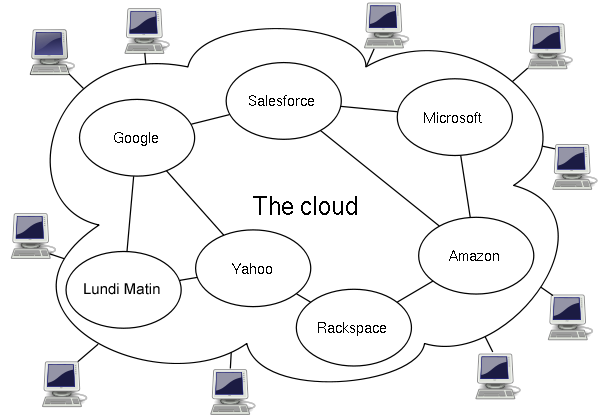
At its core, cloud computing means accessing computing services—like servers, storage, and software—over the internet instead of from your own hard drive or a local server in your office. The "cloud" is just a metaphor for the internet and the vast network of data centers that provide these services.
Think of it like a utility. When you need electricity, you don't build your own power plant. You plug into the grid and pay for what you use. The cloud works the same way for computing power.
This model shifts the burden of managing and maintaining IT infrastructure to a specialized provider. Instead of buying and setting up expensive servers, a company can rent access to everything it needs, from applications to storage space.
The Five Key Traits
Not every service on the internet is considered "cloud computing." To qualify, a service generally needs to have five specific characteristics.
On-demand self-service
noun
You can get computing resources whenever you need them, without having to talk to a human. If you need more storage or processing power, you can provision it yourself through a web portal in minutes.
This is followed by broad network access. Services are available over the network and can be accessed through standard devices like laptops, tablets, and phones. If you have an internet connection, you have access.
Next is resource pooling. The cloud provider's computing resources are pooled to serve multiple customers, with different physical and virtual resources dynamically assigned according to demand. You don't know or care exactly which physical server is running your application; you just know it's running. It’s like a large apartment building sharing its main plumbing and electrical infrastructure among all residents—it's far more efficient.
This pooling of resources allows providers to achieve massive economies of scale, making computing power cheaper for everyone.
Rapid elasticity is another crucial trait. Resources can be scaled up or down quickly, and in some cases, automatically. If your website suddenly gets a surge in traffic after a viral marketing campaign, the cloud can instantly allocate more resources to handle the load. When traffic dies down, it scales back. You have access to a seemingly infinite pool of resources.
Finally, there's measured service. Cloud systems automatically control and optimize resource use by using a metering capability. This means resource usage is monitored, controlled, and reported, providing transparency for both the provider and the consumer. You pay only for what you actually use, just like a water or electricity bill.
Why Bother with the Cloud?
These characteristics lead to some significant benefits for organizations of all sizes.
| Benefit | Description |
|---|---|
| Cost Savings | Companies avoid the huge capital expense of buying hardware and software. Instead, they pay a monthly operational expense, which is often much lower. |
| Scalability | Businesses can scale their IT needs up or down in an instant. This flexibility is a huge advantage for companies with fluctuating or growing demands. |
| Performance | Major cloud services run on a worldwide network of secure data centers, which are regularly upgraded to the latest generation of fast and efficient hardware. |
| Speed & Agility | Most cloud services are self-service. Vast amounts of computing resources can be provisioned in minutes, giving businesses the ability to move faster on projects. |
| Reliability | Cloud computing makes data backup, disaster recovery, and business continuity easier and less expensive, because data can be mirrored at multiple sites on the provider's network. |
By outsourcing their infrastructure, companies can stop worrying about running their own data centers and focus on what they do best: building their own products and serving their customers.
Ready to test your knowledge on these foundational concepts?
What is the core concept of cloud computing?
A streaming service's viewership suddenly triples after a hit new show is released. The platform seamlessly handles the new users by automatically increasing its processing power. This ability to scale resources up and down based on demand is known as _________.
Understanding these core ideas is the first step in seeing how the cloud has reshaped the entire technology landscape.