Introduction to Chess Strategy
Chess Basics
The Board and the Battlefield
Chess is played on a square board with 64 alternating light and dark squares, arranged in an 8x8 grid. Each player starts with an army of 16 pieces: one king, one queen, two rooks, two bishops, two knights, and eight pawns. The board is always set up so that each player has a light-colored square in their bottom-right corner.
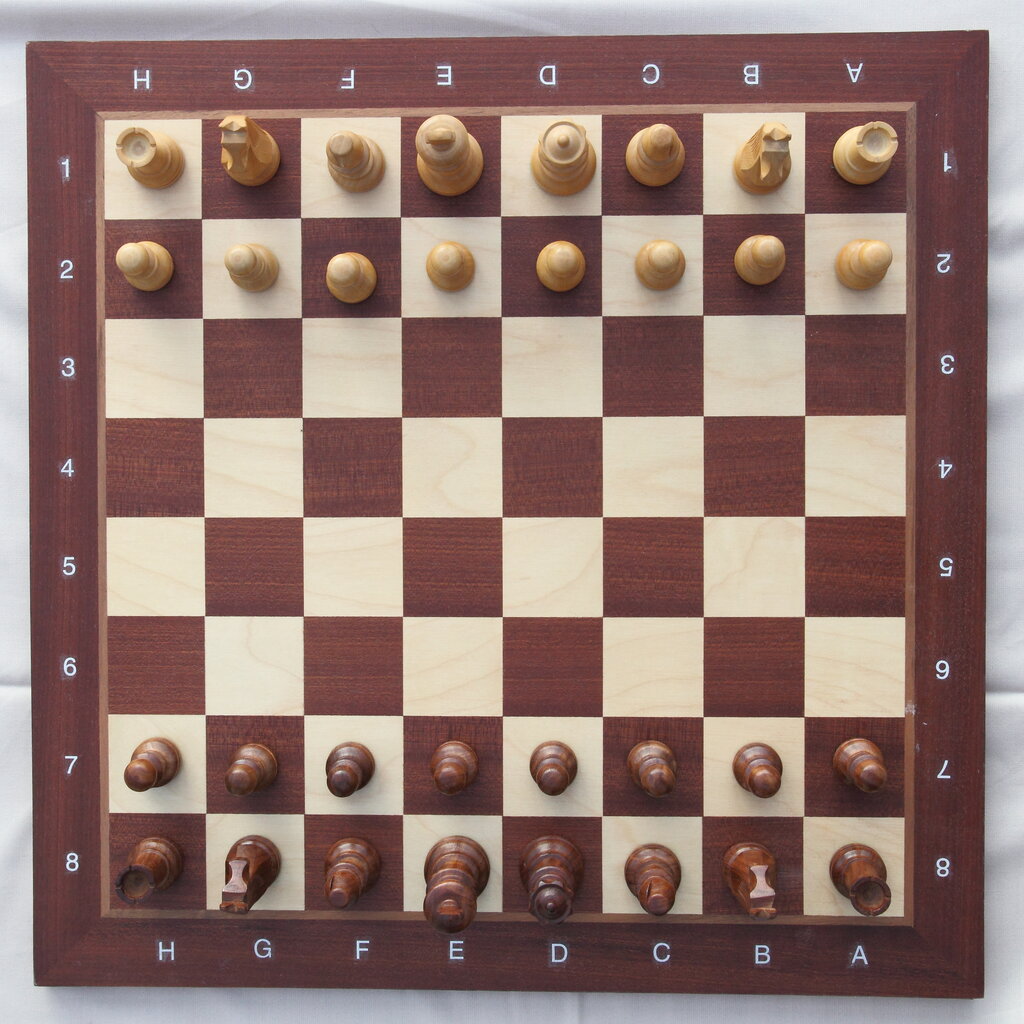
The back row, or rank, is for your most powerful pieces. Rooks go in the corners, with knights next to them, and then bishops. The queen is placed on the square that matches her color (the white queen on a light square, the black queen on a dark square), and the king stands next to her.
The row in front of them is filled entirely with your eight pawns. White always moves first, and then players take turns making one move at a time.
The goal of the game is simple but profound: to trap your opponent's king so it cannot escape capture. This is called checkmate.
Checkmate
noun
A position in which a player's king is in check (threatened with capture) and there is no legal move to escape the check.
While you can capture your opponent's other pieces, the king is never actually captured. The game simply ends when checkmate is achieved. Let's look at how each piece moves to understand how to attack and defend.
How the Pieces Move
Each of the six types of chess pieces moves in a unique way. Mastering their movements is the first step to mastering the game.
The Pawn: The Soul of Chess
Pawns are the weakest pieces, but they have the most complex rules of movement. They generally move one square forward. However, on its very first move, a pawn has the option to move two squares forward instead of one. Pawns cannot move backward.
Pawns also have a special way of capturing. They can't capture pieces directly in front of them. Instead, they capture one square diagonally forward. A pawn attacks the squares to its front-left and front-right.
The Rook moves any number of vacant squares horizontally or vertically. It's like a battering ram, powerful in open files and ranks.
The Bishop moves any number of vacant squares diagonally. This means a bishop will always stay on squares of the same color it started on. You have one light-squared bishop and one dark-squared bishop.
The Queen is the most powerful piece. She can move any number of vacant squares in any straight line—vertically, horizontally, or diagonally. She combines the powers of the rook and the bishop.
The Knight has the most unusual move. It moves in an 'L' shape: two squares in one direction (horizontal or vertical), and then one square at a 90-degree angle. The knight is the only piece that can jump over other pieces.
The King is the most important piece, but it's also one of the weakest. It can move one square in any direction: horizontally, vertically, or diagonally. The main goal is to protect your king at all costs.
Special Moves
Beyond the basic movements, chess has three special rules that add depth to the game. These rules apply in specific situations.
Pawn Promotion
If a pawn manages to march all the way to the other end of the board—the eighth rank for White, or the first rank for Black—it gets a promotion! You can replace the pawn with a queen, rook, bishop, or knight of the same color. Most of the time, players choose to promote to a queen, since it's the most powerful piece.
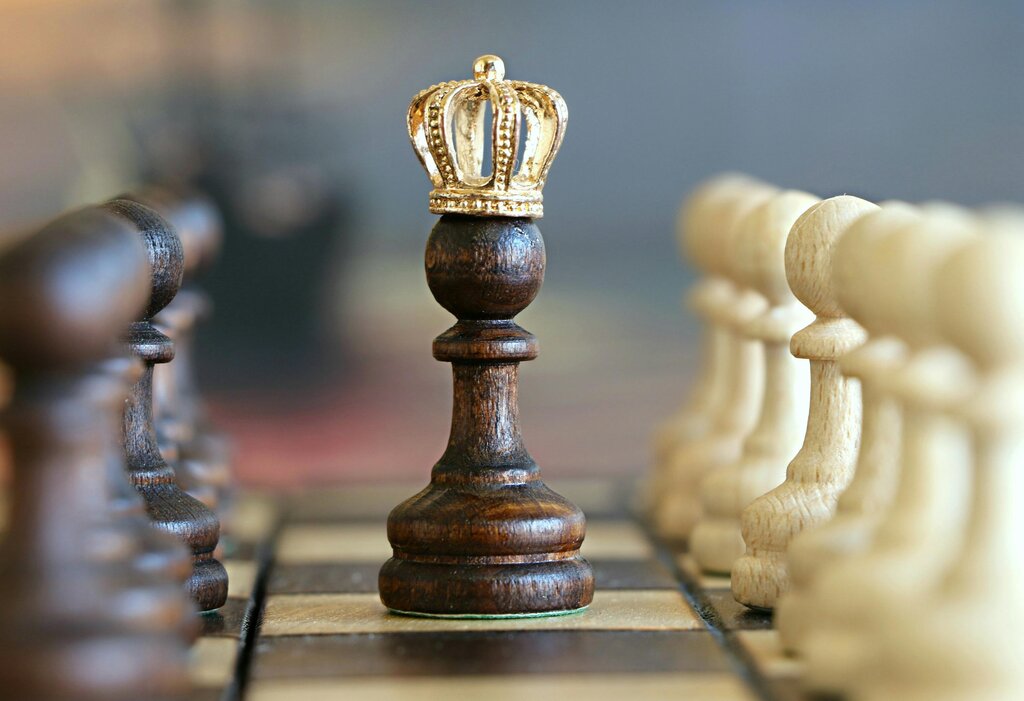
You can have multiple queens on the board at once if you promote more than one pawn.
Castling
Castling is a special move that involves both your king and one of your rooks. It's the only move where you can move two pieces at once, and it’s a great way to move your king to safety and bring your rook into the game.
To castle, you move your king two squares toward a rook, and then move that rook to the square the king just crossed over. You can castle to the side with fewer squares between the king and rook (kingside) or to the side with more squares (queenside).
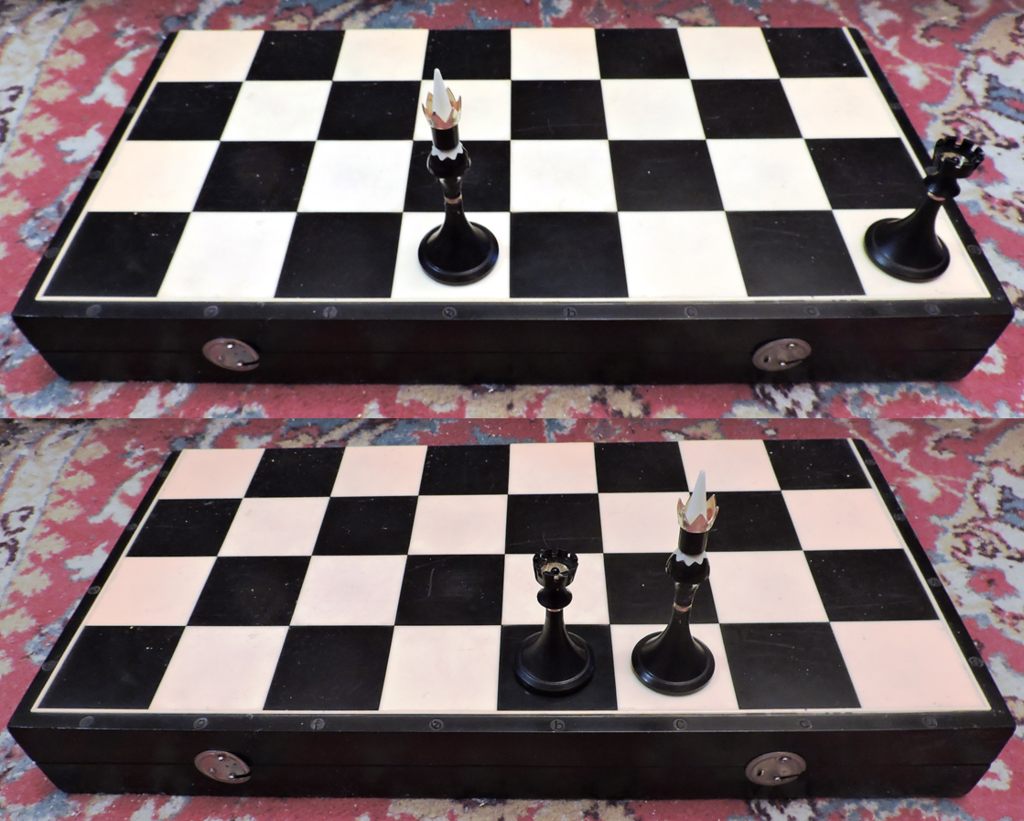
However, you can only castle if:
- Neither the king nor the rook has moved yet in the game.
- There are no pieces between the king and the rook.
- The king is not currently in check.
- The king does not pass through a square that is attacked by an enemy piece.
- The king does not end up in check.
En Passant
This is a French term that means "in passing." It's a special pawn capture that can only occur immediately after a pawn moves two squares forward from its starting position, landing right next to an enemy pawn. The enemy pawn can then capture the first pawn as if it had only moved one square forward.
This special capture must be made on the very next turn. If you don't do it immediately, you lose the chance.
When setting up the board, the white queen is placed on which square?
Which piece moves in an 'L' shape and is the only piece that can jump over others?
These are the fundamental rules of chess. Understanding how the pieces move, the goal of the game, and the special moves will give you a solid foundation to start playing and exploring the endless possibilities of this amazing game.