Introduction to Artificial Intelligence
Introduction to AI
What Is AI?
Artificial intelligence, or AI, is the science of making computers do things that normally require human intelligence. This includes tasks like learning from experience, solving problems, and understanding language. Think of it as teaching a machine to think.
The goal of AI is to create systems that can operate intelligently and independently.
AI is already a big part of modern technology, even if you don't always notice it. It powers the recommendation engines that suggest what you should watch next on a streaming service. It helps your navigation app find the fastest route by analyzing traffic in real-time. It's the technology behind spam filters in your email and the voice assistants on your phone. Its importance is growing because it can process vast amounts of data far more quickly and accurately than a human ever could, finding patterns and making predictions that drive smarter decisions.
The Building Blocks of AI
AI isn't a single thing; it's a broad field made up of several key areas. Understanding these components helps demystify how AI works.
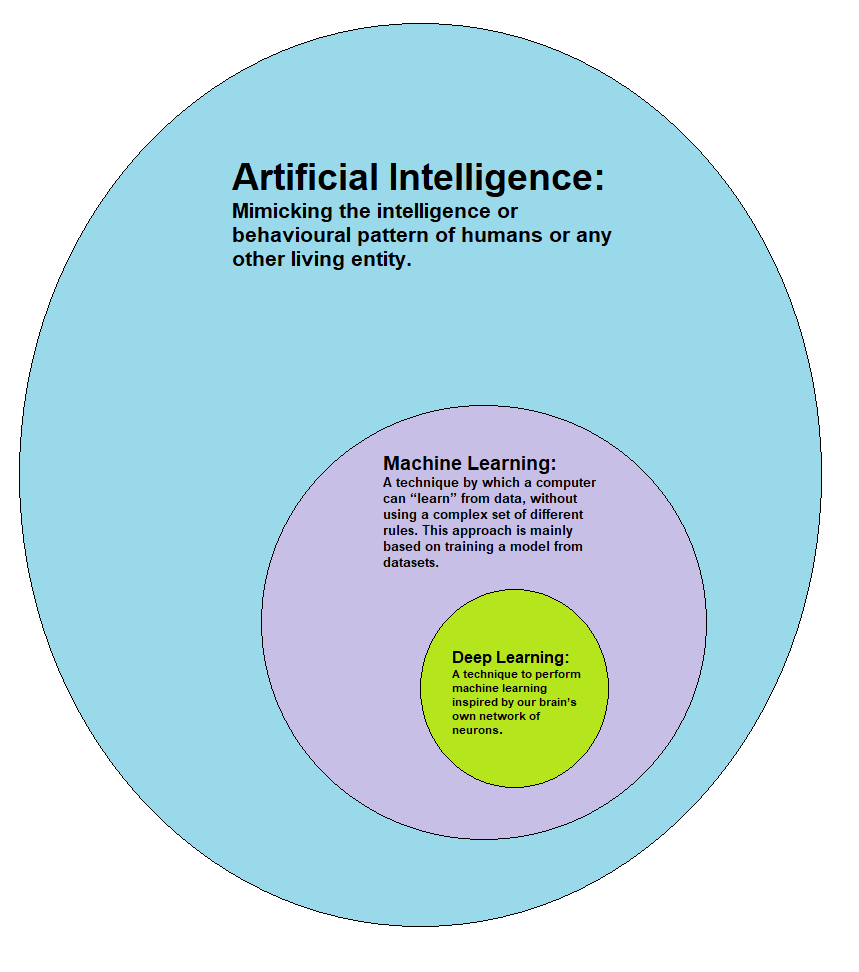
At the core of most modern AI is machine learning (ML). Instead of being programmed with explicit instructions for every possible scenario, a machine learning system is trained. You feed it large amounts of data, and it learns to recognize patterns on its own. It’s like teaching a child to recognize a dog by showing them thousands of pictures of dogs, rather than trying to write a list of rules that define what a dog is.
Algorithm
noun
A set of step-by-step instructions that a computer follows to perform a task or solve a problem.
One powerful type of machine learning is inspired by the human brain itself. This approach is called neural networks. A neural network is a system of interconnected nodes, or “neurons,” organized in layers. Information passes from an input layer, through one or more hidden layers where the processing happens, to an output layer that delivers the final result. Each connection has a weight that gets adjusted during the training process, allowing the network to learn.
Finally, there's natural language processing (NLP). This branch of AI gives machines the ability to read, understand, and generate human language. Whenever you talk to a voice assistant, use a translation app, or see an email automatically sorted into a category, you're interacting with NLP. It's what bridges the gap between human communication and computer understanding.
These building blocks—machine learning, neural networks, and NLP—often work together to create the powerful AI applications we use today. Now, let's check your understanding of these core concepts.
What is the primary goal of Artificial Intelligence (AI)?
Instead of being programmed with explicit instructions, a machine learning system is ______ on large amounts of data to recognize patterns.
Together, these concepts form the foundation of artificial intelligence, a field that continues to evolve and reshape our world.