Introduction to 3D Modeling
Introduction to 3D Modeling
What Is 3D Modeling?
At its core, 3D modeling is the process of creating a mathematical representation of any three-dimensional object or surface using specialized software. Think of it as digital sculpting or construction. Instead of using clay or wood, you use a computer to build an object point-by-point in a virtual space.
This digital object isn't just a flat picture. It has depth, width, and height, just like a real-world object. You can rotate it, look at it from any angle, and see how light and shadow would interact with its surface. This ability to create and inspect an object digitally before it ever exists physically is what makes 3D modeling so powerful.
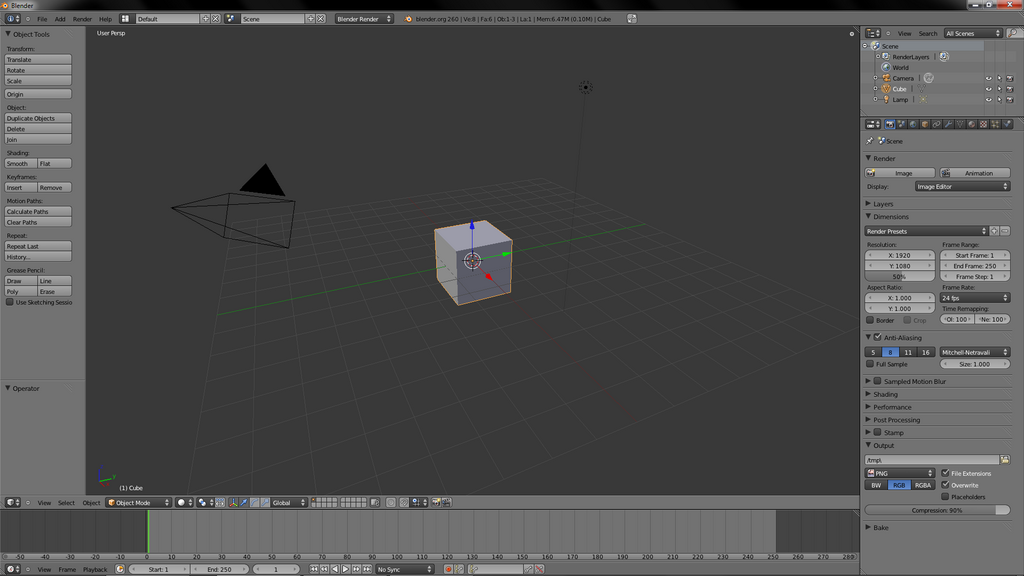
The primary significance of 3D modeling lies in visualization and simulation. It allows architects to walk through a building before a single brick is laid, engineers to test the aerodynamics of a car before it's built, and doctors to plan a complex surgery using a precise model of a patient's organ. It bridges the gap between imagination and reality, saving time, money, and resources by allowing for iteration and refinement in a digital environment.
Where Is 3D Modeling Used?
The applications of 3D modeling are incredibly diverse and continue to expand. You've almost certainly encountered it, even if you weren't aware of it.
From the dinosaurs in a blockbuster movie to the new chair you're considering online, 3D models are a part of modern life.
Here are a few key industries where it's essential:
- Entertainment: In video games, every character, environment, and object is a 3D model. In movies, it's used for computer-generated imagery (CGI), creating fantastical creatures and breathtaking special effects.
- Architecture and Real Estate: Architects use 3D models to create realistic renderings and virtual tours of buildings, helping clients visualize the final space long before construction begins.
- Product Design and Manufacturing: Engineers and designers model everything from smartphones to aircraft parts. These models can be used for testing, refinement, and even 3D printing to create physical prototypes.
- Healthcare: Medical professionals create detailed 3D models of organs, bones, and even molecules from scans like MRIs or CTs. These models are invaluable for surgical planning, medical training, and designing custom prosthetics.

The Building Blocks of a Model
So how does a computer build a 3D object? It all comes down to a few simple geometric principles. A 3D model is essentially a collection of points in space, connected to form a shell or mesh.
The fundamental components are:
- Vertex: A single point in 3D space. It has a position defined by coordinates (X, Y, and Z).
- Edge: A straight line that connects two vertices.
- Face: A flat surface created by connecting three or more edges in a closed loop. The most common type of face is a triangle or a quadrilateral (a four-sided polygon).
These faces, when joined together, create the surface of the 3D model. The entire structure of vertices, edges, and faces is called a polygon mesh.
By manipulating these simple components, an artist can create a mesh of any shape, from a simple cube to a complex human character. The density of the mesh, or the number of polygons, often determines the level of detail in the final model. More polygons can create smoother, more realistic surfaces, but also require more computing power to render.
With this foundational understanding of what 3D models are, where they're used, and how they're constructed, you're ready to explore how these digital objects are brought to life.