International Criminal Court Operations
Rome Statute Framework
The Court's Blueprint
Every court operates by a set of rules. For the International Criminal Court (ICC), that rulebook is the Rome Statute . This treaty doesn't just outline procedures; it creates the very foundation for the world's first permanent international court designed to prosecute individuals for the most serious crimes of global concern. Before the Rome Statute, international tribunals were temporary, set up for specific conflicts like those in the former Yugoslavia or Rwanda. The ICC was designed to be a lasting institution of justice.
The Four Core Crimes
The ICC's jurisdiction is tightly focused on four specific offenses, often called 'atrocity crimes'. This ensures the court concentrates only on matters that shock the conscience of humanity.
The four core crimes are:
- Genocide: Acts committed with the intent to destroy, in whole or in part, a national, ethnical, racial, or religious group.
- Crimes Against Humanity: Widespread or systematic attacks directed against any civilian population. These acts include murder, extermination, enslavement, and torture.
- War Crimes: Grave breaches of the Geneva Conventions and other serious violations of the laws of war, committed during an armed conflict. This can include intentionally targeting civilians or using prohibited weapons.
- Crime of Aggression: The planning, preparation, initiation, or execution of an act of aggression by a state leader. This act, by its character, gravity, and scale, must constitute a manifest violation of the Charter of the United Nations.
The Rome Statute has made accountability for atrocity crimes an integral aspect of the rule of law.
Who, Where, and When?
The Court can't investigate any crime, anywhere, at any time. Its power is limited by three types of jurisdiction defined by the Rome Statute.
First is temporal jurisdiction (ratione temporis). The ICC can only prosecute crimes committed after July 1, 2002, the date the statute entered into force. This rule prevents the court from acting retroactively.
Second are territorial (ratione loci) and personal (ratione personae) jurisdiction. As outlined in Article 12, the Court can generally act if:
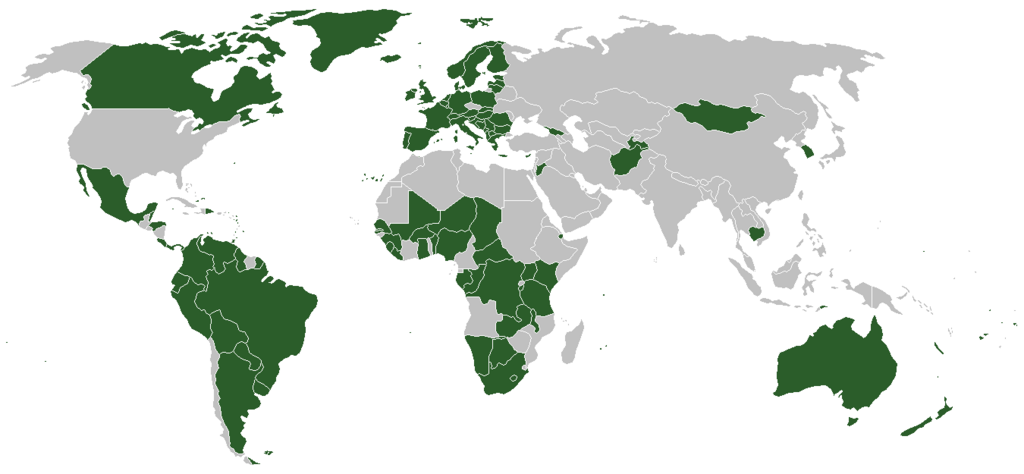
- The alleged crimes were committed on the territory of a State Party (a country that has ratified the Rome Statute).
- The alleged perpetrator is a national of a State Party.
Essentially, the ICC has jurisdiction if the crime happens on a member state's soil or is committed by a member state's citizen, regardless of where it occurs.
Triggering an Investigation
Even if the jurisdictional requirements are met, an investigation doesn't begin automatically. Article 13 of the Rome Statute lays out three specific 'triggers' that can initiate a case.
-
State Party Referral: Any country that has joined the Rome Statute can request the Prosecutor to investigate a situation. For example, Uganda referred the situation concerning the Lord's Resistance Army to the ICC.
-
UNSC Referral: The can refer a situation to the Prosecutor. This is a powerful mechanism because it can grant the ICC jurisdiction over countries that have not ratified the Rome Statute, as seen with the referrals for situations in Darfur (Sudan) and Libya.
-
Proprio Motu Investigation: The Prosecutor can open an investigation on their own initiative, based on information received from victims, NGOs, or other sources. This power ensures the court can act even without a state or UNSC referral.
On his own impulse
The crime of aggression has a much stricter regime. The Court can only exercise jurisdiction over this crime if it's referred by the Security Council or if the states involved (both the aggressor and victim states) have accepted the Court's jurisdiction over it. This unique setup reflects the political sensitivity surrounding acts of state aggression and was a major point of contention during the statute's negotiation. The jurisdiction was finally activated in 2018, long after the other three crimes.
Ready to test your knowledge? Let's see what you've learned about the Rome Statute's framework.
What was the primary purpose of the Rome Statute?
The ICC's jurisdiction is focused on four specific 'atrocity crimes'. Which of the following is NOT one of them?
These foundational rules—the what, where, when, and how—ensure the ICC operates within a predictable legal framework, respecting state sovereignty while striving to end impunity for the world's most severe crimes.