Intermediate Music Theory Applications
Functional Diatonic Harmony
The Why Behind the Chords
In music, chords don't just exist in a vacuum. They have jobs. Functional harmony is the system that explains these jobs—how chords relate to each other and to a central key, or s. Think of it like a story with a beginning, middle, and end. Some chords feel like 'home,' some feel like they're going on a journey, and others feel like they need to get back home urgently.
These roles are grouped into three main categories: Tonic, Subdominant, and Dominant. Understanding them is like learning the grammar of music.
- Tonic (T): This is your home base. The tonic chord (I in a major key, i in a minor key) provides a sense of stability and rest. Most songs end on the tonic because it feels complete.
- Subdominant (SD): These chords create moderate tension and often act as a bridge. They prepare the listener for the next phase. The most common subdominant chords are IV and ii (or iv and ii° in minor).
- Dominant (D): This function creates the most tension. Dominant chords, especially the V7 chord, have a powerful pull back to the tonic. They feel unresolved and create a strong desire for release.
Mapping the Journey
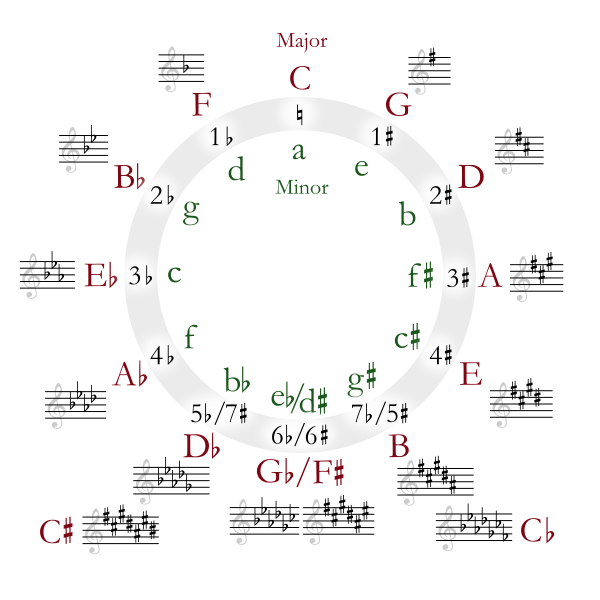
The circle of fifths is more than just a way to remember key signatures. It's a map of natural harmonic movement. Moving clockwise around the circle creates a strong pull, which is why the V-I relationship is so fundamental. The G is a perfect fifth above C, the D is a perfect fifth above G, and so on. This relationship underpins countless chord progressions.
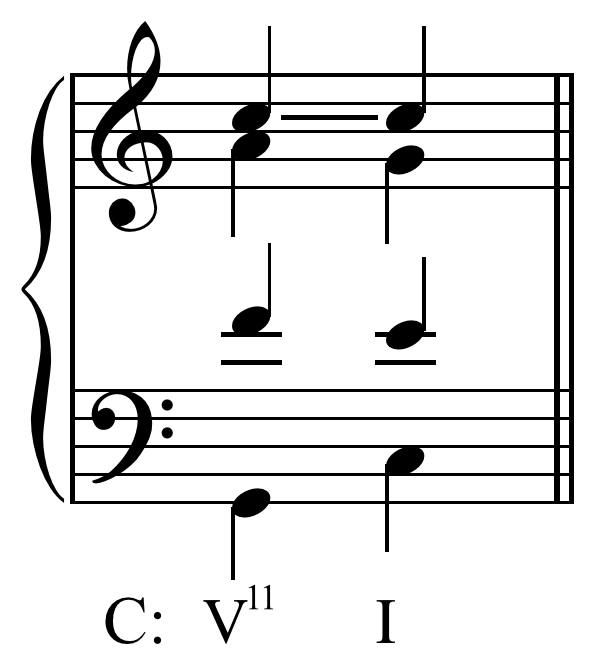
The most common progression, ii-V-I, is a perfect example of this in action. In C major, this is Dm - G - C. The Dm (a subdominant) moves to G (the dominant), which then resolves strongly back to C (the tonic). This progression creates a miniature story arc of departure, tension, and return that is deeply satisfying to the ear.
Musical Punctuation
Just as punctuation organizes sentences, cadences organize musical phrases. A cadence is a two-chord progression at the end of a phrase that signals a pause, a question, or a full stop. There are four main types you'll encounter constantly.
| Cadence Type | Progression | Feeling |
|---|---|---|
| Perfect Authentic | V - I (or V - i) | Final, complete, the end. |
| Plagal | IV - I (or iv - i) | The "Amen" cadence. Less final than a perfect cadence. |
| Half | Ends on V | Unresolved, a pause. Like a comma. |
| Deceptive | V - vi (or V - VI) | Surprise! Avoids the expected resolution. |
Learning to recognize these cadences by ear is a crucial skill. They tell you where you are in the musical form and manage the listener's expectations. A half cadence leaves you hanging, while a perfect authentic cadence signals that the section is truly over.
Composers use these cadences to build the larger structure of a piece. A first section might end with a half cadence, leading into a developmental middle section, which then drives toward a final, conclusive perfect authentic cadence at the very end.
In functional harmony, what is the primary role of the Tonic function?
Which chord progression best exemplifies the functional harmony 'story arc' of subdominant -> dominant -> tonic?
By understanding the roles chords play, you move from simply identifying them to understanding the story the music is telling. It’s the key to unlocking deeper analysis and more intentional composition.