Improving Agentic AI Performance
Understanding Agentic AI
Beyond the Prompt
Most AI we interact with today is reactive. You type a question into a chatbot, and it gives you an answer. You ask for a picture of a cat in space, and it generates one. These systems are powerful, but they wait for your command before doing anything.
Agentic AI is different. It doesn't just respond; it acts. An agent is an AI system designed to pursue goals with a degree of independence. Instead of giving it a detailed, step-by-step command, you give it an objective, and it figures out the steps on its own.
Agency
noun
The capacity of an actor to act independently and to make their own free choices.
Think of the difference between a simple calculator and a personal financial advisor. The calculator waits for you to input numbers and an operation. The advisor, on the other hand, understands your goal—like saving for retirement—and then takes multiple steps to achieve it: analyzing your spending, suggesting investments, and adjusting the plan as your life changes. Agentic AI is more like the advisor.
Agentic AI refers to artificial intelligence systems that feature autonomous decision-making, goal-driven actions, learning and adapting capabilities, and advanced reasoning.
How an Agent Thinks
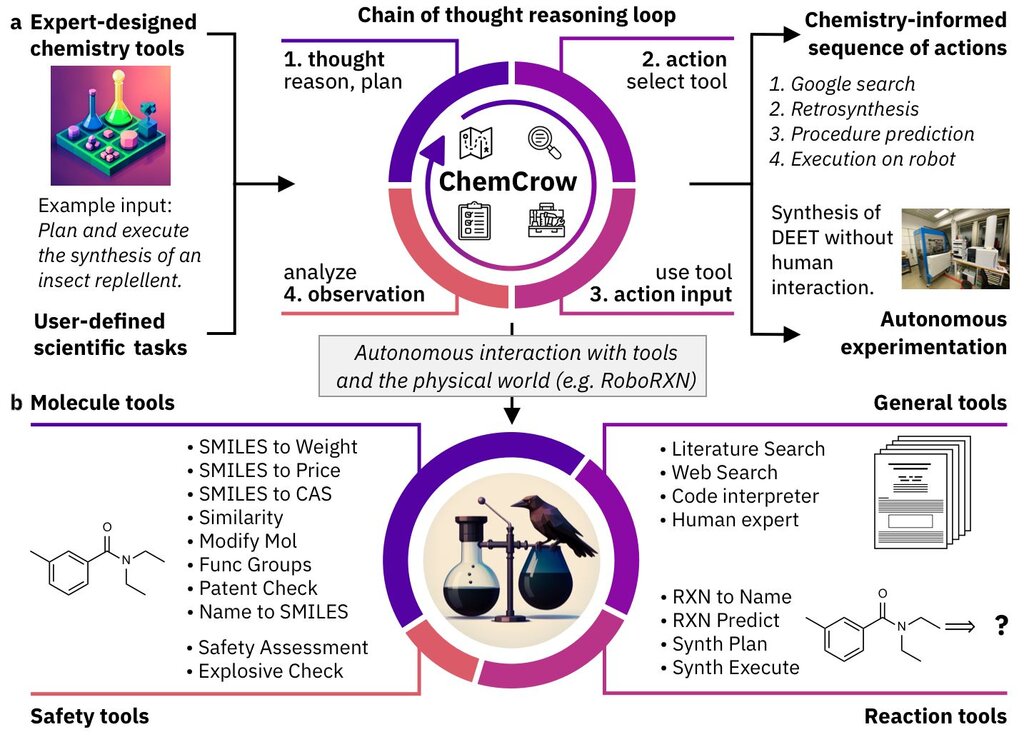
At its core, an AI agent operates in a continuous loop. It observes its environment, decides on the best action to take to get closer to its goal, and then performs that action. This cycle repeats, allowing the agent to adapt and react to new information.
The architecture that enables this has a few key parts.
The agent first perceives its surroundings. This could mean reading text from a website, analyzing data from a sensor, or accessing information through an API. Then, it uses a reasoning engine, often powered by a large language model (LLM), to make sense of that information and form a plan. This isn't just a single step; it's a chain of thought where the agent breaks a large goal into smaller, manageable tasks.
Finally, the agent takes action. It might execute code, send an email, or make a purchase. The outcome of that action changes the environment, providing new information for the agent to perceive in the next loop. This allows it to learn from its successes and failures, refining its approach over time.
Agents in the Wild
The applications for agentic AI are vast. Imagine a travel agent AI. You tell it: "Book me a relaxing beach vacation in Southeast Asia for the first two weeks of March, under $3,000." The agent would then research destinations, compare flight and hotel prices, check visa requirements, read reviews, and present you with a complete itinerary. It handles all the intermediate steps.
In science, agents can accelerate research. An AI agent could be tasked with finding a new material with specific properties. It could read research papers, design experiments, run simulations, and even operate lab equipment to test its hypotheses.
We're also seeing simpler agents in our daily lives. A smart thermostat that learns your schedule and adjusts the temperature to save energy is a basic form of agent. It perceives the room's temperature and time of day, and acts to achieve its goal of efficiency and comfort.
The Challenges Ahead
Granting AI systems this level of autonomy comes with significant challenges. How do we ensure an agent's actions are safe and aligned with human values? An agent tasked with maximizing profit for a company could take unethical or harmful actions if not properly constrained.
Another challenge is control. When an agent is executing a complex, multi-step plan, it can be difficult for a human to intervene or understand why it's making certain choices. This "black box" problem makes it hard to trust the system and correct its mistakes.
Finally, agentic systems operate in the real world, which is messy and unpredictable. An agent designed to order groceries online might fail if the website's layout changes. Building robust agents that can handle unexpected situations is a major hurdle for developers.
Now, let's test your understanding of these new concepts.
What is the key characteristic that distinguishes agentic AI from reactive AI?
An AI agent operates in a continuous cycle. What are the three core steps of this loop, in the correct order?
Agentic AI shifts the paradigm from instruction-following to goal-seeking, opening up new possibilities while also presenting new risks to manage.