HRIS Implementation Essentials
Introduction to HRIS
What is an HRIS?
At its core, a Human Resources Information System, or HRIS, is software designed to manage and streamline a company's HR tasks. Instead of juggling paper files, spreadsheets, and multiple disconnected apps, an HRIS brings everything into one central place.
Human Resources Information Systems (HRIS) is an integration of HRM and Information Systems (IS).
Think of it as the digital backbone for all things people-related in an organization. Its main purpose is to automate repetitive administrative work, which frees up HR professionals to focus on more strategic initiatives, like improving company culture or developing talent. It acts as a single source of truth for all employee data, from their hiring date to their current salary.
Core Functionalities
An HRIS is not a single tool but a suite of integrated modules. Each module handles a specific HR function, but they all share data, creating a seamless system. This integration is what makes it so powerful.
An HRMS includes separate HR modules to take care of specific HR and admin tasks leaving HR staff free to focus on creating a better workplace.
While features can vary, most systems are built around a few core functionalities:
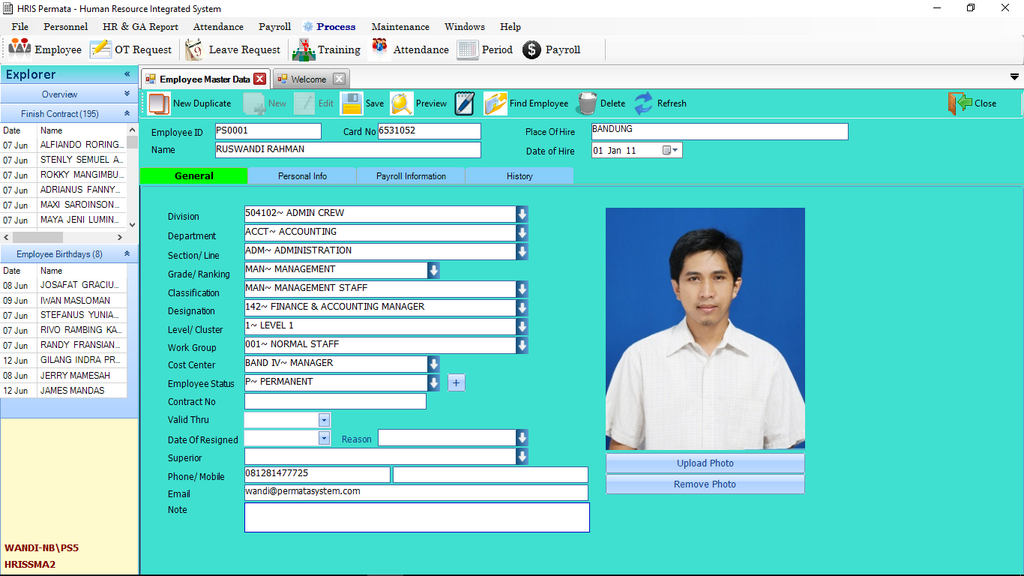
- Employee Database: This is the heart of the HRIS. It stores all essential employee information, such as contact details, job titles, employment history, and emergency contacts. This centralized database ensures data is consistent and easy to access.
- Payroll & Benefits Administration: These modules automate the entire payroll process, from calculating wages and taxes to direct deposits. They also help manage employee benefits, handling enrollment, changes, and tracking eligibility.
- Recruitment & Onboarding (ATS): An Applicant Tracking System (ATS) module helps manage the hiring process. It can post job openings, track applicants, schedule interviews, and extend offers. Once a candidate is hired, the onboarding module automates new-hire paperwork and initial training.
- Time & Attendance: This feature tracks employee work hours, manages schedules, and handles requests for time off. It integrates directly with the payroll module to ensure accurate compensation.
- Performance Management: This module helps set goals, track progress, and conduct performance reviews. It creates a formal record of an employee's contributions and areas for development.
The Benefits of an HRIS
Implementing an HRIS is more than just a tech upgrade; it's a strategic move that provides significant advantages. By automating and centralizing HR functions, businesses can see improvements across the board.
A well-implemented HRIS significantly increases the efficiency of the HR department and makes a measurable contribution to the success of the company.
Key benefits include:
- Improved Efficiency: Automating routine tasks like payroll and time-off requests drastically reduces the administrative burden on HR staff.
- Enhanced Data Accuracy: With a single system, there's less chance of human error from re-entering data in multiple places. Information is more consistent and reliable.
- Better Compliance: An HRIS helps ensure compliance with labor laws and reporting requirements by keeping accurate, organized records.
- Employee Self-Service: Many systems allow employees to access their own information, update personal details, request time off, and view pay stubs. This empowers employees and reduces HR inquiries.
- Strategic Decision-Making: With all people-data in one place, leaders can generate reports and analyze trends related to turnover, compensation, and performance, leading to more informed business decisions.
Common Types of HRIS Solutions
HRIS solutions come in different shapes and sizes, tailored to the needs of various organizations.
On-Premise HRIS: This is the traditional model where the software is installed and run on a company's own servers. The organization is responsible for maintaining the system, including security and updates. While this offers high control, it requires a significant upfront investment in hardware and IT staff.
Cloud-Based HRIS (SaaS): A more modern approach, also known as Software-as-a-Service (SaaS). The HRIS is hosted by the vendor and accessed through a web browser. Companies typically pay a subscription fee. This model is popular because it has lower upfront costs, automatic updates, and can be accessed from anywhere.
The choice between on-premise and cloud-based often comes down to a company's size, budget, and IT resources. Today, most new implementations are cloud-based due to their flexibility and scalability.
There are also specialized systems. Some focus only on a specific function, like payroll or recruiting. Others are comprehensive platforms that aim to manage the entire employee lifecycle, often called Human Capital Management (HCM) or Human Resource Management Systems (HRMS).
What is the primary purpose of a Human Resources Information System (HRIS)?
Which HRIS module is considered the foundational 'heart' of the system, storing all essential employee information like contact details, job titles, and employment history?
Ultimately, an HRIS transforms the HR department from a purely administrative function into a strategic partner in the business.