Homework Assignments Explained
Understanding Homework Assignments
What's the Point of Homework?
Homework is practice for your brain. Just like an athlete runs drills or a musician plays scales, homework gives you a chance to work with the ideas you learned in class on your own time. It’s how concepts move from your short-term memory to your long-term memory. Doing the work helps make the knowledge stick.
The main purpose of homework is to reinforce what you've learned. It bridges the gap between seeing something in class and truly understanding it.
When you tackle problems by yourself, you find out what you know and, more importantly, what you don't. This is a good thing! It shows you exactly where you need to ask for help or review your notes.
More Than Just Busy Work
Beyond reinforcing class material, assignments teach you crucial life skills. One of the biggest is time management. You probably have assignments for multiple classes, all with different due dates. Juggling them teaches you how to prioritize tasks, plan your time, and meet deadlines, which are skills you'll use long after you've left school.
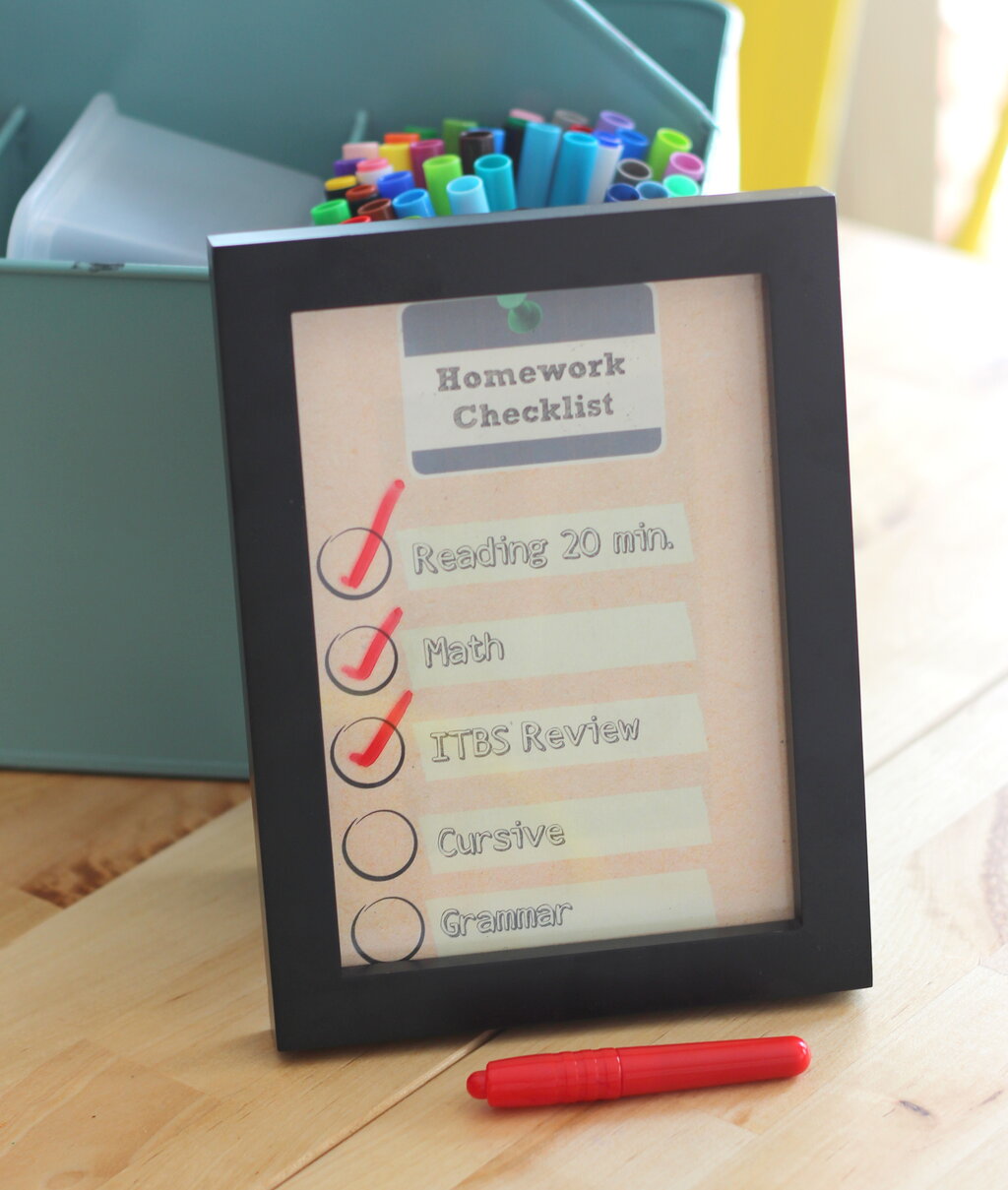
Homework also builds your ability to work independently. In the classroom, your teacher is right there to guide you. At home, you’re in charge. You learn to rely on your own problem-solving skills, use resources like textbooks, and develop the focus needed to complete a task from start to finish. This self-reliance is a key ingredient for success in any field.
Decoding Your Assignment
To do an assignment well, you first need to understand what you're being asked to do. Most assignments have three key components. Taking a minute to identify them will save you a lot of time and confusion.
First, look for the instructions. These are the step-by-step directions. They tell you what to do. Should you write an essay, solve a set of problems, or create a presentation? Read the instructions carefully, and then read them again.
Next, identify the objectives. These are the learning goals, or the why behind the assignment. An objective might be something like, "Demonstrate understanding of photosynthesis" or "Analyze the main character's motivations." Knowing the objective helps you focus your work on what really matters.
Finally, understand the evaluation criteria. This is how your work will be graded. Sometimes this is presented as a rubric, which is a chart that breaks down the requirements for earning a certain grade. It tells you what an 'A' paper looks like versus a 'C' paper.
| Criteria | Excellent (A) | Satisfactory (C) | Needs Improvement (F) |
|---|---|---|---|
| Clarity | Argument is crystal clear and easy to follow. | Argument is understandable but could be clearer. | Argument is confusing and hard to follow. |
| Evidence | All claims are supported with strong evidence. | Some claims are supported with evidence. | Claims are made without supporting evidence. |
| Grammar | Free of spelling and grammatical errors. | Contains a few minor errors. | Contains significant errors that distract the reader. |
Understanding the criteria beforehand allows you to check your own work before you turn it in, ensuring you've met all the expectations.
Let's see what you've learned about the purpose and parts of a homework assignment.
What is the primary academic purpose of homework, as described in the text?
According to the text, juggling assignments for different classes primarily teaches you which crucial life skill?
Thinking about the instructions, objectives, and criteria for every assignment is the first step toward doing great work and learning more effectively.